Ingredients
- 2 lb lamb shoulder (or leg), cut into 2-inch chunks
- 2 large yellow onions, thinly sliced
- 4 cloves garlic, minced
- 1 teaspoon ground ginger
- 1 teaspoon ground cinnamon
- 1/2 teaspoon ground turmeric
- 1/4 teaspoon saffron threads, crushed and soaked in 2 tablespoons warm water
- 1/2 teaspoon ras el hanout (optional)
- 2 tablespoons olive oil
- 1 tablespoon butter
- 1 cup pitted prunes (soft, not rock-hard)
- 2 tablespoons honey
- 1/4 cup blanched almonds
- 1 tablespoon sesame seeds
- Salt and black pepper, to taste
- Fresh cilantro, for serving
Instructions
Heat the olive oil and butter in a heavy pot or Dutch oven over medium heat. Add the onions and cook for 8–10 minutes, until soft and golden at the edges.
Stir in the garlic, ginger, cinnamon, turmeric, and ras el hanout (if using), and cook for 1 minute until very fragrant. Season the lamb generously with salt and pepper, add it to the pot, and brown on all sides, about 6–8 minutes — you want color, not cooking through.
Pour in the saffron and its soaking water plus 1/2 cup of water or broth. Bring to a simmer, then cover tightly, reduce the heat to the lowest possible setting, and cook for 1 1/2 hours without lifting the lid. The lamb should be nearly fall-apart tender.
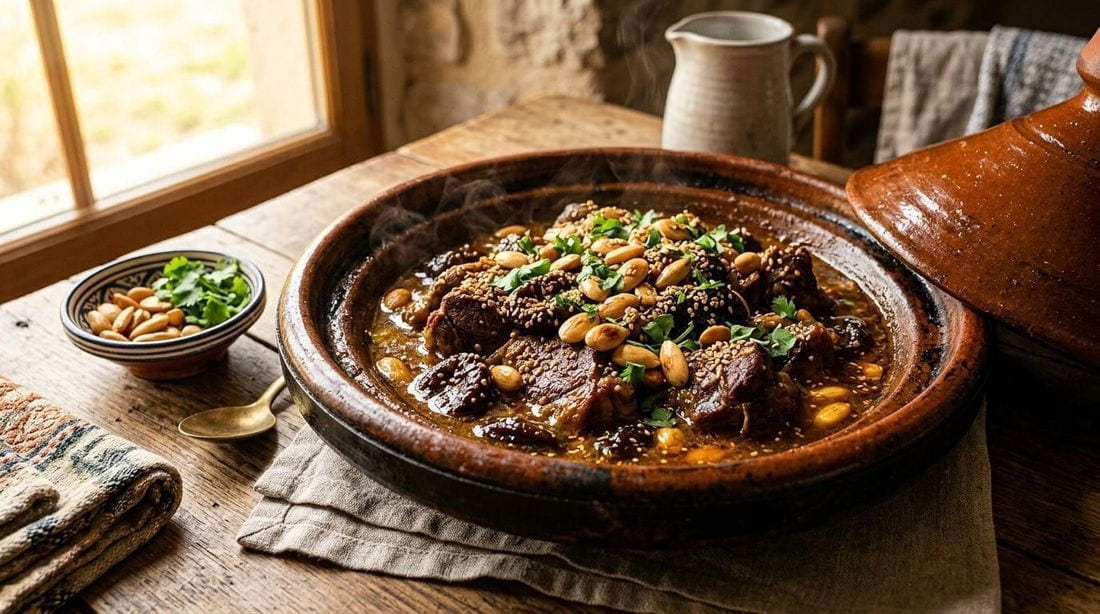
Add the prunes and honey to the pot. Stir gently, then simmer uncovered for 15–20 minutes, spooning the sauce over the prunes, until the sauce has reduced to a glossy, syrupy glaze and the prunes are plump and jammy.
While the sauce reduces, toast the almonds in a dry skillet over medium heat for 2–3 minutes until golden, then tip them out. Toast the sesame seeds for 30 seconds until fragrant.
Taste the sauce and adjust the salt — the sweetness should meet the savoriness in the middle. Rest the tagine off the heat for 10 minutes.
Serve from the pot: scatter the almonds, sesame seeds, and fresh cilantro over the top, and bring plenty of couscous or flatbread to the table.
Tips for Success
- The sweet-savory balance is the whole dish. Taste before serving and nudge it: a pinch of salt sharpens it, a squeeze of lemon or a spoonful of preserved lemon cuts the sweetness if it went too far.
- Toast the almonds yourself — raw almonds steam and soften on top of the dish; toasted ones stay crisp and earn their crunchy contrast.
- Like all tagines, this is better the day after. Make it ahead, cool it, and reheat gently; the sauce thickens and the flavors knit overnight.
Cook's Notes: what to watch for
- The pitfall: Adding the prunes and honey at the start. They need only 15–20 minutes, and a full cook time turns them into dissolved sweetness while the sauce reduces to jam; left unattended in the final uncovered stage, the honey glaze scorch-pits the pot bottom.
- The step that matters most: The final uncovered reduction with prunes and honey — spooning sauce over the fruit until it turns glossy and syrupy. This is where the sweet-savory balance is set, so taste here and correct with salt or a squeeze of lemon before serving.
- The quirk: After the long covered braise the sauce looks thin and unimpressive, then within 10 minutes of uncovering it collapses into a syrupy glaze — the flip happens fast, so stay at the pot. Also expect the saffron water to look like barely a teaspoon of gold going in.
Perfect pairings
These recipes belong on the same table — cook them together for a full spread, or swap in a variation next time.
Gear for this recipe
Read the full guide before you buy:
Frequently Asked Questions
Can I use beef instead of lamb?
Yes. Beef chuck is the best swap — it has enough fat and connective tissue to stay moist through the long braise. Use the same cut size and cooking time; you will not taste the difference in this spiced sauce.
What kind of prunes should I use?
Soft, pitted prunes (the kind you can eat straight from the bag). If yours are dry and hard, soak them in hot water for 15 minutes before adding. Rock-hard prunes will not plump up properly in the sauce.
What should I serve with this tagine?
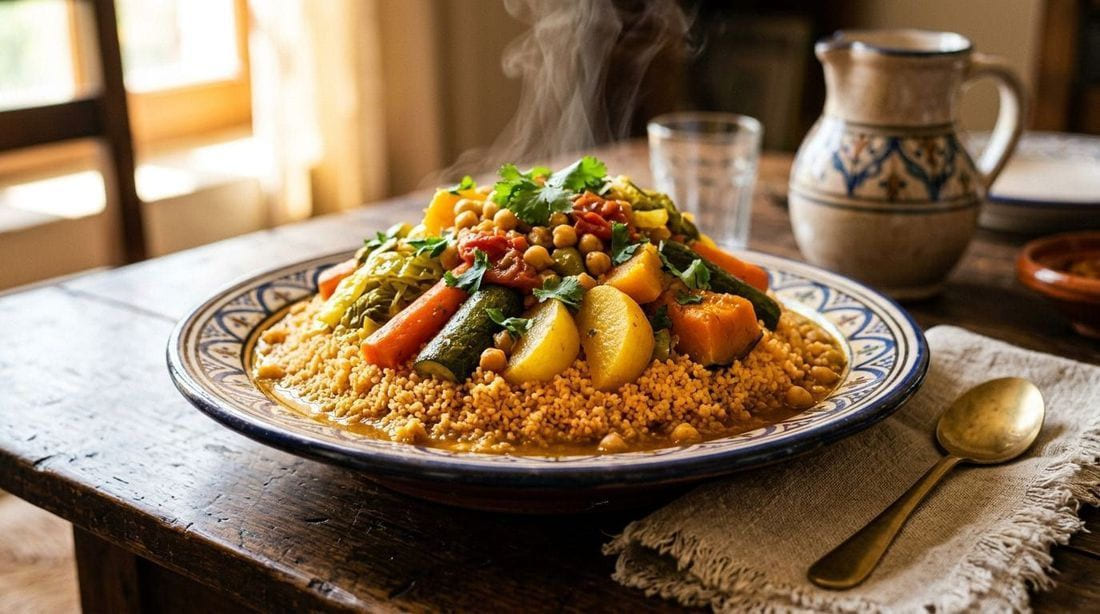
Couscous is the classic pairing — our Moroccan Seven-Vegetable Couscous is a feast on its own or served alongside. Warm flatbread for sopping up the sauce, or plain steamed rice, also works beautifully.
Can I make this ahead of time?
Yes, and it improves overnight. Cool the tagine completely, refrigerate for up to 3 days, and reheat gently on the stove. Add the toasted almonds and sesame seeds fresh at serving time so they stay crisp.
Why is my lamb tough instead of fall-apart tender?
The braise was too short or the heat too high. Lamb shoulder needs at least 1 1/2 hours on the lowest possible heat with the lid tightly sealed — the steam does the work. When it is ready, a fork should pull the meat apart with zero resistance. If it still resists at 1 1/2 hours, give it another 20–30 minutes before adding the prunes.
Why is my sauce watery instead of glossy?
The final reduction was skipped or shortened. After the prunes and honey go in, simmer uncovered for a full 15–20 minutes, spooning the sauce over the prunes, until it coats the back of a spoon. Also check your starting liquid — 1/2 cup is plenty because the onions and lamb release more as they cook.
Why is my tagine too sweet?
Easy fix: it needs salt or acid, not less honey next time. A generous pinch of salt sharpens the whole sauce, and a squeeze of lemon or a teaspoon of chopped preserved lemon cuts the sweetness while staying true to the dish. Reduce the honey to 1 tablespoon if you prefer a more savory tagine.
Affiliate disclosure: this page contains affiliate links. If you buy equipment through them, Cuisinety earns a small commission at no extra cost to you — it keeps the site free. Picks follow the same research-backed standards as our gear guides. Read ourfull affiliate disclosure.
Browse Moroccan Recipes →
Love this recipe? Pin it!
Save it to your Pinterest board so you can find it later.
Pin this Recipe