Ingredients
- 1 whole chicken (about 3.5 lbs), cut into 8 pieces
- 2 large yellow onions, thinly sliced
- 1 cup green olives (pitted or cracked)
- 1 whole preserved lemon, quartered (rind only, flesh discarded)
- 1/2 cup water
- salt to taste
Instructions
In a heavy-bottomed pot or Dutch oven, layer the sliced onions evenly across the bottom. This creates a bed that keeps the chicken from sticking and slowly sweetens as it cooks.
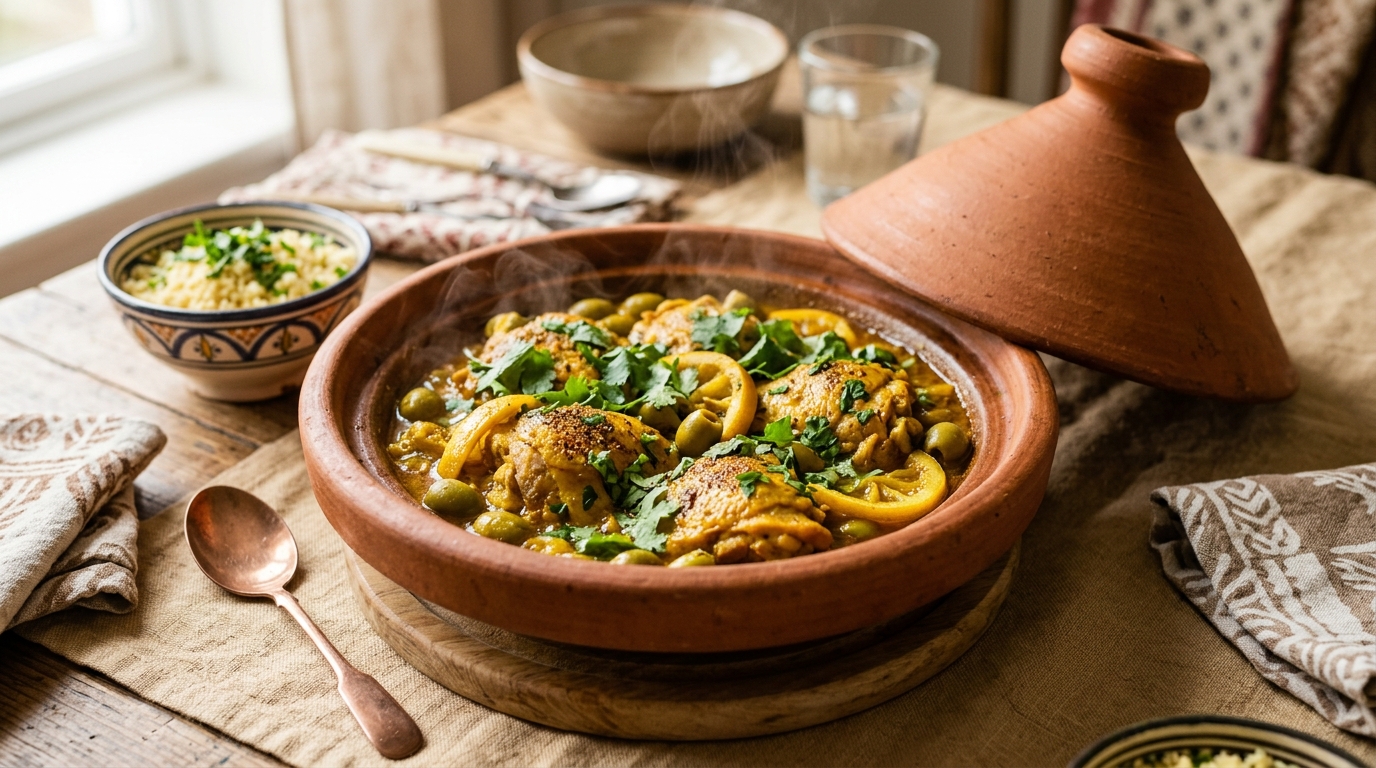
Arrange the chicken pieces skin-side up on top of the onions. Tuck the preserved lemon quarters and olives around and between the pieces.
Pour the water around the edges (not over the chicken, to keep the skin intact). Season lightly with salt — the olives and preserved lemon are already salty.
Cover the pot tightly with a lid. Cook over the lowest possible heat for 60 minutes. Do not lift the lid for the first 45 minutes — the steam is doing the work.
After 60 minutes, uncover and increase the heat slightly to let the liquid reduce for 10–15 minutes. The chicken should be fall-apart tender and the onions meltingly soft.
Serve directly from the pot with crusty bread or couscous for scooping up the rich, silky sauce.
Tips for Success
- Preserved lemons are the secret ingredient. Find them at Middle Eastern grocers or online. If you cannot find them, substitute the zest and juice of 1 fresh lemon plus extra salt, though the flavor will be milder.
- Do not skip the onion bed. It practically melts into a jammy sauce that is the backbone of the dish.
- This tastes even better the next day. Make it a day ahead and reheat gently.
Cook's Notes: what to watch for
- The pitfall: Over-salting is the classic error: the green olives and preserved lemon rind bring plenty of salt on their own, and a generous hand at the start turns the reduced onion sauce briny by the end. Season lightly, then taste after the reduction.
- The step that matters most: The covered, lowest-heat hour is the whole recipe. The steam trapped under the lid braises the chicken and melts the onions into sauce — lifting the lid in the first 45 minutes releases that steam and you get dry-ish chicken and a thin, watery base instead.
- The quirk: The chicken skin stays pale and soft the entire cook — this braise never browns, and that is correct. The sauce also looks like barely-flavored onion water for the first 40 minutes before the steam and reduction turn it silky.
Perfect pairings
These recipes belong on the same table — cook them together for a full spread, or swap in a variation next time.
Frequently Asked Questions
What is a tagine?
A tagine is both the conical clay pot used in Moroccan cooking and the slow-cooked stew made inside it. This stovetop version uses a Dutch oven to achieve the same effect.
Can I use boneless chicken?
Bone-in pieces give more flavor and stay moist during the long cook. Boneless works but reduce cooking time to 40–50 minutes.
What should I serve with tagine?
Couscous is the classic pairing. Warm flatbread, quinoa, or rice also work beautifully to soak up the sauce.
Is this spicy?
Not at all. Traditional Moroccan tagine relies on warmth (from the slow cook), not heat. The olives and lemon provide tang and depth without any chili.
Why did my tagine chicken turn out dry?
Almost always heat that is too high or a lid that did not seal. The chicken should braise in its own steam: keep the heat on the lowest setting, keep the lid tightly closed for the first 45 minutes, and do not skip the onion bed — it releases the liquid that keeps everything moist. Bone-in chicken also stays juicier than boneless.
Can I make this in a slow cooker?
Yes. Layer the onions on the bottom, add the chicken, lemon, and olives, and cook on low for 6–8 hours. You can skip the water entirely — the onions release enough liquid.
My tagine came out too salty. How do I fix it?
Olives and preserved lemon are naturally salty, so rinse the olives first and season lightly. If it is already salty, simmer a peeled raw potato in the sauce for 15 minutes — it absorbs excess salt — and remove it before serving.
Affiliate disclosure: this page contains affiliate links. If you buy equipment through them, Cuisinety earns a small commission at no extra cost to you — it keeps the site free. Picks follow the same research-backed standards as our gear guides. Read ourfull affiliate disclosure.
Browse Moroccan Recipes →
Love this recipe? Pin it!
Save it to your Pinterest board so you can find it later.
Pin this Recipe