Ingredients
- 3 1/2 cups (440 g) all-purpose flour
- 1 tablespoon instant yeast (about 1 packet)
- 1 teaspoon salt
- 1 1/2 cups (360 ml) warm water (about 105°F/40°C), plus more as needed
- 2 cups neutral oil (sunflower or vegetable), for deep-frying
- Granulated sugar, powdered sugar, or honey, for serving
Instructions
In a large bowl, whisk the flour, yeast, and salt together. Pour in the warm water and stir with a wooden spoon until a very soft, shaggy dough forms. It should be looser and stickier than bread dough — almost like a thick batter. Add a splash more water if it looks dry.
Cover the bowl with a damp kitchen towel and let the dough rise in a warm spot for 30–45 minutes, until it is puffy, bubbly, and doubled in volume. Sfenj dough is meant to be wet and slack — do not be tempted to add flour.
Heat 2 inches of oil in a deep pot or Dutch oven to 350°F (175°C). While it heats, set a wire rack over a baking sheet and put a bowl of water next to the pot.
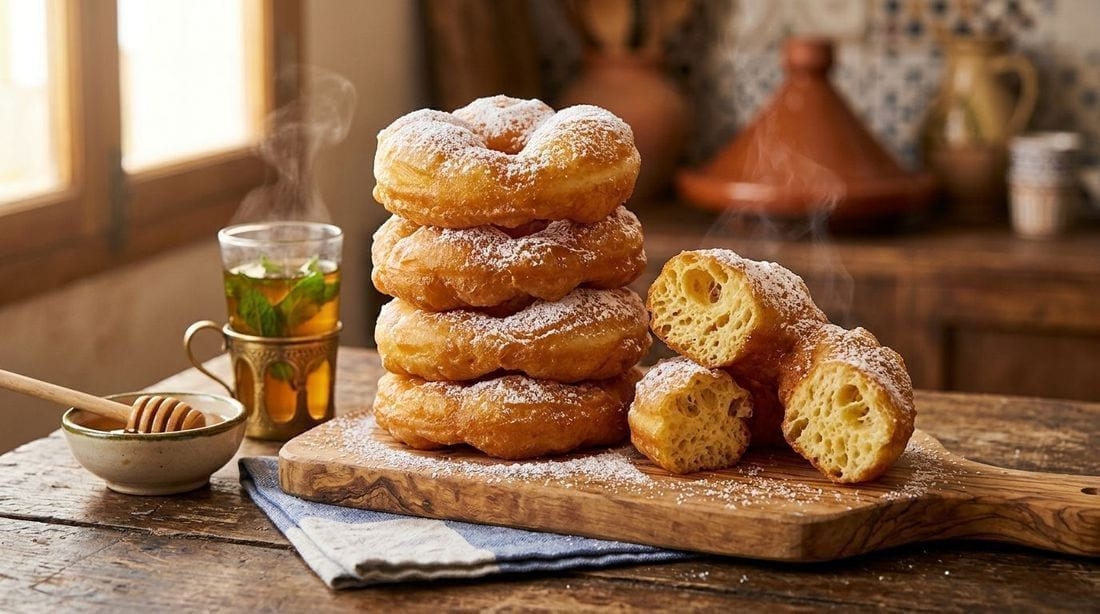
Dip your hands in the water. Grab a fistful of dough (about 2 1/2 tablespoons), and while it rests in your palm, poke your thumb through the center to form a ring, stretching it gently into a doughnut shape about 3 inches across.
Slide the ring carefully into the hot oil. Fry 2–3 per batch, 1 1/2–2 minutes per side, flipping once, until deep golden brown and puffed. Do not crowd the pot — the doughnuts need room to puff.
Drain on the wire rack for a moment, then toss immediately in granulated sugar (or drizzle with honey) while still warm. Repeat with the remaining dough, keeping your hands wet so the sticky dough does not cling. Serve hot, with mint tea.
Tips for Success
- The wetter the dough, the lighter the sfenj. A stiff dough makes dense, doughy doughnuts — aim for one that barely holds its shape and slowly spreads in the bowl.
- Keep your hands wet while shaping. The dough is extremely sticky by design; dipping your hands in water between rings is the classic technique and it makes the whole process shockingly easy.
- Watch the oil temperature between batches — it climbs with each addition. Dip a corner of dough in to test: it should sizzle immediately and float within seconds. Too hot, and the sfenj browns before the inside cooks; too cool, and they soak up oil.
Cook's Notes: what to watch for
- The pitfall: Adding flour to the sticky dough. Sfenj dough is meant to be slack and almost batter-like; stiffening it produces dense, bread-like doughnuts. The fix for stickiness is wet hands, never more flour — dip in the water bowl between every ring.
- The step that matters most: Keeping hands wet while shaping the rings. The dough clings to dry fingers and tears; a wet palm lets each portion stretch into a clean ring that slides off into the oil. It sounds like a detail but it is the difference between ease and a fight.
- The quirk: The oil temperature climbs with each batch — dough that fried perfectly at 350°F browns too fast by round three. Test with a corner of dough: it should sizzle and float within seconds. And toss in sugar while hot or it will not stick.
Perfect pairings
Sfenj are best the moment they leave the oil — serve them with a pot of mint tea and something sweet to dip into.
Frequently Asked Questions
Why are my sfenj dense instead of light and airy?
The dough was probably too stiff, or it did not rise long enough. Sfenj dough should be noticeably wet and slack — almost batter-like. If you added flour to make it manageable, that is the culprit. Let it rise until visibly puffy and doubled, and keep your hands wet when shaping.
Why are my doughnuts greasy?
The oil was not hot enough, or the pot was overcrowded. Fry at a steady 350°F (175°C) and cook only 2–3 rings at a time. If the oil drops below temperature, the dough absorbs it instead of crisping. Drain on a wire rack, not paper towels, so the steam can escape.
Can I make the dough ahead of time?
Yes — this dough actually improves in the fridge. After mixing, cover and refrigerate up to 24 hours; let it come to room temperature for 30 minutes before frying (it will be even more flavorful from the slow ferment). Fried sfenj are best eaten within the hour, so fry to order.
Why did my sfenj come out dense and doughy?
The dough was too stiff, or it did not rise enough. Sfenj dough should be noticeably wet and slack — almost batter-like. If you added flour to make it easier to handle, that is what turned them dense. Let the dough rise 30–45 minutes until puffy and doubled, and keep your hands wet when shaping the rings.
Why are my doughnuts greasy and heavy?
The oil temperature dropped, or the pot was overcrowded. Fry at a steady 350°F (175°C) and cook only 2–3 rings at a time so the oil stays hot. If the dough sinks and sits instead of floating and puffing within a few seconds, the oil is too cool — wait for it to come back up to temperature.
Can I use bread flour instead of all-purpose?
You can, but all-purpose gives the classic light, airy texture. Bread flour's higher protein makes a chewier, more bread-like sfenj — closer to a bagel in texture. If you only have bread flour, reduce the amount by about 2 tablespoons and expect a slightly denser result.
Affiliate disclosure: this page contains affiliate links. If you buy equipment through them, Cuisinety earns a small commission at no extra cost to you — it keeps the site free. Picks follow the same research-backed standards as our gear guides. Read ourfull affiliate disclosure.
Browse Moroccan Recipes →
Love this recipe? Pin it!
Save it to your Pinterest board so you can find it later.
Pin this Recipe Cuisine