Ingredients
- 1 cup (250 ml) water
- 3 tablespoons olive oil (or neutral oil), plus more for frying (about 4 cups / 1 L)
- 3/4 teaspoon fine salt
- 2 teaspoons sugar
- 1 cup (130 g) all-purpose flour
- 1/2 cup (100 g) sugar mixed with 1 tablespoon ground cinnamon, for coating
- 3.5 oz (100 g) dark chocolate (70%), chopped
- 2 cups (500 ml) whole milk, divided
- 2 teaspoons cornstarch
- 2 tablespoons sugar (for the chocolate)
Instructions
Make the dough: bring the water, olive oil, salt, and 2 teaspoons sugar to a rolling boil in a saucepan. Pull it off the heat, add all the flour at once, and beat hard with a wooden spoon until a thick, smooth, glossy paste forms — about 1 minute, no flour lumps left. It should be stiff enough to hold ridges but soft enough to pipe: if it feels stiff like bread dough, work in up to 2 tablespoons hot water, one at a time.
Rest and load the bag: let the dough sit 10 minutes so it settles and pipes cleanly, then scrape it into a piping bag fitted with a large open-star tip (1M or 8B). No tip? Snip a 3/4-inch hole in the bag — you lose the ridges, not the churros.
Heat the oil properly: pour 1 1/2 to 2 inches of oil into a wide, heavy pot and heat to 355–370°F (180–188°C). No thermometer? Drop in a small cube of bread — it should sizzle steadily and turn golden in about 40 seconds. Line a tray with paper towels and pour the cinnamon sugar onto a plate.
Pipe and fry in batches: squeeze 6-inch lengths of dough straight from the bag over the oil, snipping them off with kitchen scissors. Work in batches of 4–6 and never crowd the pot — crowding drops the temperature and greasy churros follow. Fry 2–3 minutes per side, rolling them as they blister, until deep golden all over with no pale patches.
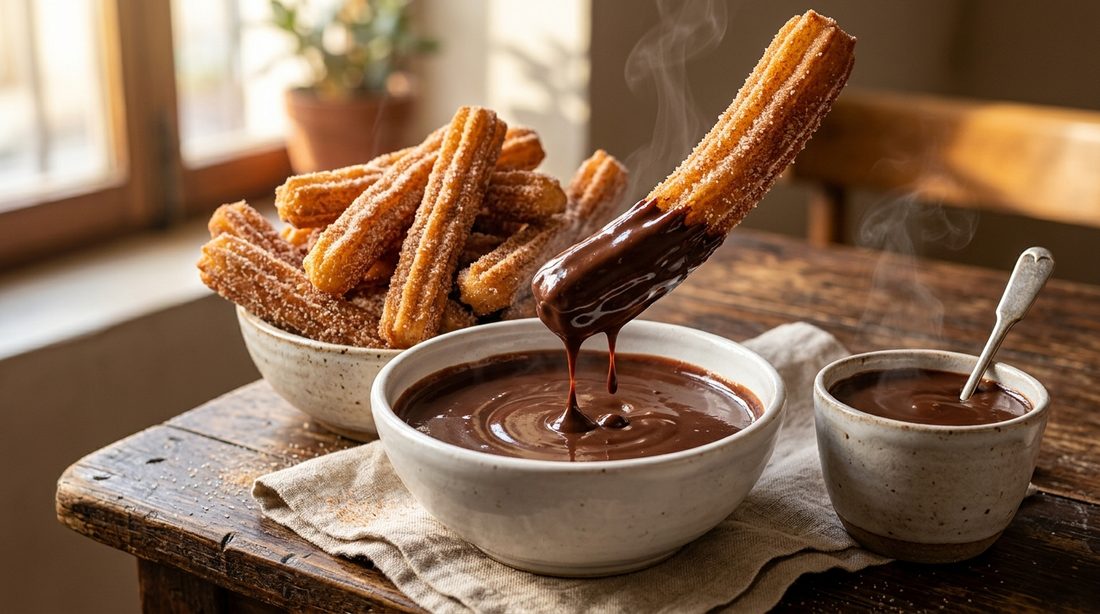
Drain and coat: lift the churros out with a slotted spoon, let the oil drip off for 3 seconds, and roll them straight through the cinnamon sugar while they are still hot enough for it to cling. Keep finished churros warm in a single layer in a 200°F (95°C) oven while you fry the rest.
Make the chocolate a la taza: whisk the cornstarch with 1/2 cup of the cold milk until smooth. Warm the remaining milk with the sugar in a saucepan until steaming, add the chopped chocolate, and whisk until melted and glossy. Whisk in the cornstarch slurry and simmer gently 2–3 minutes, stirring, until it thickens enough to coat the back of a spoon — thicker than drinking cocoa, thinner than pudding. Pour into wide cups and serve immediately with the hot churros.
Tips for Success
- Judge the dough by feel, not the clock. The paste is right when it holds a ridge for a second after the spoon drags through it and comes off the pot sides in a soft ball. Too stiff to pipe cleanly? Beat in hot water a tablespoon at a time; too loose? It will dissolve into the oil and you need 1–2 tablespoons more flour worked in off the heat.
- Oil temperature is the whole recipe. Below 350°F (175°C) churros drink oil and turn soggy; above 380°F (190°C) the outside browns before the inside sets. Hold 355–370°F, fry in small batches, and let the oil come back to temperature between batches — the bread-cube test takes ten seconds and saves the whole tray.
- Eat them at the table, not on the counter. Churros are a five-minute food: the crust is crackling straight from the sugar and starts to soften as they cool. Fry, coat, and serve in waves — or keep them crisp in a single layer in a low oven. Never stack or cover them; trapped steam undoes everything the fryer did.
Perfect pairings
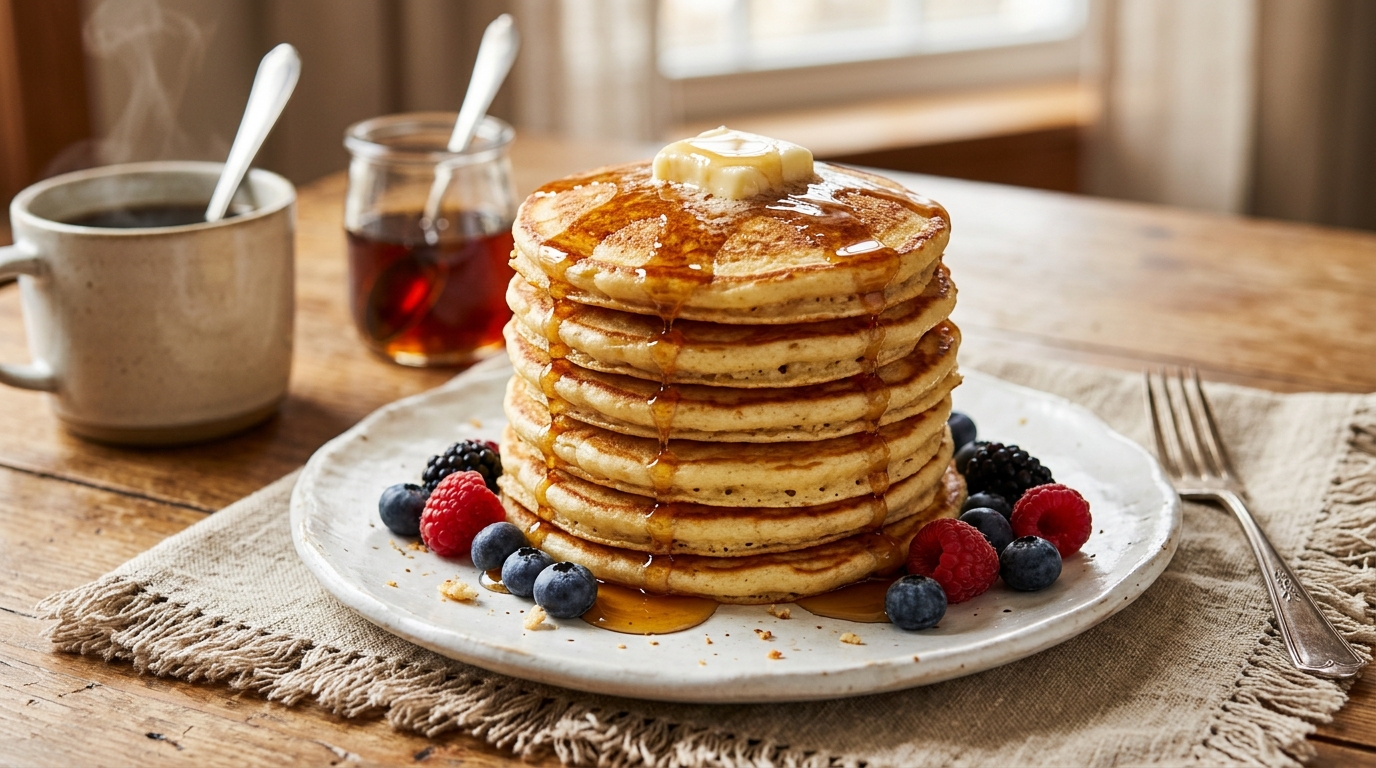
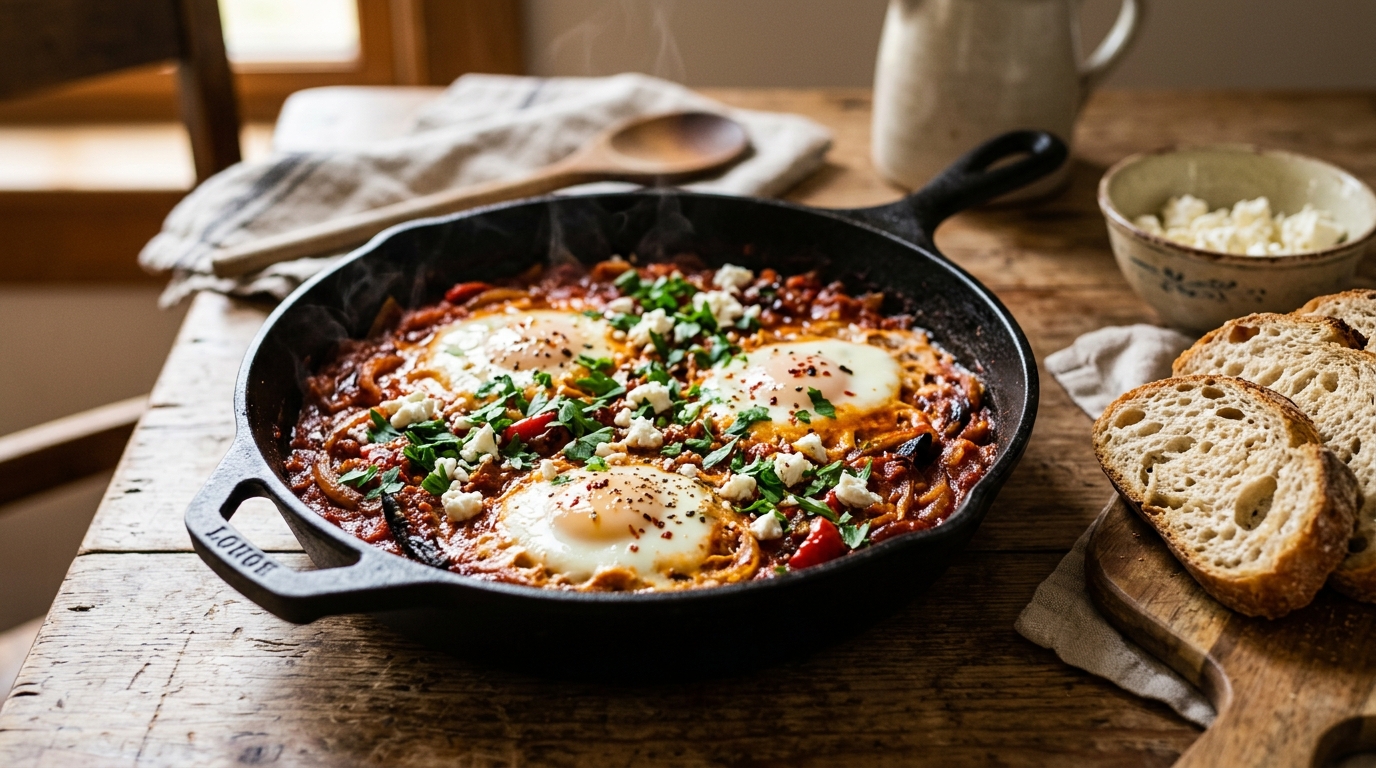
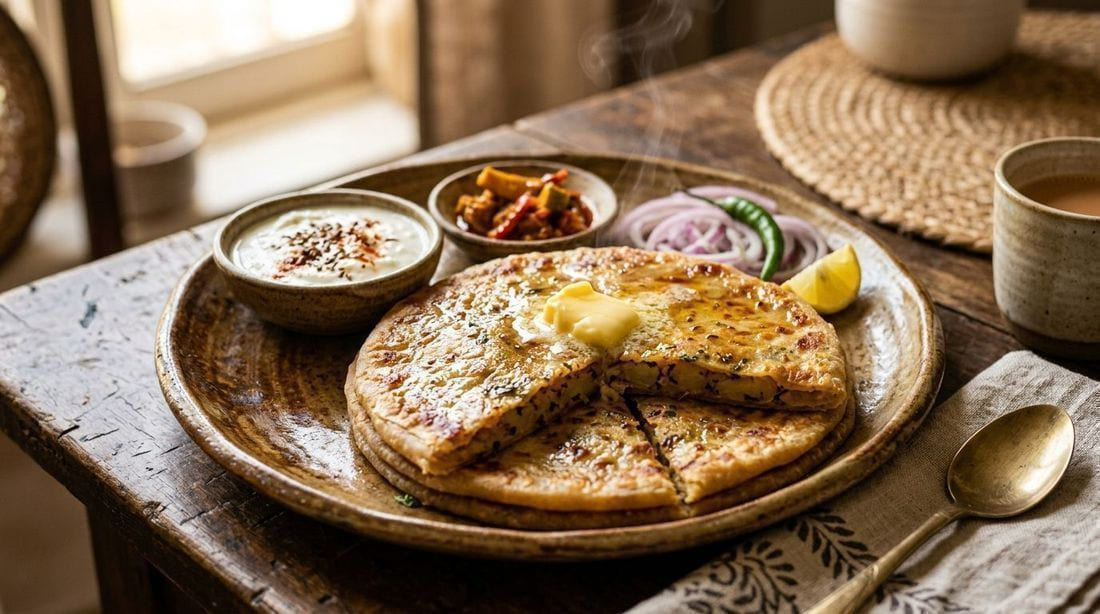
Churros are best with a pot of something warm and the rest of the fried-and-griddled breakfast canon — dunk, sip, repeat.
Frequently Asked Questions
My dough is too soft to pipe (or too stiff to squeeze) — how do I fix it?
Both fixes happen off the heat. Too stiff: beat in hot water one tablespoon at a time until it pipes with firm pressure — a stiff paste fights the bag and squirts unevenly. Too soft: it will slump and dissolve into the oil, so beat in one to two tablespoons of flour and let the dough rest 10 minutes; flour keeps absorbing as it cools. The target is a paste that holds a ridged trail but flows when pushed. And rest the dough before piping — a 10-minute sit makes it noticeably easier to handle without changing the fry.
How do I keep the oil at the right temperature without a thermometer?
Use the bread test: a small cube of white bread dropped into the oil should sizzle steadily and turn golden in about 40 seconds — faster means the oil is too hot, slower means too cold. Dry chopstick method: bubbles should stream briskly from the tip the moment it touches the oil. Most important, watch the oil between batches: every batch of cold dough drops the temperature, so give it a minute to climb back before piping the next round. Steady heat is the difference between crisp churros and greasy ones.
My chocolate is too thin (or too thick) for dunking — how do I adjust it?
Chocolate a la taza should coat a spoon thickly and a churro completely — like warm pudding that still pours. Too thin: simmer it 2 minutes more, stirring, or whisk in a little extra cornstarch slurry (1 teaspoon cornstarch in 1 tablespoon cold milk) and simmer until it grips. Too thick: whisk in warm milk a splash at a time until it flows. Note it also thickens as it sits in the cups — pull it slightly looser than you think you need, and serve it in wide, shallow cups so a churro can reach the bottom.
My dough is too soft to pipe (or too stiff to squeeze) — how do I fix it?
Both fixes happen off the heat. Too stiff: beat in hot water one tablespoon at a time until it pipes with firm pressure — a stiff paste fights the bag and squirts unevenly. Too soft: it will slump and dissolve into the oil, so beat in one to two tablespoons of flour and let the dough rest 10 minutes; flour keeps absorbing as it cools. The target is a paste that holds a ridged trail but flows when pushed. And rest the dough before piping — a 10-minute sit makes it noticeably easier to handle without changing the fry.
How do I keep the oil at the right temperature without a thermometer?
Use the bread test: a small cube of white bread dropped into the oil should sizzle steadily and turn golden in about 40 seconds — faster means the oil is too hot, slower means too cold. Dry chopstick method: bubbles should stream briskly from the tip the moment it touches the oil. Most important, watch the oil between batches: every batch of cold dough drops the temperature, so give it a minute to climb back before piping the next round. Steady heat is the difference between crisp churros and greasy ones.
My chocolate is too thin (or too thick) for dunking — how do I adjust it?
Chocolate a la taza should coat a spoon thickly and a churro completely — like warm pudding that still pours. Too thin: simmer it 2 minutes more, stirring, or whisk in a little extra cornstarch slurry (1 teaspoon cornstarch in 1 tablespoon cold milk) and simmer until it grips. Too thick: whisk in warm milk a splash at a time until it flows. Note it also thickens as it sits in the cups — pull it slightly looser than you think you need, and serve it in wide, shallow cups so a churro can reach the bottom.
Affiliate disclosure: this page contains affiliate links. If you buy equipment through them, Cuisinety earns a small commission at no extra cost to you — it keeps the site free. Picks follow the same research-backed standards as our gear guides. Read ourfull affiliate disclosure.
Browse All Recipes →
Love this recipe? Pin it!
Save it to your Pinterest board so you can find it later.
Pin this Recipe Cuisine