Ingredients
- For the puri (8-10):
- 2 cups all-purpose flour
- 1/2 teaspoon salt
- 1/2 teaspoon ajwain or cumin seeds (optional)
- 2 tablespoons ghee or neutral oil
- 1/2 cup warm water (about), as needed
- Oil, for deep frying
- For the halwa:
- 1 cup fine semolina (suji / rava)
- 1/2 cup ghee or butter
- 3/4 cup sugar (adjust to taste)
- 2 cups water
- 3–4 green cardamom pods, crushed
- A pinch of saffron threads (optional)
- 2 tablespoons almonds, pistachios, or raisins
- For the chana (chickpea curry), optional:
- 1 can chickpeas, drained
- 1 tablespoon oil
- 1 teaspoon cumin seeds
- 1/2 teaspoon chili powder
- 1/2 teaspoon ground coriander
- Salt to taste
- For serving, optional: pickles, sliced onion, green chilies, chai
Instructions
Make the puri dough: mix the flour, salt, and ajwain, then rub in the ghee until crumbly. Add warm water gradually and knead a stiff but pliable dough. Cover and rest 30 minutes.
Divide the dough into 8–10 balls. Roll each into a thin circle about 4–5 inches across. Keep them dusted and covered so they do not dry out.
Heat 1 1/2 inches of oil in a deep pot to 360°F (180°C). Fry the puri one at a time: gently lower it in, and within seconds it will puff. Tap it gently with a slotted spoon to help it balloon. Fry 30–40 seconds per side until golden and crisp. Drain on a wire rack. Keep them warm in a covered bowl.
Make the halwa: heat the ghee in a pan over medium heat, add the semolina, and toast, stirring constantly, until it turns light golden and smells nutty, 4–5 minutes.
Meanwhile, bring the water, sugar, and crushed cardamom to a boil. Carefully pour the hot syrup into the toasted semolina (it will splutter), stirring constantly. Simmer until the halwa thickens and pulls away from the sides of the pan, 3–4 minutes. Stir in the saffron and nuts, and cook 1 more minute.
For the chana (optional): bloom the cumin in the oil, add the chickpeas with the spices and a splash of water, and simmer 5 minutes until saucy.
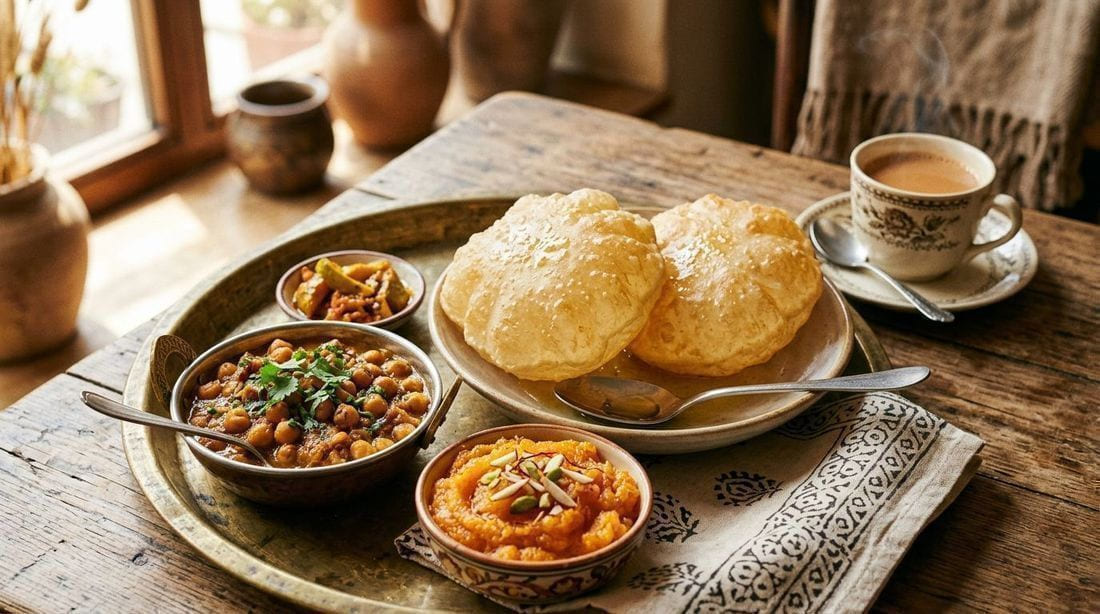
Assemble the feast: serve the hot puri with the halwa, the chana, pickles, onion, and chai. Traditionally, puri is eaten with the halwa and chana together, making a sweet-and-savory bite.
Tips for Success
- The puri must puff - that is the sign of the right oil temperature and a moist enough dough. If they do not puff, the oil is too hot or too cool; aim for a steady 360°F.
- Toast the semolina long enough that it smells nutty - under-toasting leaves the halwa raw and pasty.
- Everything is best made fresh and served immediately while hot: puri lose their puff, and halwa is best warm.
Frequently Asked Questions
Why do my puri not puff up?
Usually the oil is not hot enough, the dough is too dry, or the puri is too thick. Fry at a steady 360°F, keep the dough moist and pliable, roll thin, and lower it in gently. A little steam inside the dough is what makes it balloon.
Can I make halwa puri ahead of time?
Puri are best fresh - they lose their crisp puff quickly. The halwa and chana can be made a day ahead and reheated. If you need to, you can also freeze uncooked puri dough and fry from cold, but fresh is noticeably better.
Is halwa puri vegetarian?
Yes - puri, halwa, and chana are all vegetarian. Just use a vegetable oil if you want it vegan, and skip the ghee or use a plant-based alternative.
How is halwa puri usually eaten?
Traditionally, the puri is torn and eaten with both the sweet halwa and the savory chana, so every bite balances sweet and spicy. Yogurt, pickles (achar), sliced onion, and a cup of milky chai complete the spread.
Affiliate disclosure: this page contains affiliate links. If you buy equipment through them, Cuisinety earns a small commission at no extra cost to you — it keeps the site free. Picks follow the same research-backed standards as our gear guides. Read ourfull affiliate disclosure.
Browse All Recipes →
Love this recipe? Pin it!
Save it to your Pinterest board so you can find it later.
Pin this Recipe Cuisine