Moroccan
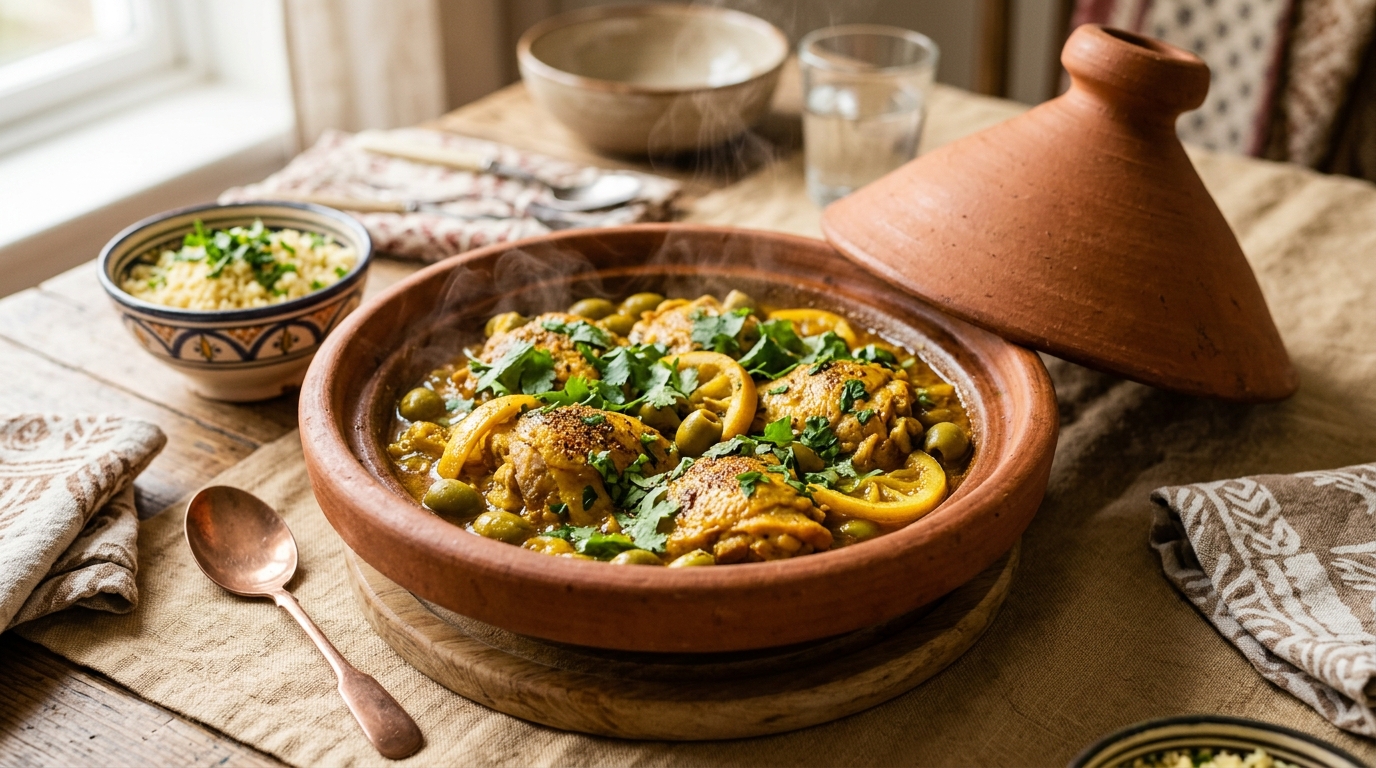
5-Ingredient Moroccan Tagine
A deeply flavorful Moroccan stew made with just five everyday ingredients. The slow-simmered combination of chicken, olives, and preserved lemon is pure North African magic.
Cuisinety kitchen
Bold North African flavors made genuinely simple at home — slow-simmered tagines, fragrant harira, preserved lemon, olives, and warm spices, written for everyday kitchens.
Moroccan cooking has a reputation for being complicated — clay tagines, forty-ingredient spice blends, and techniques passed down over generations. The truth, once you cook it a few times, is the opposite: Moroccan food is built on a handful of generous ideas — slow cooking, warm spices, dried fruit, preserved lemon, and bread for scooping — and almost everything here is a weeknight reality.
This hub is the navigator for our full collection of Moroccan recipes, and it works like a proper topic cluster: every recipe below is a spoke, deeply linked to its siblings and back to this page. Whether you are here for your first tagine, a Ramadan table, or a weekend baking project like bastilla or chebakia, start with a group that matches your appetite.
Spoke
The heart of Moroccan home cooking — meat or fish slowly braised with onions, olives, preserved lemon, and warm spices until it falls apart. No clay pot required: a Dutch oven does the same job.
A deeply flavorful Moroccan stew made with just five everyday ingredients. The slow-simmered combination of chicken, olives, and preserved lemon is pure North African magic.
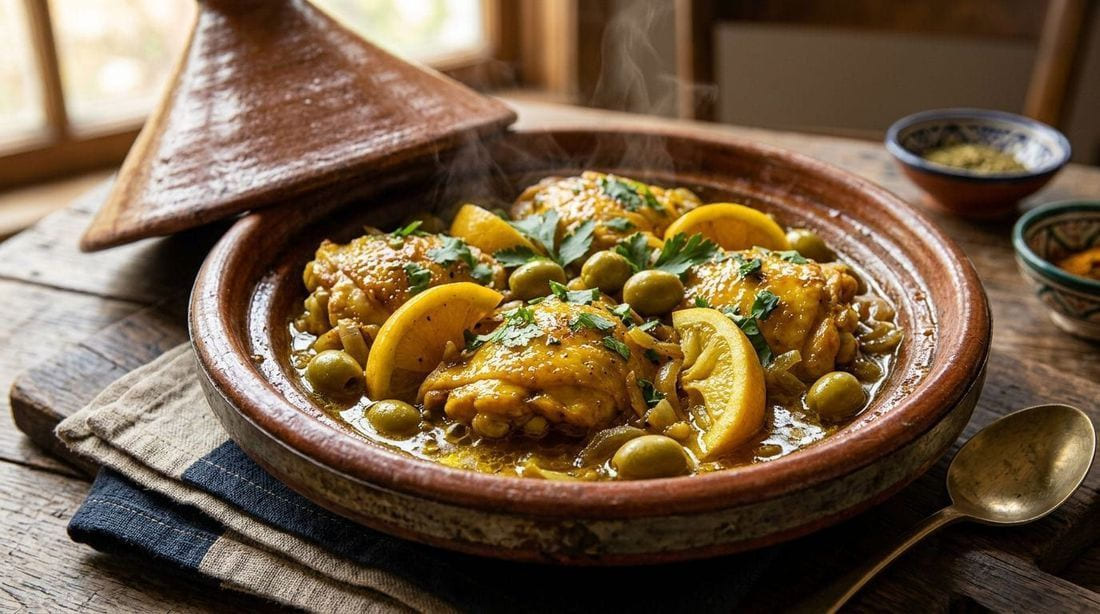
The iconic Moroccan chicken tagine — tender chicken braised in a saffron-golden onion sauce, brightened with preserved lemon and briny green olives. The dish that made Moroccan cooking famous, made simple at home.
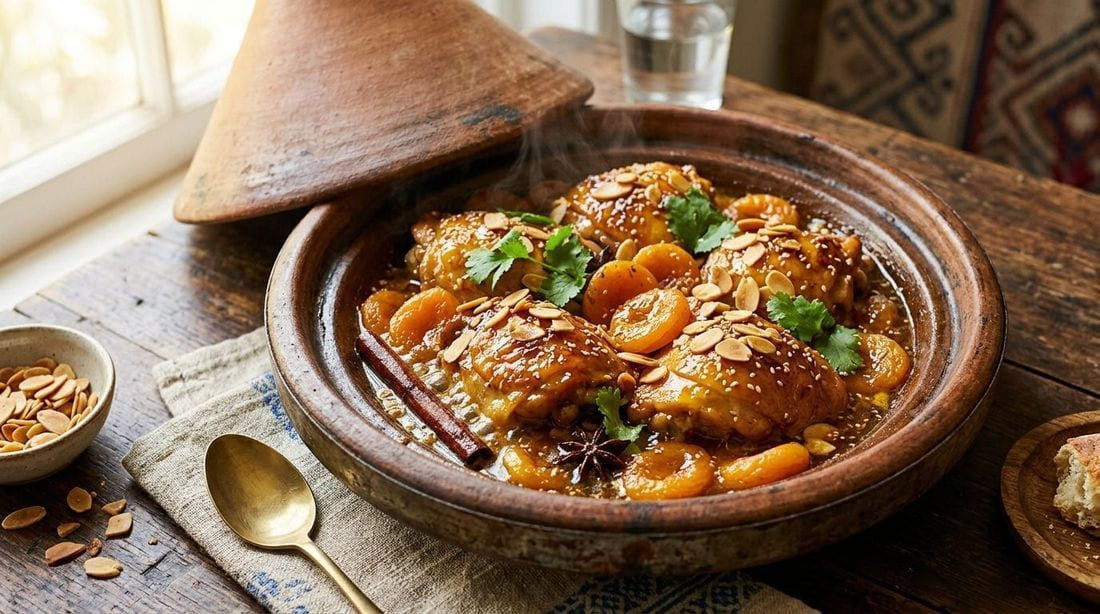
A sweet-and-savory Moroccan classic — tender chicken braised with caramelized onions, saffron, and cinnamon, finished with jammy dried apricots, toasted almonds, and a drizzle of honey. Festive, fragrant, and unforgettable.
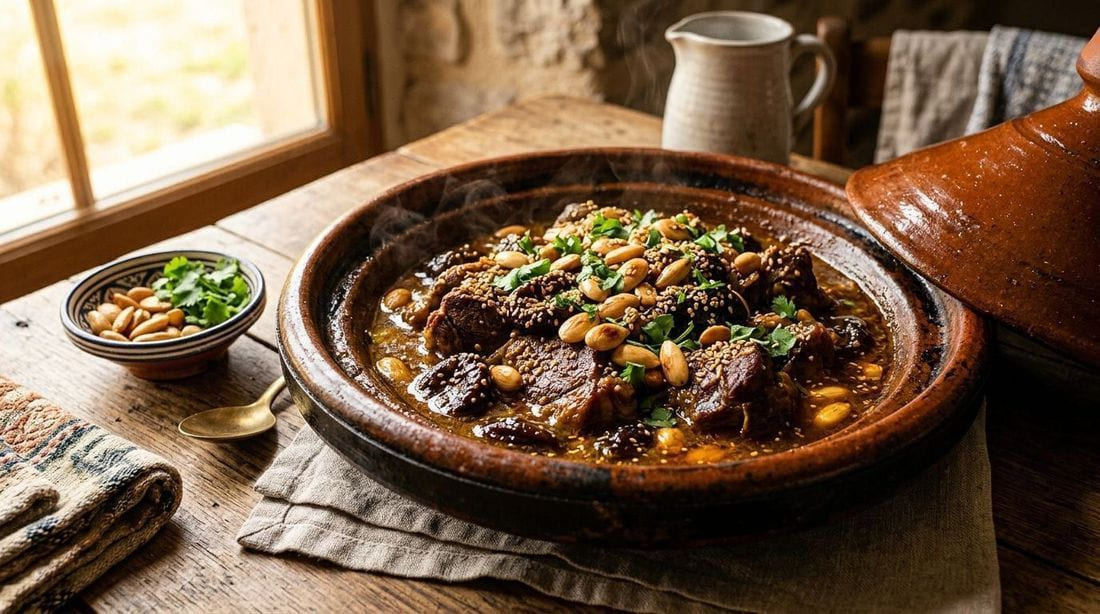
The classic Moroccan celebration tagine: fall-apart lamb braised with cinnamon, saffron, and ginger, finished with honeyed prunes and toasted almonds. Sweet, savory, and deeply aromatic.
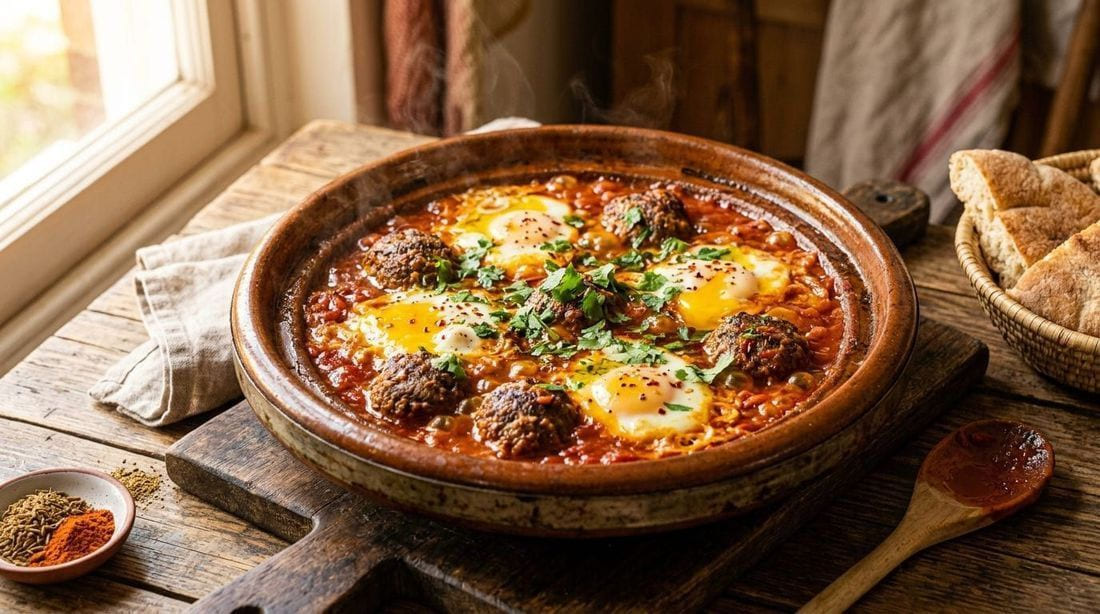
Tender spiced beef meatballs simmered in a rich tomato sauce, topped with eggs poached right in the pan. A 50-minute Moroccan bistro classic you eat straight from the pot with crusty bread.
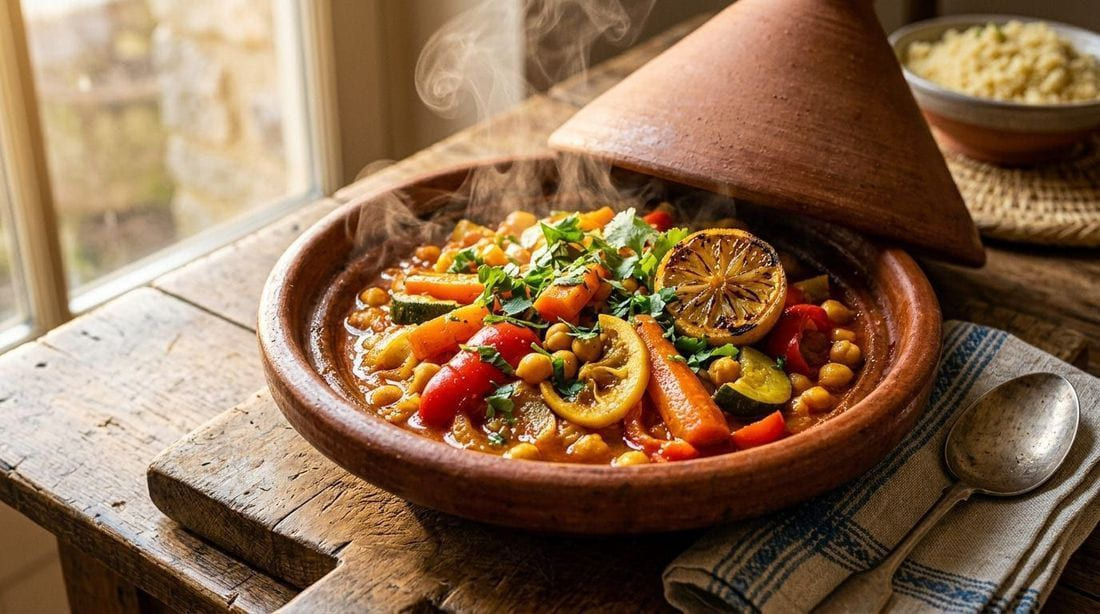
A fragrant, saffron-spiced vegetable tagine with tender chickpeas, sweet golden butternut squash, and jammy dried fruit — hearty, naturally vegan, and deeply comforting. The stew that proves Moroccan kitchens turn vegetables into pure magic.
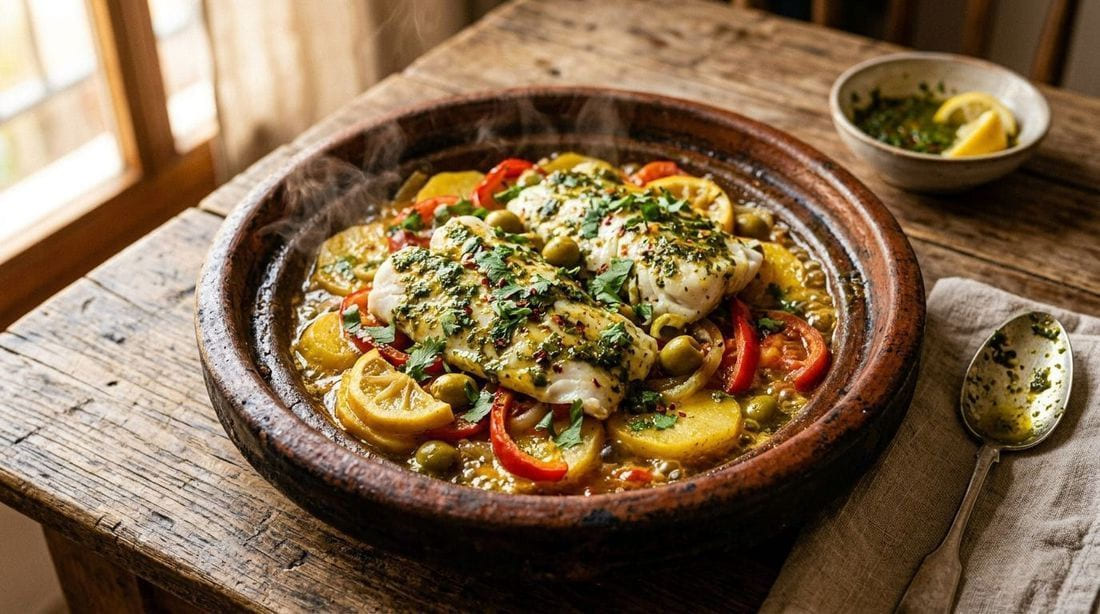
Flaky white fish braised in a bright, garlicky chermoula sauce with preserved lemon, green olives, and tomatoes — the vibrant seafood tagine of Morocco's coast, ready in under an hour and built for mopping up with couscous.
Spoke
One-pot comfort: harira, the legendary tomato-lentil-chickpea soup that breaks every Ramadan fast, and couscous royale, the Friday ceremonial dish piled with seven vegetables.

Morocco's beloved soul-warming soup: tomatoes, lentils, chickpeas, and vermicelli in a fragrant herb broth, finished the traditional way with a thickened egg-straw flourish.
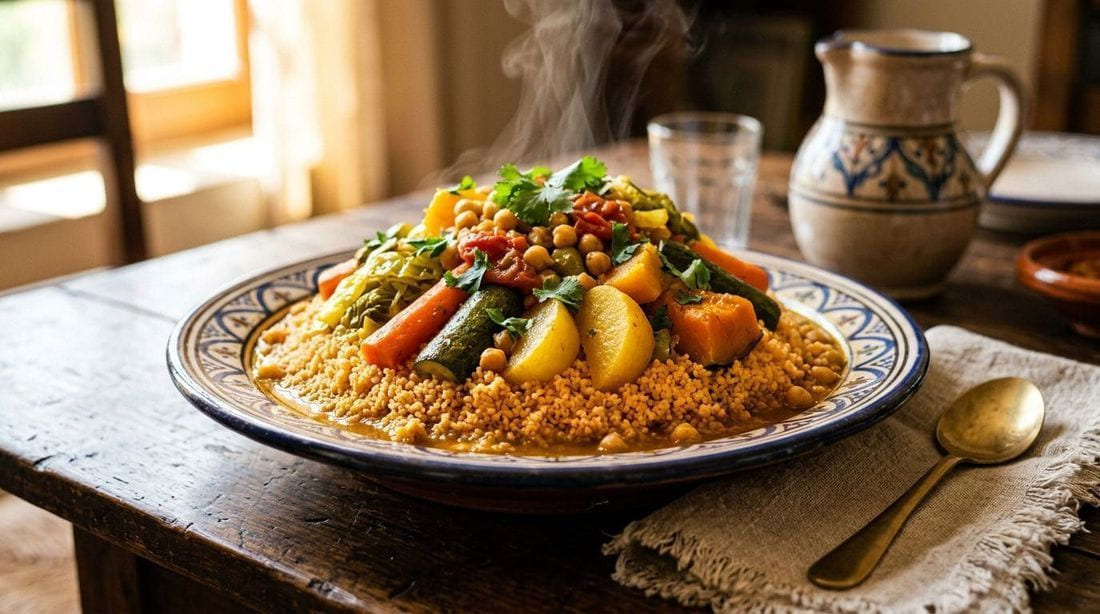
The Friday feast of Morocco: fluffy steamed couscous crowned with seven slow-braised vegetables and chickpeas in a golden saffron broth, finished with butter and harissa. Vegetarian-friendly and utterly satisfying.
Spoke
Zaalouk — smoky eggplant and tomato cooked into a silky salad — is the side that steals the show on every Moroccan table. Serve it warm with bread.
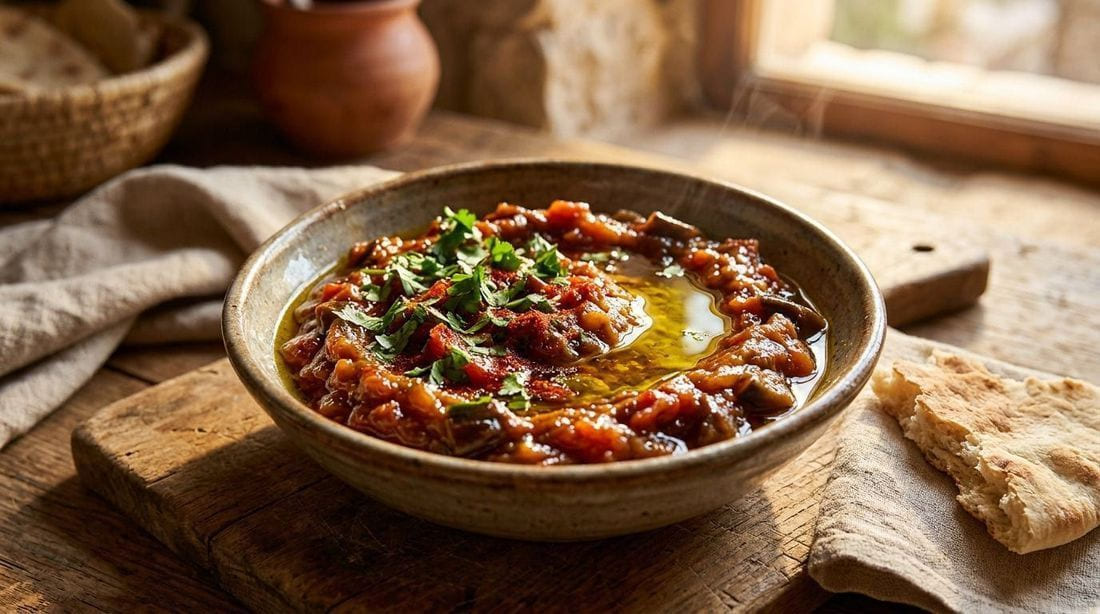
A smoky, garlicky Moroccan cooked salad of eggplant and tomato — silky with olive oil, bright with cumin and cilantro. Ready in 40 minutes and made to be scooped up with warm bread.
Spoke
The dough crafts: flaky layered msemen for breakfast, crisp cinnamon-sugar briouats, and the showstopper bastilla — a sweet-savory pigeon (here, chicken) pie dusted with powdered sugar and cinnamon.
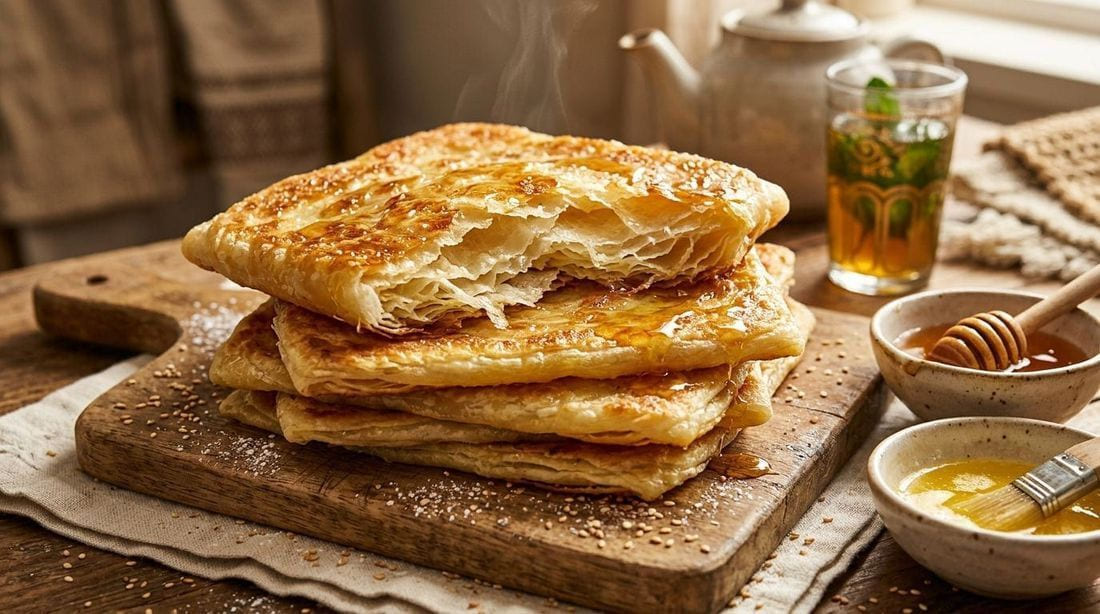
Crisp, golden, and impossibly flaky Moroccan flatbreads — pan-fried squares with paper-thin layers, served with honey and butter for breakfast or wrapped around tagines.
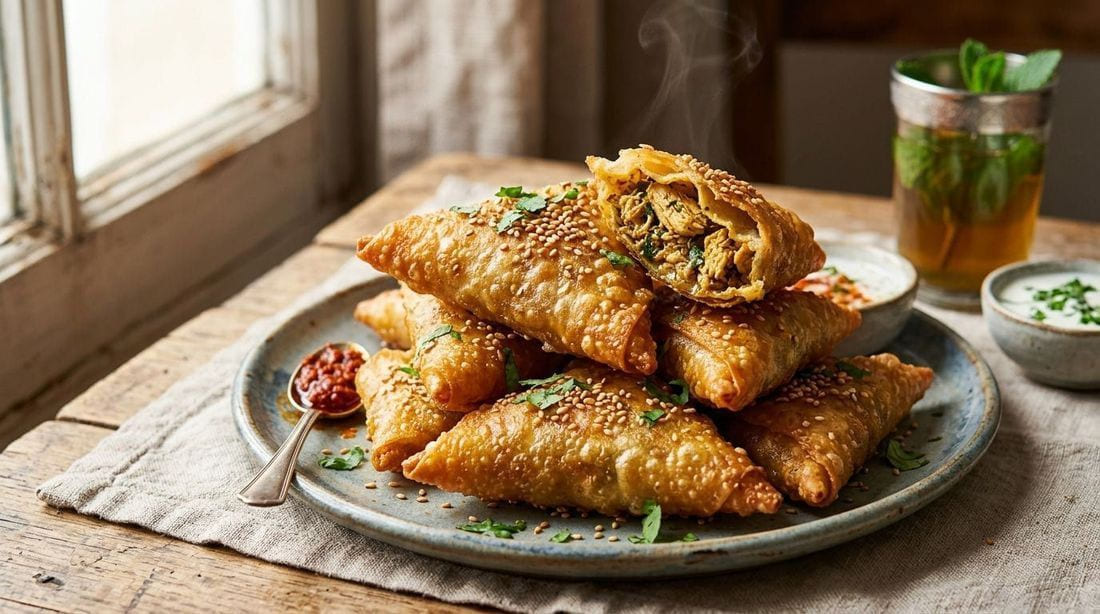
Crackling-crisp golden triangles of warqa or phyllo wrapped around a warmly spiced chicken filling — the Moroccan street-food favorite, made at home. Perfect for Ramadan, parties, and anytime you want something dangerously snackable.
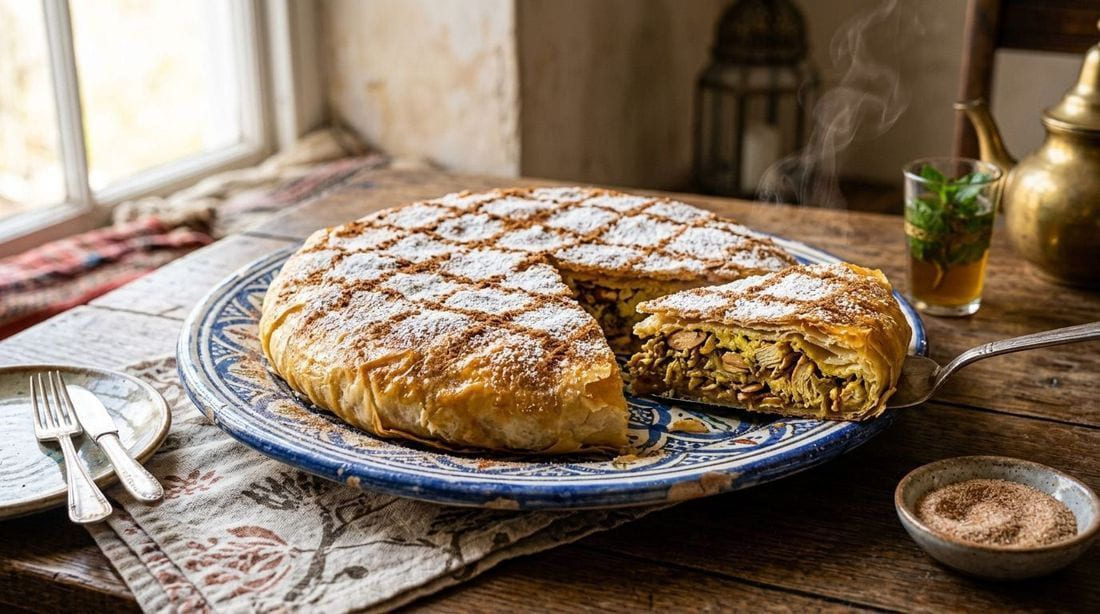
The legendary Moroccan centerpiece: layers of crisp golden pastry around spiced shredded chicken, silky egg binding, and toasted almonds, finished with a snowfall of powdered sugar and cinnamon. Sweet, savory, and utterly unforgettable.
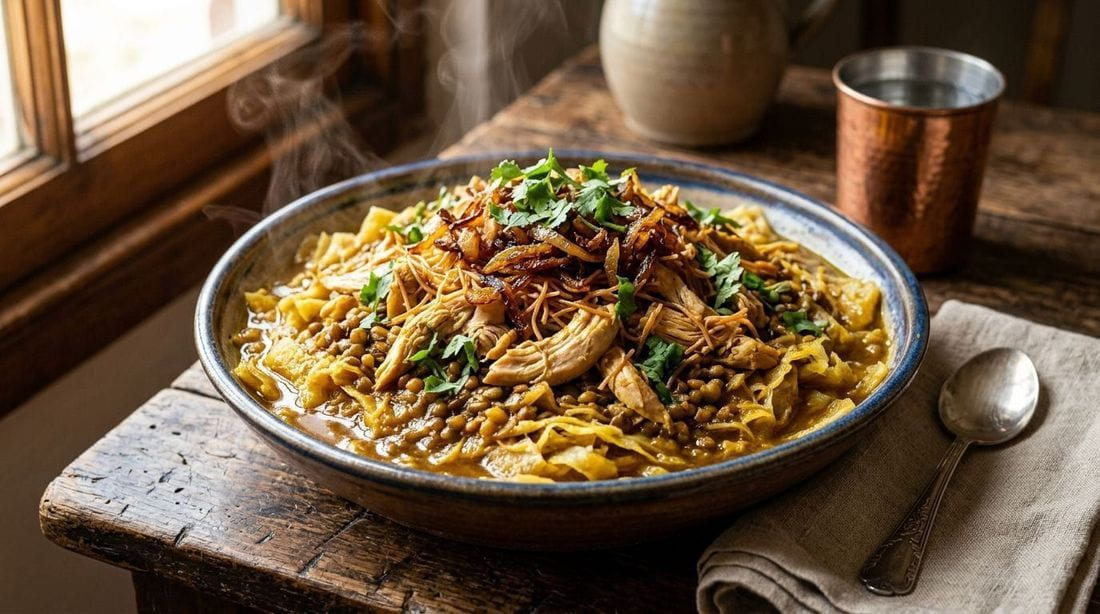
The ultimate comfort feast of Moroccan home cooking: tender shredded chicken and golden lentils in a saffron-fenugreek broth, poured over torn msemen flatbread and crowned with crispy caramelized onions. Deeply warming, endlessly soppable, and loved by every Moroccan grandmother.
Spoke
The edible gifts of the Moroccan pantry: chebakia, the sesame-honey flower cookies of Ramadan; sellou, the nutty no-bake sesame powder; and amlou, almond-honey-argan spread that out-Nutellas Nutella. Every one of them begs for a hot pot of mint tea.
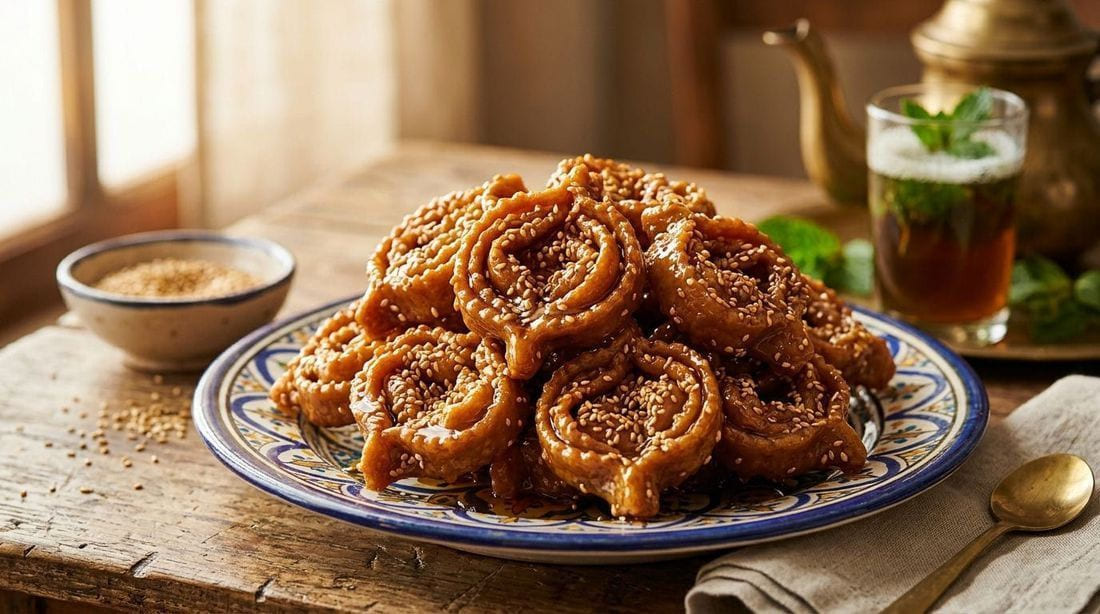
Crunchy, honey-glazed Moroccan flower cookies — fried golden, spiced with anise and cinnamon, and drenched in orange-blossom honey. The iconic Ramadan treat, shaped by hand.
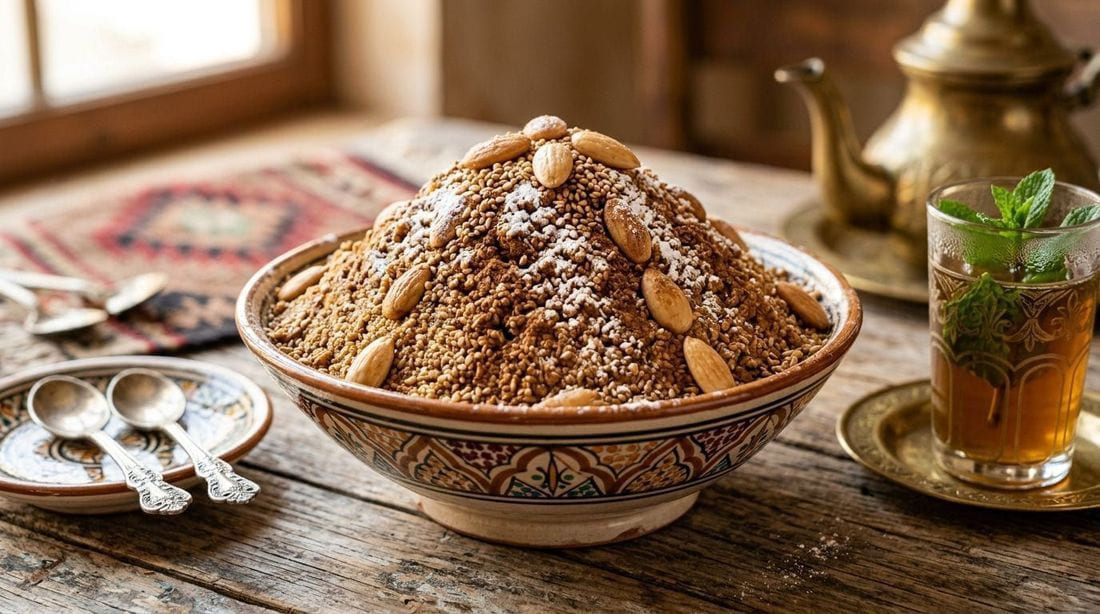
No-bake Moroccan sellou — roasted sesame, almonds, and flour bound with honey and butter into crumbly, fragrant ginger-spiced balls. A favorite Ramadan and post-holiday treat that keeps for weeks and needs no oven.
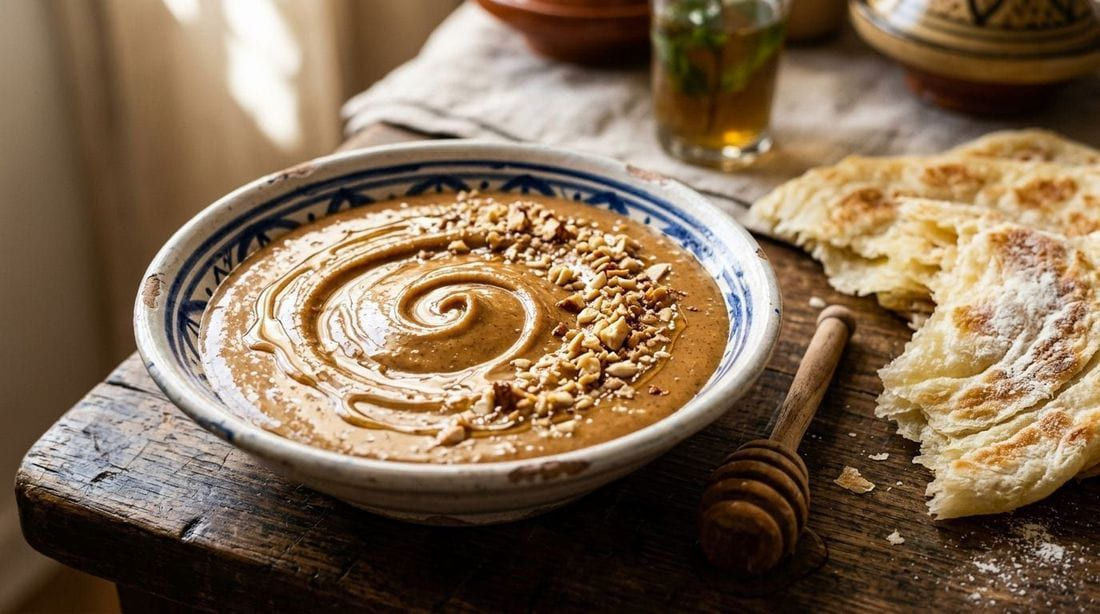
A silky no-cook Moroccan spread: roasted almonds blitzed with honey and argan oil into a glossy, perfectly balanced sweet-nutty cream. Spread it on msemen, pancakes, or good bread for a breakfast that feels like a gift.
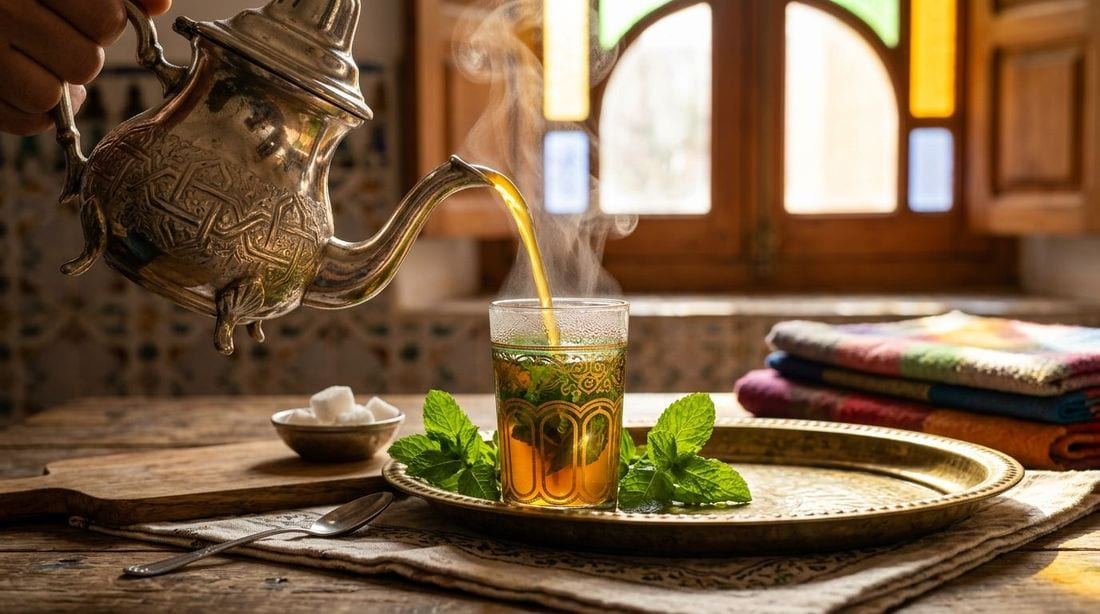
The legendary Moroccan mint tea — gunpowder green tea, fresh spearmint, and sugar poured from a height until it foams. The welcome drink of Morocco, and the only tea ceremony worth knowing.
New to Moroccan cooking? Start with the 5-Ingredient Moroccan Tagine — it needs one pot and zero specialty equipment. From there, add Zaalouk as a side, Msemen for the bread basket, and Amlou for breakfast. That is a complete Moroccan table, and every one of those recipes lives in this cluster.