Ingredients
- 2 cups (about 1 lb) medium-grain couscous
- 1 1/2 lb lamb shoulder or leg, cut into 2-inch chunks
- 4 merguez sausages
- 4 tablespoons olive oil, divided
- 2 tablespoons butter, softened
- 1 large onion, grated or very finely diced
- 2 carrots, peeled and cut into 2-inch batons
- 2 turnips, peeled and quartered
- 2 zucchini, cut into 2-inch chunks
- 1/2 small pumpkin or butternut squash, peeled and cut into large chunks
- 1/4 small green or white cabbage, cut into wedges
- 2 ripe tomatoes, grated (or 1 can crushed tomatoes)
- 1 can (15 oz) chickpeas, drained and rinsed
- 1 teaspoon ground turmeric
- 1 teaspoon ground ginger
- 1/2 teaspoon ground cinnamon
- 1/4 teaspoon saffron threads, crushed (optional)
- 1 teaspoon salt, plus more to taste
- 6 cups water or beef/chicken broth
- Harissa and extra broth, for serving
Instructions
Brown the lamb: heat 2 tablespoons of olive oil in a large pot (or the bottom of a couscoussier) over medium-high heat. Sear the lamb chunks in a single layer until deeply browned on all sides, 8–10 minutes. Remove and set aside.
Start the broth: reduce the heat to medium and add the remaining 2 tablespoons of olive oil. Add the grated onion and cook 5–6 minutes until soft, scraping up the browned bits. Stir in the turmeric, ginger, cinnamon, saffron (if using), and salt, and cook 1 minute until fragrant.
Add the grated tomatoes and cook 3–4 minutes, then return the lamb to the pot and pour in the water or broth. Bring to a boil, cover, and simmer gently for 30 minutes, until the lamb is nearly tender.
Add the carrots and turnips — they take longest. Simmer 10 minutes, then add the pumpkin and cabbage wedges. Simmer 10 minutes more, then add the zucchini and chickpeas. Cook 10 minutes until every vegetable is tender but still holding its shape. Taste the broth and adjust salt.
Meanwhile, prepare the couscous: in a wide bowl, drizzle it with 1/4 cup warm water and 1 tablespoon olive oil. Rub it between your fingers to break up any lumps, then let it sit 10 minutes.
Steam the couscous: line a steamer basket or colander with a damp kitchen towel (or line the holes with parchment). Set it over the simmering broth — it must not touch the liquid — and steam, covered, for 20 minutes.
Tip the couscous into the bowl, break up clumps with a fork, and rub in the softened butter. Return it to the steamer for a second 20-minute steam. The grains should be light, separate, and fluffy.
Grill the merguez: while the couscous finishes, sear the merguez in a hot skillet or on the grill for 6–8 minutes, turning, until browned and cooked through. Slice into thick rounds.
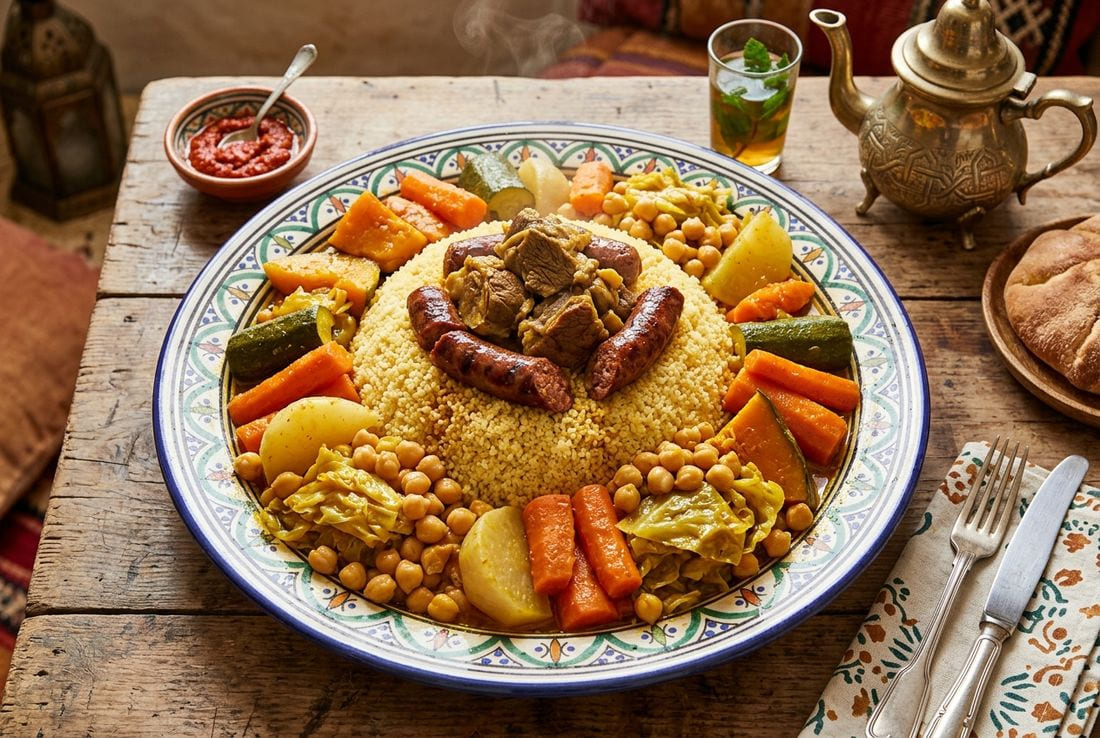
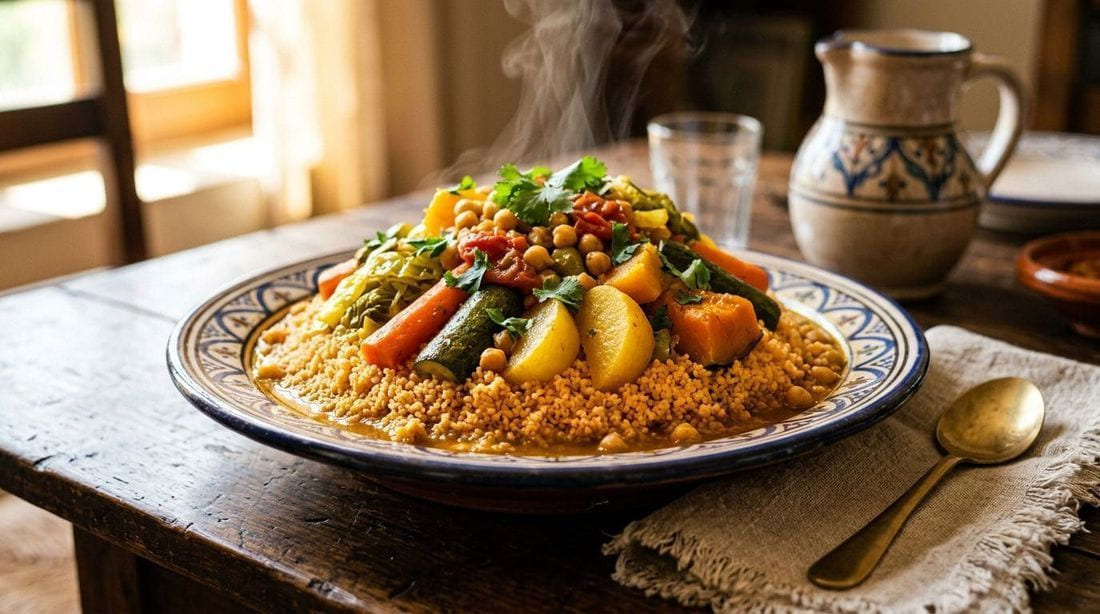
Assemble: mound the couscous in a deep platter, hollowing the center slightly. Arrange the vegetables in separate piles for color, scatter the chickpeas and lamb over the top, crown with the sliced merguez, and ladle 1–1 1/2 cups of hot broth over everything.
Serve immediately with harissa and the remaining broth on the side — the Moroccan way is to add both to your own portion. Keep the extra broth warm; the couscous will drink it up.
Tips for Success
- The two-step steam is the secret to fluffy couscous — the rest between steamings lets the grains absorb evenly. Skip it and you get sticky clumps.
- Stagger the vegetables by cooking time and never stir the pot once they are in; ladle broth over them instead. Stirring turns the whole dish to mush.
- Merguez browns fast and can burst — sear over medium-high heat and turn gently. If you cannot find merguez, a spicy lamb or beef sausage is a fine stand-in.
- The broth is the soul of the dish. If it tastes flat, it needs more salt or a longer simmer; the classic finishing touch is a spoonful of smen (aged butter) or extra butter whisked in at the end.
Cook's Notes: what to watch for
- The pitfall: Merguez bursting in the pan. Over high or crowded heat the casings split and flood the skillet with rendered fat; sear them over medium-high with gentle turns, or slice into rounds after grilling whole. The couscous clumping without the two-step steam is the other common failure.
- The step that matters most: The two-step steam of the couscous over the simmering broth — rub with butter between rounds, never let the basket touch the liquid. This is what separates the light, separate grains this feast is judged on from a dense, sticky mound.
- The quirk: Never stir the vegetable pot once the staggered additions go in — ladle broth over the top instead, or the squash and cabbage break into the broth. And the couscous drinks the ladled broth fast at the table; keep extra warm on the side.
Perfect pairings
These recipes belong on the same table — cook them together for a full spread, or swap in a variation next time.
Frequently Asked Questions
What is the difference between couscous royal and regular couscous?
Couscous Royal is the classic meat version of the Friday couscous — tender lamb and merguez sausages piled over the steamed couscous alongside the seven braised vegetables, all in the same golden broth. Regular (vegetarian) couscous is the identical ceremony without the meat.
Do I need a couscoussier?
No. A large pot with a steamer basket or a metal colander that fits snugly on top works perfectly. Line it with a damp kitchen towel or parchment to keep the grains from falling through, and seal the gap between pot and steamer with a towel so no steam escapes.
Can I use a different cut of lamb?
Yes — lamb shoulder or leg are ideal because they stay juicy through the long simmer. You can also use beef chuck in the same amount: brown it the same way and simmer until fork-tender, about 45 minutes, before adding the vegetables.
Can I make this ahead?
The broth, lamb, and vegetables keep for 3 days in the fridge and freeze beautifully for 3 months. The couscous is best fresh, but leftovers steam back to life in a covered pan with a splash of broth over low heat.
Why is my couscous sticky or clumpy instead of fluffy?
The two-step steam was likely skipped, or the grains were not rubbed with oil and water before steaming. Drizzle the dry couscous with warm water and oil, rub it between your fingers to break up lumps, rest it 10 minutes, then steam twice with a fork-fluff and butter rub in between. The couscous must also sit above — never in — the simmering broth.
Can I use chicken instead of lamb?
Yes. Use bone-in chicken pieces (about 1 1/2 lb) and simmer them in the broth for 25–30 minutes before adding the vegetables, then pile them on top with the merguez. The broth becomes lighter but still rich. Pull the chicken out when it is cooked so it does not fall apart in the pot.
Can I make the merguez part ahead of time?
Absolutely. Grill or pan-sear the merguez up to 2 days ahead and keep it in the fridge; slice and reheat it in the hot broth for a few minutes right before assembling. The broth, lamb, and vegetables also keep 3 days in the fridge and freeze for up to 3 months.
Affiliate disclosure: this page contains affiliate links. If you buy equipment through them, Cuisinety earns a small commission at no extra cost to you — it keeps the site free. Picks follow the same research-backed standards as our gear guides. Read ourfull affiliate disclosure.
Browse Moroccan Recipes →
Love this recipe? Pin it!
Save it to your Pinterest board so you can find it later.
Pin this Recipe Cuisine