Ingredients
- 1 1/2 cups (240 g) fine semolina
- 1/2 cup (65 g) all-purpose flour
- 1 tablespoon sugar
- 1 teaspoon instant yeast
- 1 teaspoon baking powder
- 1/2 teaspoon salt
- 2 1/4 cups (530 ml) lukewarm water
- Neutral oil or butter, for the pan
- For serving: melted butter and honey (or amlou), hot mint tea
Instructions
Combine the semolina, flour, sugar, yeast, baking powder, and salt in a blender. Add the lukewarm water and blend on high for 1–2 minutes until the batter is completely smooth, glossy, and about the consistency of thin crepe batter — no graininess left. If you do not have a blender, whisk vigorously by hand for 3–4 minutes.
Pour the batter into a bowl or the blender jar, cover, and let it rest at room temperature for 30 minutes. The batter should become bubbly and slightly foamy on top — that aeration is what creates the holes.
Give the rested batter a gentle stir (it will have separated slightly). Heat a small nonstick skillet or crepe pan over medium heat — about 6–7 inches wide is ideal. Brush the pan very lightly with oil or butter.
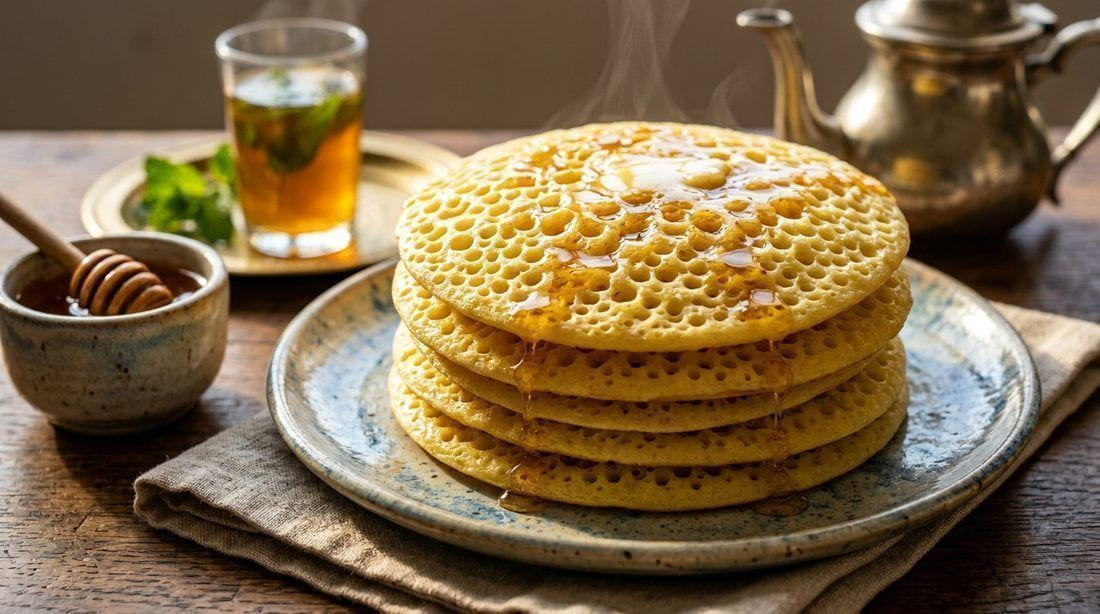
Ladle in about 1/4 cup of batter and tilt the pan to spread it into a thin round. Cook over medium heat WITHOUT flipping. Within a minute, the surface will bubble and fill with holes; when the top looks dry, set, and covered with open craters — no wet batter left — the baghrir is done, about 2–3 minutes total.
Slide the baghrir onto a plate, holey side up, and repeat with the remaining batter, brushing the pan lightly between batches. Stack the pancakes as they finish — they stay soft and pliable.
Serve warm, drizzled with melted butter and honey (or spread with amlou) so the craters soak it all up. Baghrir are best fresh, straight from the pan, with mint tea.
Tips for Success
- Never flip baghrir. The holes form and set on the uncooked top as steam escapes — flipping traps the steam and you lose the signature craters. If the top still looks wet after a few minutes, your heat is too low; if the bottom burns before the top sets, it is too high. Medium heat is the sweet spot.
- The rest is not optional. The 30-minute rest lets the yeast and baking powder aerate the batter, and the bubbles are literally what become the holes. A short rest gives you dense, hole-less pancakes.
- Keep the pan barely greased. Excess oil makes the batter spread unevenly and can steam the holes shut. A light brush between batches is all you need, and the first pancake is often the test pancake — expect it to be a little imperfect.
Cook's Notes: what to watch for
- The pitfall: Flipping. The holes form and set on the uncooked top as steam escapes; turned over, the steam is trapped and you get a dense, hole-less pancake. Cook one side only, until the surface is dry and covered in open craters.
- The step that matters most: The 30-minute rest after blending. The yeast and baking powder aerate the batter in that window, and those bubbles are literally what become the thousand holes — a rushed batter produces smooth, bready crêpes instead.
- The quirk: The batter separates after resting and needs a gentle stir — that is normal, not spoilage. Expect the first pancake to be the flawed test pancake while the pan finds its temperature, and keep the pan only barely greased or the holes steam shut.
Perfect pairings
Baghrir are the breakfast that begs for the full Moroccan spread — honey, amlou, mint tea, and bread-basket siblings from the same griddle.
Frequently Asked Questions
Why did my baghrir come out without holes?
Almost always one of three things: the batter was not rested long enough, it was blended too thick, or the heat was wrong. Rest the batter a full 30 minutes until it is visibly bubbly, keep it thin — about crepe-batter consistency — and cook over steady medium heat. If the top sets without holes, your pan is too hot, which seals the surface before the steam can pop through.
Why are my baghrir sticking or tearing when I remove them?
Baghrir are delicate because they are cooked on one side only. Use a good nonstick pan and just a whisper of oil, cook until the top is fully dry and set, and loosen the edges with a thin spatula before sliding — or tilt them directly onto the plate. If they tear, they were likely lifted too early or the pan was too greasy.
Can I make the batter ahead of time?
Yes — the batter keeps in the fridge for up to 24 hours and actually develops a nicer tang, like sourdough. Give it a stir, let it sit at room temperature for 15 minutes to reactivate the bubbles, and thin with a splash of water if it thickened overnight. Cooked baghrir reheat well in a dry skillet for 30 seconds per side (holey side up) or briefly in a steamer.
Why are my baghrir gummy or dense instead of full of holes?
The classic culprit is a batter that is too thick or not rested enough. Baghrir batter must be thin — pourable like crepe batter, so it spreads to a lacy round in the pan — and it needs the full 30-minute rest to aerate. Blend the semolina and flour until completely smooth, then rest until the surface looks bubbly and foamy. If the top of the pancake sets into a smooth skin instead of a honeycomb, your pan is too hot: high heat seals the surface before the trapped steam can pop through to form holes. Aim for a steady medium heat and give the batter a gentle stir before each ladle.
Can I make baghrir with just semolina, no flour?
Yes — the flour is optional and the pancake becomes even more distinctly Moroccan. The classic street version uses semolina only; the flour just lightens the crumb slightly and makes the batter a touch more forgiving. If you go all-semolina, keep the batter on the thinner side and expect a slightly more porous, chewier pancake — which is the texture purists love. Fine semolina is essential either way; coarse semolina will not blend into the smooth batter baghrir need.
How do I store and reheat leftover baghrir?
Baghrir are at their best within an hour of the pan, but they keep well: stack cooled pancakes with parchment between them, wrap tightly, and refrigerate for up to 3 days or freeze for up to 2 months. Reheat in a dry, hot skillet for 30–40 seconds per side, or steam them briefly (a bamboo steamer or a colander over simmering water for about a minute) — steaming brings back the soft, spongy texture best. To reheat the freezer stack, thaw overnight in the fridge first. Re-drizzle with butter and honey after reheating, since the craters drink it up.
Affiliate disclosure: this page contains affiliate links. If you buy equipment through them, Cuisinety earns a small commission at no extra cost to you — it keeps the site free. Picks follow the same research-backed standards as our gear guides. Read ourfull affiliate disclosure.
Browse Moroccan Recipes →
Love this recipe? Pin it!
Save it to your Pinterest board so you can find it later.
Pin this Recipe Cuisine