Ingredients
- 2 lb bone-in chicken (thighs and drumsticks), skin removed
- 1/4 cup neutral oil or ghee
- 4 ripe tomatoes, grated (or 1 can crushed tomatoes)
- 2 tablespoons ginger-garlic paste
- 2–3 green chilies, slit lengthwise, plus more for garnish
- 1 1/2 teaspoons salt, divided
- 1 teaspoon red chili powder
- 1/2 teaspoon ground turmeric
- 1 teaspoon ground coriander
- 1/2 teaspoon cracked black pepper
- 1 tablespoon fresh ginger, cut into thin matchsticks, for garnish
- 1/4 cup chopped fresh coriander, for garnish
- 1 lemon, cut into wedges, for serving
Instructions
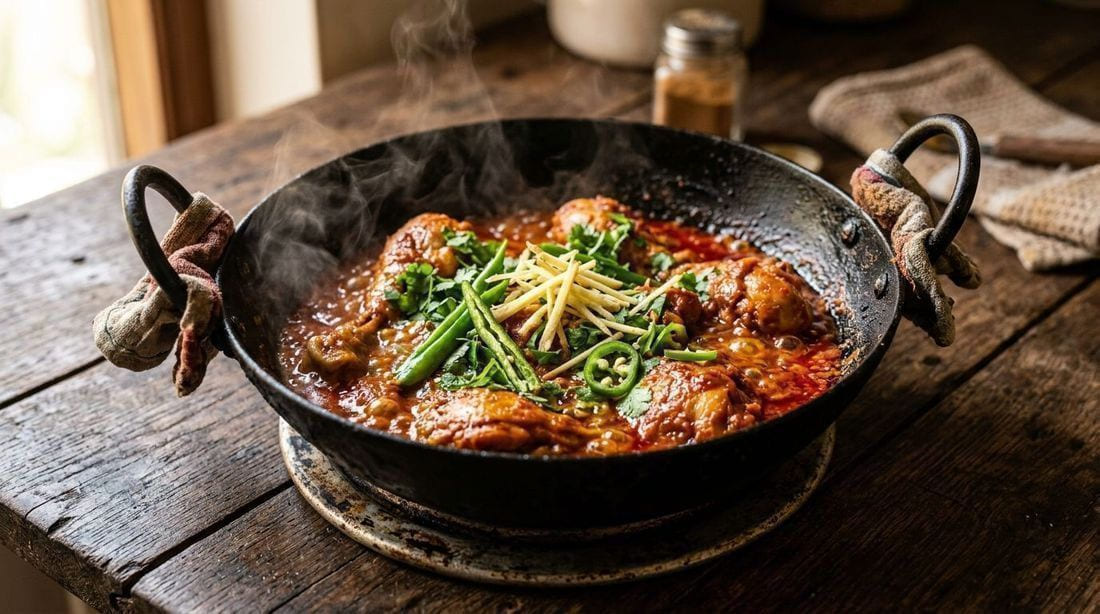
Heat the oil or ghee in a karahi, wok, or wide skillet over high heat until it shimmers. Add the chicken pieces in a single layer and sear, turning occasionally, until they are golden on all sides, 8–10 minutes. Do not crowd the pan - work in two batches if needed.
Add the ginger-garlic paste and slit green chilies, stirring for 1 minute until fragrant.
Add the grated tomatoes, 1 teaspoon salt, red chili powder, turmeric, ground coriander, and black pepper. Cook over high heat, stirring often, until the tomatoes reduce into a thick, glossy masala and the oil separates to the edges, 10–15 minutes. The chicken should be cooked through but still juicy.
Taste and add the remaining salt if needed. Finish by stirring in half the fresh coriander, then scatter over the ginger matchsticks, remaining coriander, and extra green chilies.
Serve straight from the wok with naan, roti, or steamed rice and lemon wedges on the side.
Tips for Success
- Resist the urge to add water. The tomatoes and chicken release enough liquid; a watery karahi is a common mistake. Cook until the oil visibly separates from the masala.
- The final ginger and green chili garnish is not optional - eating it raw against the hot masala is the karahi signature.
- Bone-in chicken stays juicier under the high heat. If you use boneless thighs, the total cook drops to about 15 minutes after the sear.
Perfect pairings
Karahi is a main-course star — serve it with fresh bread and something cooling.
Frequently Asked Questions
Why is my karahi watery?
High heat and no added water are the rules. If your tomatoes released a lot of liquid, cook the masala longer until the oil separates - that is the visual cue it is ready. Also make sure your pan is properly hot before the chicken goes in, so it sears instead of steaming.
Can I use boneless chicken?
Yes. Boneless thigh is best - about 1 1/2 lb, cut into large chunks, cooked 10–12 minutes after the sear. Boneless breast works but dries out; pull it off the heat as soon as it is cooked through.
What is the difference between karahi and a regular curry?
Karahi is cooked fast and dry - the tomatoes are crushed, not pureed, no cream, no yogurt, no long simmer. It relies on high heat and fresh ginger and green chilies to stay bright and sharp. Most curries are slower, creamier, and smoother in comparison.
How is karahi different from a normal curry?
Karahi is cooked fast and dry at high heat — the tomatoes are crushed, not pureed; there is no cream or yogurt in the base; and it finishes with raw fresh ginger and green chilies. Regular curries are slower, creamier, and smoother. Karahi stays bright, sharp, and a little spicy.
Why is my karahi watery?
Either the pan was not hot enough when the chicken went in, or you added water. High heat and no added liquid are the rules — the tomatoes and chicken release enough moisture. Cook until the oil visibly separates from the masala, which is the sign it is done.
Where does karahi get its name?
From the karahi — a deep, round-bottomed wok used across Pakistan and northern India. The dish is cooked in the same vessel it is named after and often served straight from it.
Affiliate disclosure: this page contains affiliate links. If you buy equipment through them, Cuisinety earns a small commission at no extra cost to you — it keeps the site free. Picks follow the same research-backed standards as our gear guides. Read ourfull affiliate disclosure.
Browse All Recipes →
Love this recipe? Pin it!
Save it to your Pinterest board so you can find it later.
Pin this Recipe Cuisine