Ingredients
- 3 lb beef shank, on the bone, with marrow if possible
- 2 tablespoons ghee or neutral oil
- 1 large yellow onion, thinly sliced
- 2 tablespoons ginger-garlic paste
- 6 cups water (or enough to cover the meat)
- 2 tablespoons wheat flour or cornflour, for the (optional) slurry
- 1/4 cup plain yogurt, whisked smooth (optional, for tang)
- For the nihari masala:
- 2 tablespoons fennel seeds, ground
- 1 tablespoon ginger powder (sonth)
- 1 tablespoon coriander seeds, ground
- 1 1/2 teaspoons red chili powder
- 1 teaspoon turmeric
- 1/2 teaspoon nutmeg, freshly grated
- 1/2 teaspoon ground long pepper or black pepper
- 4–5 green cardamom pods, crushed
- 2 whole cloves
- 1 small cinnamon stick
- 1 teaspoon salt, plus more to taste
- For garnish: fresh ginger matchsticks, sliced green chilies, fresh coriander, lemon wedges
Instructions
Grind all the nihari masala spices together (or use 3 tablespoons of a ready nihari masala blend). Toast the ground spices gently in a dry pan for 30–60 seconds until fragrant, then set aside.
In a large heavy pot, heat the ghee over medium-high heat. Fry the sliced onion until deep golden, 8–10 minutes, then add the ginger-garlic paste for 1 minute.
Add the beef shank pieces and sear on all sides until browned, 5–7 minutes. Stir in the nihari masala and 1 teaspoon salt until the meat is coated and the spice smells toasted, about 1 minute.
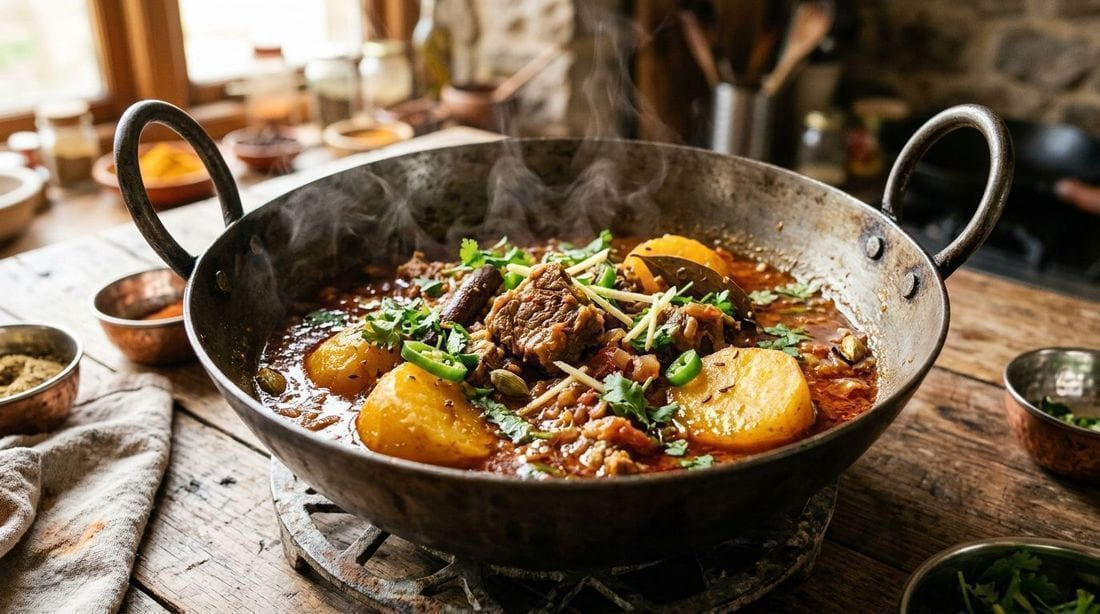
Pour in the water to cover the meat by an inch. Bring to a boil, then reduce to the lowest simmer. Cover and cook for 4 hours, stirring every 30–45 minutes and topping up with water as needed - the classic cooks it overnight on the lowest heat for 10–12 hours, and longer is genuinely better here.
When the meat is fall-apart tender and the gravy is dark and silky (usually 4 hours at a low simmer), check the consistency: it should coat a spoon but not be gloppy. If it is thin, whisk 2 tablespoons of flour with 1/4 cup of the hot gravy into a paste, stir it in, and simmer 10 more minutes. For tang, stir in the yogurt and simmer 5 minutes more.
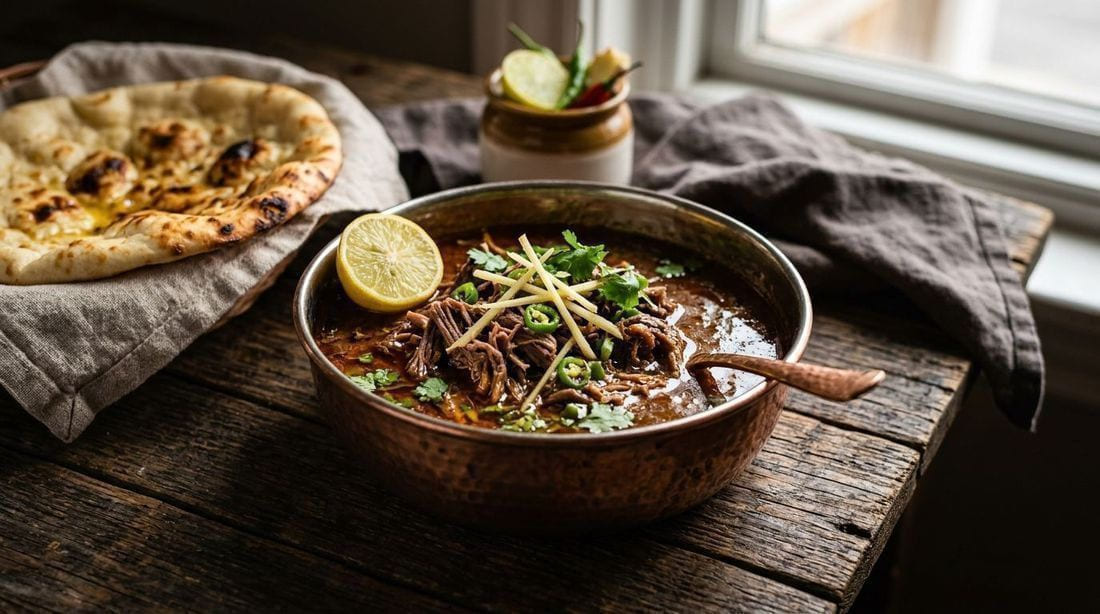
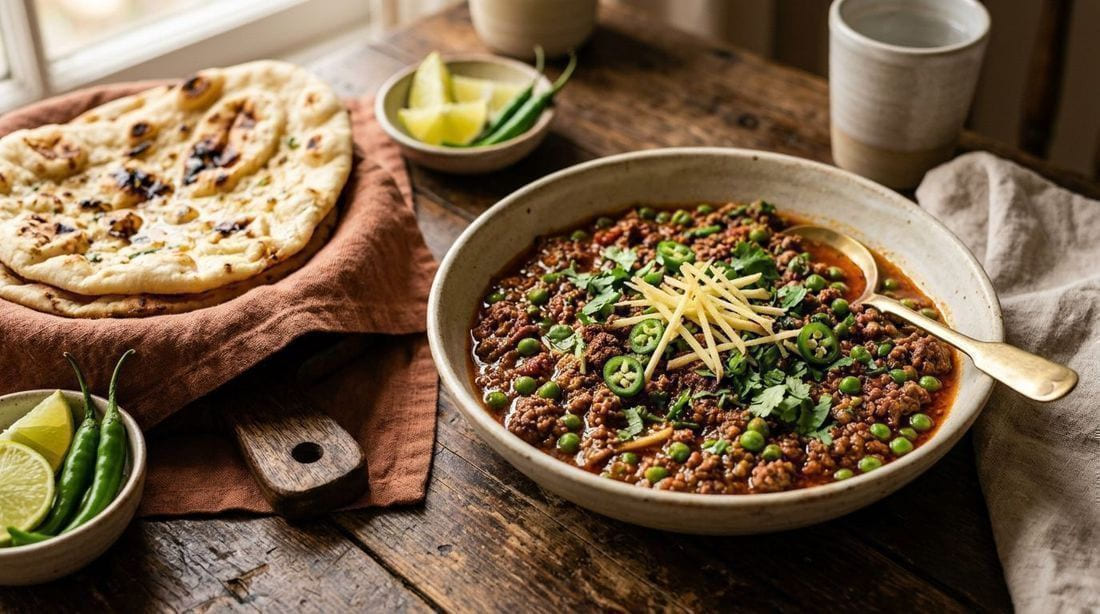
Season to taste - nihari should be well salted. Serve piping hot in deep bowls, topped with ginger matchsticks, green chilies, and coriander, with lemon wedges and naan or kulcha for soaking up every drop.
Tips for Success
- Marrow time: nihari gets its silky body from the bone marrow, not from oil or cream. Ask your butcher to cut the shanks into 2-inch rounds so the marrow stays in and melts into the gravy.
- The overnight route is best if you can manage it: 10–12 hours on the lowest heat builds a deeper, more gelatinous gravy than a 4-hour simmer. Refrigerated overnight, nihari actually tastes better the next day.
- Do not skip the lemon and fresh ginger at the table - the acidity and heat cut through the rich gravy and are part of the dish, not optional garnish.
Perfect pairings
Nihari is a slow-morning bowl — serve it with fresh bread and cooling sides.
Frequently Asked Questions
What cut of beef should I use for nihari?
Shank is the classic - it has the connective tissue and marrow that melt into the gravy. Oxtail and brisket also work well. Avoid lean cuts like sirloin; they will dry out over the long simmer.
My nihari gravy is thin. How do I thicken it?
Two options: simmer it down longer uncovered, or make a slurry of 2 tablespoons of flour whisked with hot gravy and stir it in, simmering 10 minutes. Traditional nihari uses a wheat-flour slurry; gluten-free cooks can use cornflour or rice flour.
Can I make nihari in a slow cooker or pressure cooker?
Yes. Slow cooker: 8–10 hours on low with everything as written. Instant Pot: 60–75 minutes on high pressure with a natural release, then simmer the gravy down on sauté until silky. Both give excellent results.
Is nihari really eaten for breakfast?
Traditionally yes - it was created as a pre-dawn meal and is still served at breakfast houses across Pakistan. But it is absolutely a dinner dish today; most home cooks serve it for any meal that deserves a 6-hour stew.
What cut of beef works best for nihari?
Beef shank is the classic — its connective tissue and marrow melt into the silky gravy. Oxtail and brisket also work well. Avoid lean cuts like sirloin, which dry out over the long simmer.
Why is my nihari gravy thin?
Let it reduce longer uncovered, or stir in a slurry of 2 tablespoons of wheat flour whisked with hot gravy and simmer 10 minutes. Traditional nihari uses the wheat-flour slurry; gluten-free cooks can use cornflour or rice flour.
Can I make nihari in a pressure cooker?
Yes. Sauté the aromatics and sear the beef, then pressure-cook with 6 cups of liquid for 60–75 minutes at high pressure. Natural release, then simmer the gravy down on sauté until dark and silky. The flavor is very close to the overnight version.
Affiliate disclosure: this page contains affiliate links. If you buy equipment through them, Cuisinety earns a small commission at no extra cost to you — it keeps the site free. Picks follow the same research-backed standards as our gear guides. Read ourfull affiliate disclosure.
Browse All Recipes →
Love this recipe? Pin it!
Save it to your Pinterest board so you can find it later.
Pin this Recipe Cuisine