Ingredients
- 1 1/2 lb beef (chuck or shank), cut into 2-inch chunks
- 1/2 cup cracked wheat (dalia)
- 1/2 cup whole wheat or barley (optional)
- 1/2 cup chana dal (split chickpeas)
- 1/2 cup masoor dal (red lentils)
- 1/2 cup urad dal (black gram)
- 1/2 cup moong dal (split mung)
- 1 large yellow onion, thinly sliced
- 1/4 cup ghee or neutral oil, plus more for serving
- 2 tablespoons ginger-garlic paste
- 2–3 green chilies, slit
- 1 1/2 teaspoons salt, or to taste
- 1 teaspoon red chili powder
- 1/2 teaspoon turmeric
- 1 tablespoon ground coriander
- 1 teaspoon garam masala
- 1/2 teaspoon ground cumin
- 8–10 cups water or low-sodium beef broth
- For garnish: fried onions, fresh ginger matchsticks, green chilies, fresh coriander, lemon wedges, ghee
Instructions
The night before (or 6 hours ahead), soak the wheat and barley together in plenty of water. Rinse all the dals and leave them to soak alongside if time allows - it shortens the cooking by about an hour.
Heat the ghee in a very large heavy pot. Fry the onion until deep golden, 8–10 minutes, then add the ginger-garlic paste and green chilies for 1 minute.
Add the beef and sear on all sides until browned, 5–7 minutes. Stir in the red chili, turmeric, coriander, cumin, and 1 teaspoon salt for 1 minute until fragrant.
Add the drained wheat, barley, and all the dals. Pour in 8 cups of water. Bring to a boil, then reduce to a low simmer and cover. Cook for 3–4 hours, stirring every 20–30 minutes and adding hot water as needed to keep it soupy - the mixture should never dry out.
When the beef shreds easily and the grains are fully soft, start smashing: use a potato masher or the back of a ladle directly in the pot to break down the mixture into a thick, smooth porridge. This is the signature haleem texture, so be thorough.
Simmer another 20–30 minutes, stirring often, until it reaches a thick, spoonable consistency that slightly holds its shape. Add the garam masala and salt to taste.
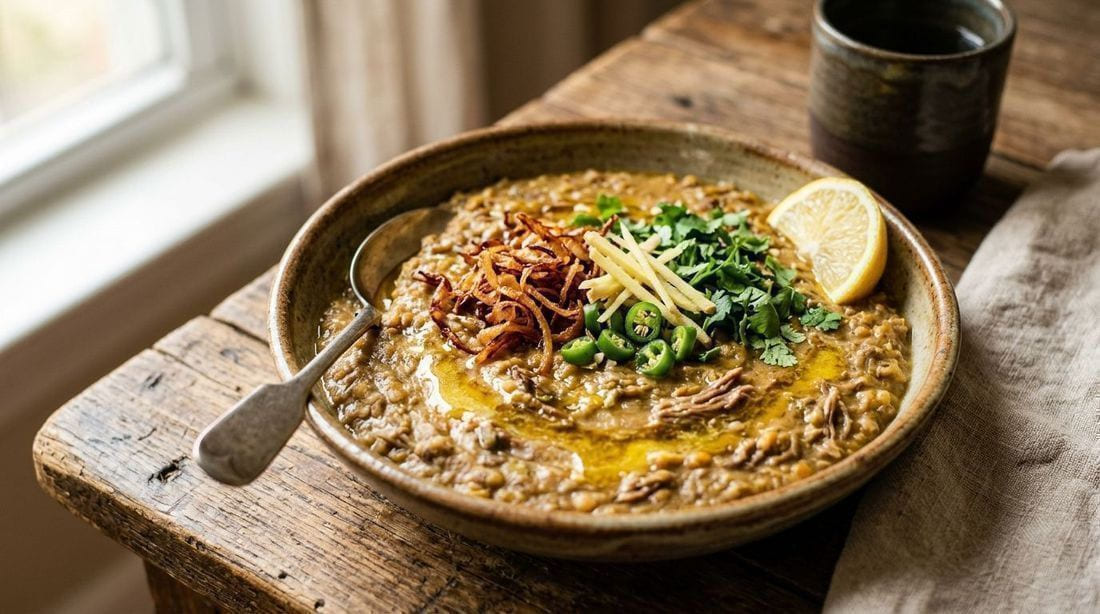
Serve in deep bowls with a generous tangle of fried onions, ginger matchsticks, green chilies, coriander, a squeeze of lemon, and a drizzle of warm ghee.
Tips for Success
- Stirring is the price of admission. Haleem scorches easily once it starts thickening - keep the heat low and stir the bottom of the pot in a figure-eight motion every 20 minutes or so.
- The texture should land between soup and porridge - thick enough to hold a spoon upright but loose enough to soak into bread. Adjust with hot water or by simmering down.
- Fried onions are not garnish here, they are texture: use at least a full onion worth, and let them get properly dark and crisp.
Perfect pairings
Haleem is rich and spooning-ready — balance it with freshness and bread.
Frequently Asked Questions
Can I make haleem in a pressure cooker?
Yes - and it is a weekday savior. Sauté the onion, meat, and spices, then pressure-cook everything with 6 cups of water for 40–45 minutes at high pressure. Natural release, then smash and simmer down to the right thickness. The flavor is 95% of the stovetop version in a fraction of the time.
Why is my haleem bitter or scorched?
Scorching on the bottom of the pot is the usual culprit. Keep the heat very low once the grains soften and stir the bottom regularly. If the burnt layer is just at the bottom, stop stirring the burnt bits in - gently lift the haleem off it and finish in a clean pot.
Which lentils do I actually need?
Chana dal alone works in a pinch, but the classic blend of chana, masoor, urad, and moong gives haleem its layered richness and smooth texture. Any dal mix of about 2 cups total will make a good haleem - use what you have.
Can I freeze haleem?
Beautifully. It freezes for up to 3 months and reheats better than most things - add a splash of water or broth over low heat. In fact, the texture often improves after a night in the fridge as the starches fully hydrate.
Why is my haleem burning on the bottom?
Once the grains soften, haleem scorches easily. Keep the heat very low and stir the bottom of the pot in a figure-eight motion every 20 minutes or so. If it has stuck, stop stirring the burnt layer in — lift the haleem off it and finish in a clean pot.
Can I make haleem with a pressure cooker?
Yes — it is a weekday savior. Sauté the onion, meat, and spices, then pressure-cook everything with 6 cups of water for 40–45 minutes at high pressure. Natural release, then smash and simmer down to the right thickness. You get about 95% of the stovetop flavor in a fraction of the time.
Why is my haleem too thin or too thick?
It should land between soup and porridge — thick enough to hold a spoon upright but loose enough to soak into bread. Thin haleem: simmer down uncovered, smashing the grains to release starch. Too thick: stir in hot water or broth a splash at a time.
Can I freeze haleem?
Beautifully. It freezes for up to 3 months and reheats better than most dishes — add a splash of water or broth over low heat. The texture often improves after a night in the fridge as the starches hydrate.
Affiliate disclosure: this page contains affiliate links. If you buy equipment through them, Cuisinety earns a small commission at no extra cost to you — it keeps the site free. Picks follow the same research-backed standards as our gear guides. Read ourfull affiliate disclosure.
Browse All Recipes →
Love this recipe? Pin it!
Save it to your Pinterest board so you can find it later.
Pin this Recipe Cuisine