Ingredients
- For the dough:
- 2 cups all-purpose flour
- 1/2 teaspoon salt
- 1/2 teaspoon ajwain (carom) seeds or cumin seeds (optional)
- 4 tablespoons ghee or neutral oil
- 1/2 cup cold water (about), as needed
- For the filling:
- 4 medium potatoes (about 1 1/2 lb), boiled and roughly mashed
- 1/2 cup frozen green peas, cooked
- 2 tablespoons neutral oil or ghee
- 1 teaspoon cumin seeds
- 1 teaspoon fennel seeds
- 1/2 teaspoon mustard seeds (optional)
- 1 green chili, finely chopped (to taste)
- 1 teaspoon grated fresh ginger
- 1/2 teaspoon turmeric
- 1 teaspoon ground coriander
- 1/2 teaspoon garam masala
- 1/2 teaspoon amchur (dried mango powder) or 1 teaspoon lemon juice
- 1 teaspoon salt, plus more to taste
- 2 tablespoons chopped fresh coriander
- Oil, for deep frying
Instructions
Make the dough: mix the flour, salt, and ajwain. Rub in the ghee until the mixture looks like breadcrumbs. Add cold water a little at a time and knead a stiff, smooth dough. Cover and rest at least 30 minutes - a rested, pliable dough is essential for thin, crisp samosas.
Make the filling: heat the oil over medium heat. Bloom the cumin, fennel, and mustard seeds for 30 seconds, then add the green chili and ginger for another 30 seconds.
Add the turmeric, coriander, garam masala, amchur, and salt. Stir for 30 seconds, then add the mashed potatoes and peas. Cook 2–3 minutes, stirring, until well combined and the spices are evenly distributed. Fold in the fresh coriander and cool completely - a cool filling is far easier to wrap.
Divide the dough into 12 equal balls. Roll each into a thin circle, about 6 inches across, then cut in half to make two semi-circles.
Shape each samosa: take a semi-circle, wet the straight edge, bring the two straight edges together to form a cone, and seal. Fill the cone with the potato mixture, then press the open top edges together and crimp to seal into the triangle.
Fill a deep pot with 2 inches of oil and heat to 350°F (175°C). Fry 3–4 samosas at a time, without crowding, for 4–5 minutes, turning, until deep golden and crisp on all sides. Do not rush - a moderate oil temperature cooks the shell through while crisping it.
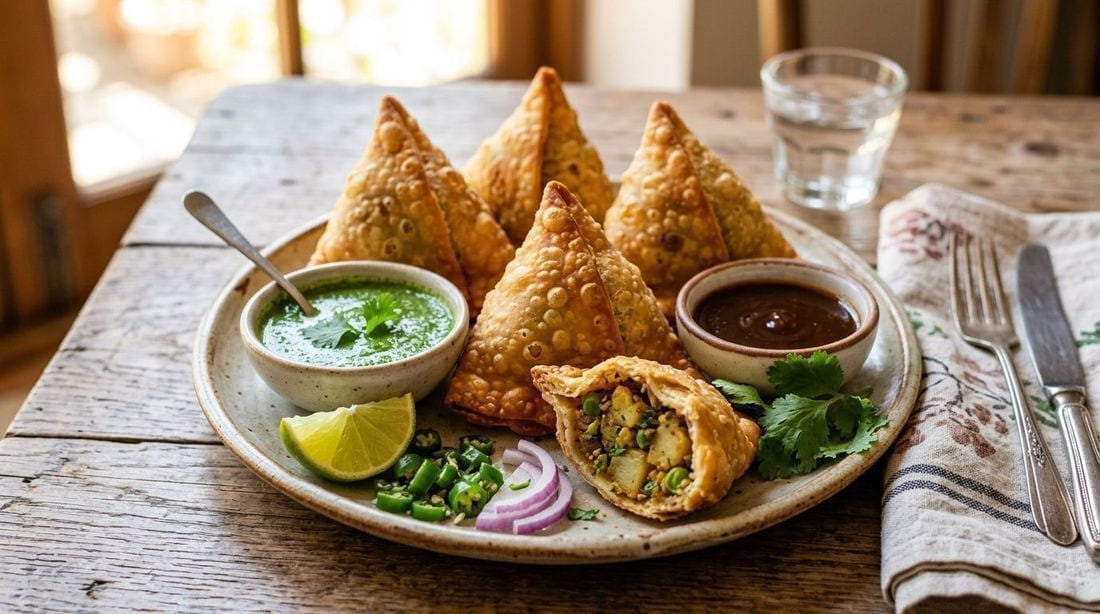
Drain on a wire rack. Serve hot with tamarind and mint chutneys.
Tips for Success
- The dough must be stiff and well-rested - a soft dough makes thick, doughy shells. If it is not pliable after resting, knead it a touch more.
- Cool the filling completely before filling the samosas. Hot filling makes the dough sticky and hard to work with.
- Freeze the shaped, unfried samosas in a single layer, then store in a bag for up to 3 months. Fry from frozen in 350°F oil - add a minute or two.
Frequently Asked Questions
Why are my samosas greasy?
The oil is too cool, or they were overcrowded. Fry at a steady 350°F in small batches. If the temperature drops, the pastry absorbs oil instead of crisping. Drain on a wire rack so steam escapes.
Why do my samosas burst or leak?
Usually the filling was too wet, too hot when wrapped, or the seams were not sealed. Cool and slightly dry the filling, and seal the edges firmly - use a little water on the seam to help it stick.
Can I bake or air-fry samosas instead of frying?
Yes. Brush with oil and bake at 400°F (200°C) for 20–25 minutes, flipping halfway, or air-fry at 375°F for 15–20 minutes. They will be less golden and crisp than fried but still delicious and much lighter.
Can I make a meat samosa variation?
Absolutely - keema samosas are popular. Use the spiced beef keema filling instead of potato, drained of excess fat, and follow the same dough and folding method.
Affiliate disclosure: this page contains affiliate links. If you buy equipment through them, Cuisinety earns a small commission at no extra cost to you — it keeps the site free. Picks follow the same research-backed standards as our gear guides. Read ourfull affiliate disclosure.
Browse All Recipes →
Love this recipe? Pin it!
Save it to your Pinterest board so you can find it later.
Pin this Recipe Cuisine