Ingredients
- 1 1/2 cups yellow moong dal or toor dal (split yellow lentils)
- 1 1/2 cups basmati rice, rinsed
- 6 cups water, for the daal
- 1 teaspoon turmeric
- 1 1/2 teaspoons salt, plus more to taste
- 1 tablespoon ginger-garlic paste
- 1 green chili, slit (optional)
- For the tarka (tempering):
- 3 tablespoons ghee or neutral oil
- 4 cloves garlic, sliced
- 1 teaspoon cumin seeds
- 1 teaspoon whole black mustard seeds (rai)
- 2 dried red chilies
- 1/2 teaspoon red chili powder
- Fresh coriander, for garnish
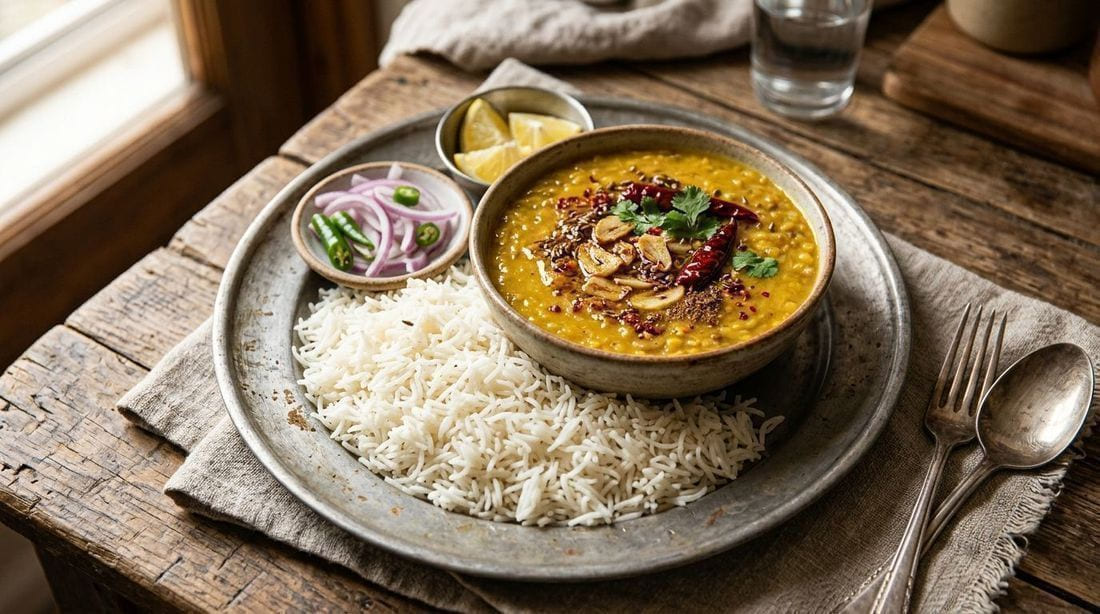
- 1 lemon, cut into wedges, for serving
- Sliced red onion and green chilies, for serving
Instructions
Rinse the dal in several changes of water until it runs clear. Rinse the rice and soak it in water for 20 minutes, then drain.
In a large pot, combine the dal, 6 cups of water, turmeric, and salt. Bring to a boil, then reduce to a gentle simmer. Cook for 35–45 minutes, stirring occasionally, until the lentils are completely soft and start to break down into a silky stew. Mash a little with the back of the spoon for a creamier texture. Add a splash of water if it gets too thick - daal should be pourable.
Stir in the ginger-garlic paste and green chili, and simmer for 5 more minutes. Season to taste - it should be well seasoned since it will be eaten with rice.
Meanwhile, cook the rice: bring 3 cups of water to a boil, add the drained rice, and simmer covered on low for 15 minutes. Let it rest off the heat for 5 minutes, then fluff.
Make the tarka: heat the ghee in a small pan over medium-high heat. Add the sliced garlic and fry until just golden (not burnt), then add the cumin and mustard seeds, which will splutter. Add the dried chilies and red chili powder, and remove from heat immediately to avoid burning the spices.
Pour the hot tarka over the daal and stir it in. Garnish with fresh coriander. Serve the daal poured over the rice, with lemon wedges, red onion slices, and green chilies on the side.
Tips for Success
- The tarka is the soul of this dish - do not skip it. Frying the whole spices in hot ghee blooms their flavor and perfumes the entire pot of lentils.
- Daal should be on the loose side when it is finished - it will thicken as it sits. Add water at the end if needed.
- Rinse the dal well; it cooks faster and is silkier with the excess starch and dust washed away.
Frequently Asked Questions
What is a tarka, and why does it matter?
A tarka (or tadka) is a quick tempering - whole spices, garlic, and chilies fried briefly in hot ghee or oil and poured over the cooked dal. It releases the spices essential oils into the fat, which then carries the flavor through the whole dish. It is what separates a flat bowl of lentils from a fragrant plate of daal chawal.
Can I use a different type of dal?
Absolutely. Toor dal (pigeon peas) is equally classic, as are masoor (red lentils) - which cook even faster, about 20 minutes. Chana dal gives a firmer, earthier result. Adjust the cooking time to your dal; the method stays the same.
Is daal chawal vegan?
It is naturally vegan if you use oil for the tarka instead of ghee, and skip any butter. Everything else - lentils, rice, spices, aromatics - is plant-based. It is a staple protein-rich vegan meal across South Asia.
Why is my daal watery or not creamy?
If it is watery, simmer it longer uncovered to reduce, or mash some of the lentils into the liquid to thicken. If it is not creamy, the dal was under-cooked - it needs the full cook time to break down and release its starches.
Affiliate disclosure: this page contains affiliate links. If you buy equipment through them, Cuisinety earns a small commission at no extra cost to you — it keeps the site free. Picks follow the same research-backed standards as our gear guides. Read ourfull affiliate disclosure.
Browse All Recipes →
Love this recipe? Pin it!
Save it to your Pinterest board so you can find it later.
Pin this Recipe Cuisine