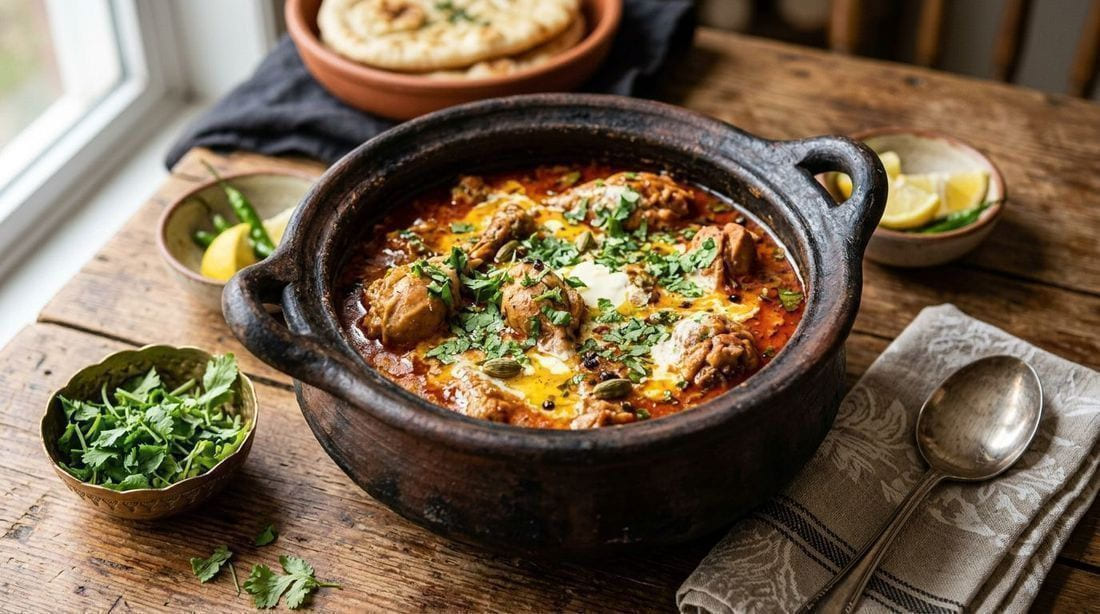
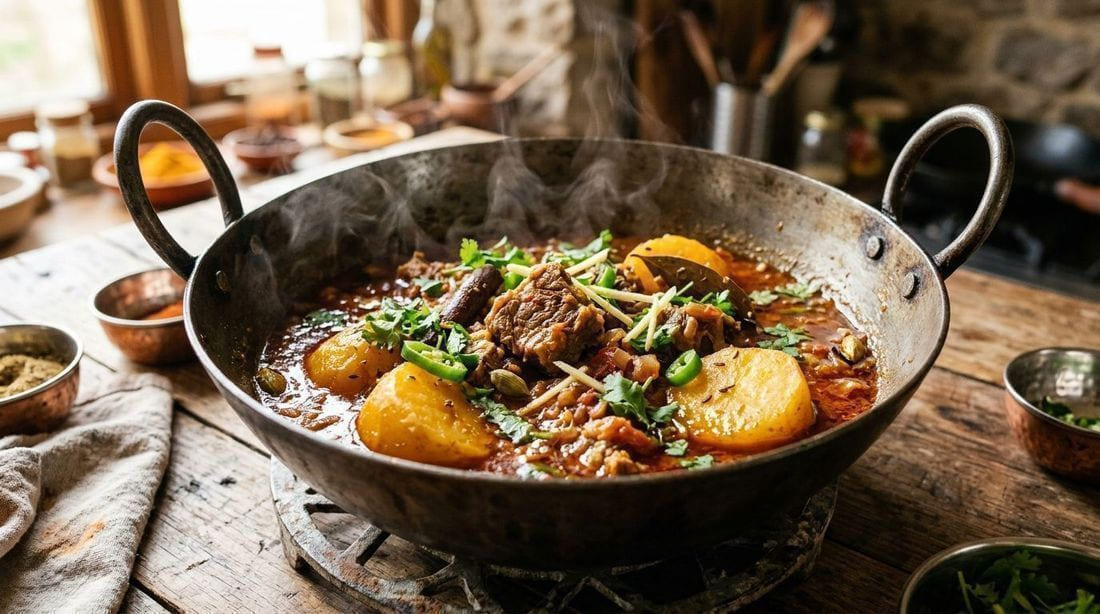
Handi means clay pot, and the dish is named for the wide-mouthed vessel it is traditionally simmered in - a shape that lets the sauce reduce slowly and evenly. What you end up with is the creamier, more elegant cousin of karahi: chicken in a velvety tomato-cream gravy, sweet with butter and light on the heat, finished with a swirl of cream and a flutter of fresh ginger. It is the curry that restaurant menus call "handi" and Pakistanis order when they want comfort, not fireworks. The technique is easy - build the masala, simmer the chicken, finish with cream - and the whole thing comes together in about 45 minutes, which makes it a brilliant weekend-lite dinner served with naan or rice.
1 tablespoon fresh ginger, cut into matchsticks, for garnish
1/4 cup chopped fresh coriander, for garnish
1 green chili, slit, for garnish (optional)
Instructions
Heat 2 tablespoons of the ghee in a wide pot or handi over medium heat. Fry the onion until soft and pale golden, 6–8 minutes, then add the ginger-garlic paste for 1 minute.
Add the pureed tomatoes, salt, red chili, turmeric, coriander, garam masala, and crushed cardamom. Cook over medium heat, stirring often, until the masala is thick and the oil separates to the edges, 8–10 minutes.
Add the chicken and toss to coat in the masala. Cover and cook over medium-low heat for 15–18 minutes, stirring occasionally, until the chicken is cooked through and the gravy is glossy. Add a splash of water if it looks dry - the handi should be saucy, not dry.
Stir in the cream and the remaining 2 tablespoons of ghee (or butter). Simmer gently for 2–3 minutes until the sauce is velvet and slightly reduced. Taste and adjust salt.
Finish with a swirl of the extra butter, scatter over the ginger matchsticks, coriander, and green chili if using. Serve hot with naan, roti, or steamed rice.
Tips for Success
The handi name is about the pot shape, but a wide skillet works just as well - what matters is a broad surface so the sauce reduces without deep-frying the chicken.
Cream is the finish, not the base. Add it at the very end and only simmer gently - boiling cream can split. The finished sauce should be silky, not broken.
For extra depth, brown the chicken pieces in the ghee first (2–3 minutes per side) before adding the tomato masala, then proceed. It adds flavor for almost no extra work.
Perfect pairings
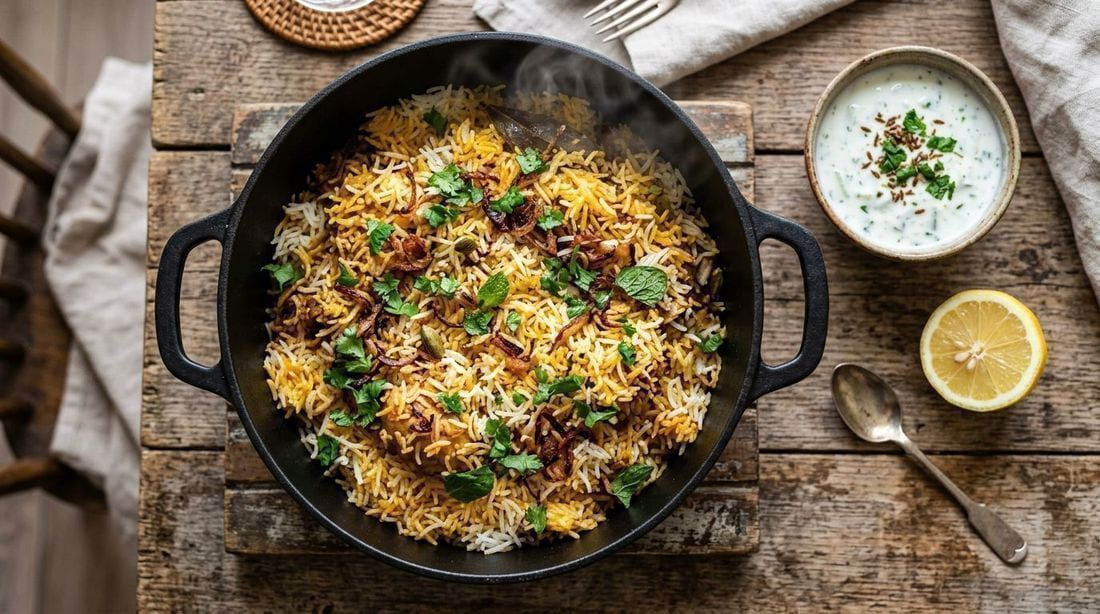
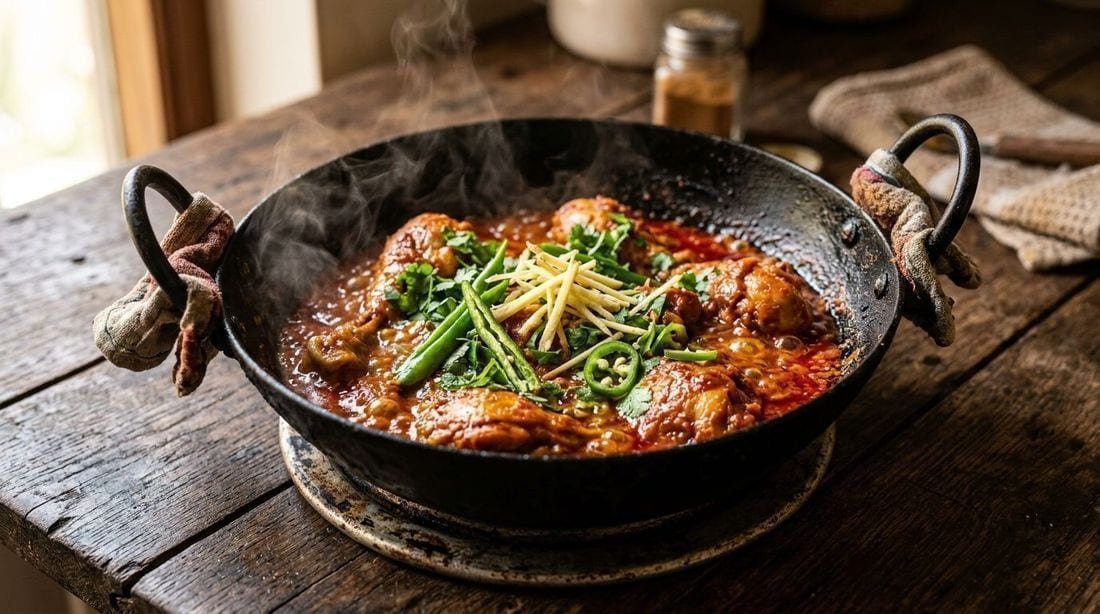
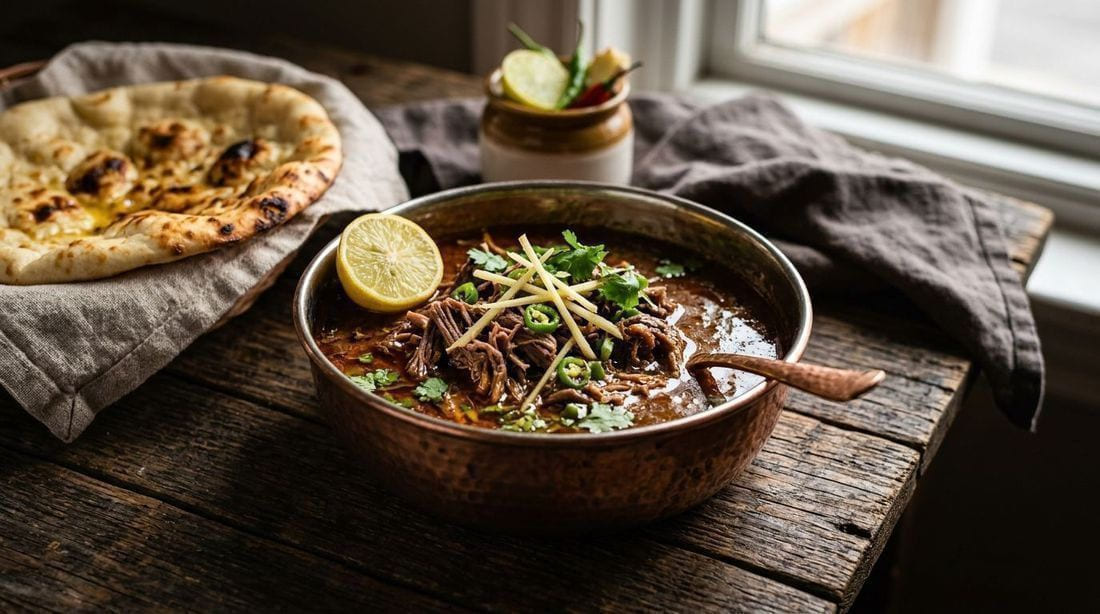
These recipes belong on the same table — cook them together for a full spread, or swap in a variation next time.
Handi is the creamy, mellow cousin of karahi. Karahi is cooked fast and dry with fresh tomatoes, ginger, and green chilies - bright and sharp. Handi uses pureed or blended tomatoes and finishes with cream and butter, giving a richer, sweeter, silkier sauce. Both are chicken curries, but they sit at opposite ends of the Pakistani curry spectrum.
Can I use bone-in chicken?
Yes. Use 2 lb of bone-in thighs or drumsticks and simmer 5–10 minutes longer. The bone-in version is actually more traditional and a touch more flavorful - just cook until the meat pulls away from the bone easily.
My handi split or curdled the cream. What happened?
The heat was too high when the cream went in, or the cream was added to a boiling sauce. Always finish over gentle heat, and if the cream is cold, warm it slightly before stirring it in. A split sauce can often be rescued by whisking in a tablespoon of cold butter off the heat.
Is handi gluten-free?
Yes, as written - there is no flour in the sauce. Just check your spice blends for any added wheat flour and serve with rice or gluten-free roti rather than naan if needed.
Affiliate disclosure: this page contains affiliate links. If you buy equipment through them, Cuisinety earns a small commission at no extra cost to you — it keeps the site free. Picks follow the same research-backed standards as our gear guides. Read ourfull affiliate disclosure.
Equipment I Used
Wide heavy skillet or clay handi:UK - US - IT - AU - DE - FR - ES - UAE
Immersion blender (for pureeing tomatoes):UK - US - IT - AU - DE - FR - ES - UAE