Ingredients
- 2 lb mustard greens (sarson), washed well
- 1 lb fresh spinach leaves, washed well
- 1/4 cup ghee or neutral oil, divided
- 1 large yellow onion, finely diced
- 1 tablespoon ginger-garlic paste
- 2–3 green chilies, slit
- 1 teaspoon salt, plus more to taste
- 1/2 teaspoon turmeric
- 1/2 teaspoon red chili powder (optional)
- 1/4 cup cornmeal or maize flour (makki atta), for thickening
- 2 tablespoons butter or ghee, for the finish
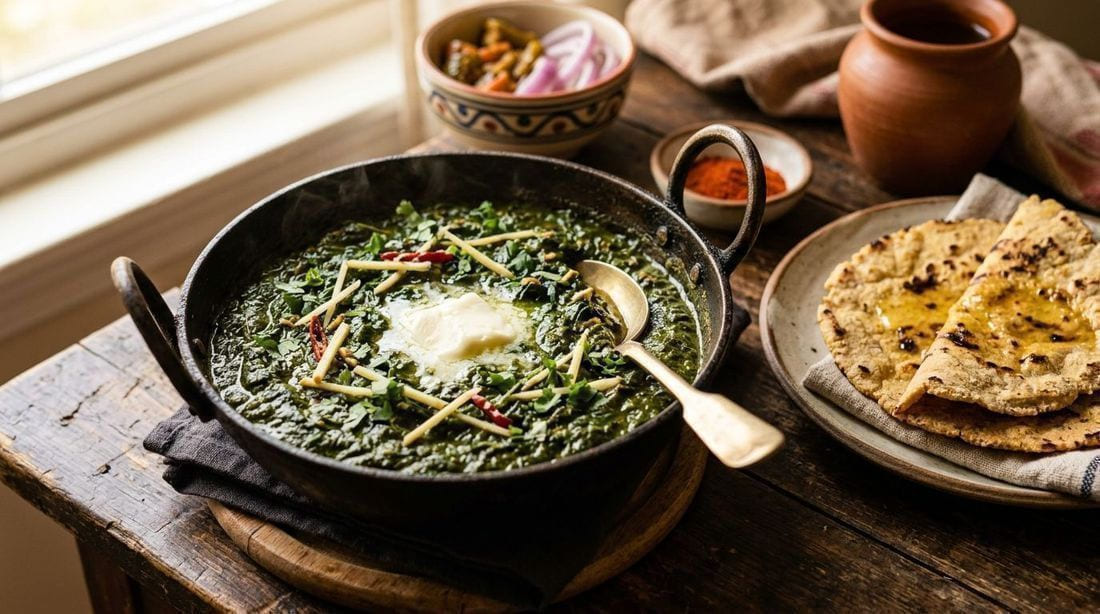
- Fresh ginger matchsticks and green chili, for garnish
Instructions
Wash the mustard greens and spinach thoroughly to remove grit, then chop them coarsely. Stacking the leaves and rolling before chopping makes this quick.
Heat 2 tablespoons of the ghee in a large, heavy-bottomed pot over medium heat. Fry the onion until soft and golden, 6–8 minutes, then add the ginger-garlic paste and green chilies for 1 minute.
Add the chopped greens in batches (they will wilt dramatically). Stir in the salt and turmeric. Cover and cook over medium-low heat, stirring every 10–15 minutes, for about 1 hour, until the greens are completely collapsed and tender. Add a splash of water if the pot runs dry.
Stir in the cornmeal to thicken and give the saag its signature body. Continue to simmer, stirring often, for 15–20 minutes until it is thick and velvety.
Optional but traditional: reserve about a cup of raw chopped spinach or mustard greens, stir them in at the end, and cook just 2–3 minutes so the saag has fresh texture against the silky base.
Right before serving, heat the remaining 2 tablespoons of ghee and tempering aromatics. Finish by swirling in the butter and garnishing with ginger matchsticks and green chili. Serve hot with makki di roti (corn flatbread) and yogurt on the side.
Tips for Success
- The long, low simmer is non-negotiable - it turns bitter, tough mustard greens into something sweet and silky. Do not rush it.
- The cornmeal is the classic thickener. If you skip it, the saag will be thinner and less cohesive. Gluten-free and essential for the right body.
- White butter (makhan) melting into hot saag is not garnish, it is doctrine. Use a generous knob of quality butter for the authentic finish.
Frequently Asked Questions
What are sarson ka saag and how is it different from regular saag?
Sarson ka saag specifically uses mustard greens (sarson) as the base, traditionally with some spinach or bathua (lamb’s quarters) mixed in. Plain saag can mean any leafy greens. The mustard greens give sarson ka saag its characteristic deep, earthy flavor - slightly bitter when raw but sweet and mellow after the long simmer.
Can I use bagged baby spinach instead of fresh greens?
Yes, for the spinach component. For the mustard greens, try to find fresh bunches at an Asian or farmers market - they are the heart of sarson ka saag. In a pinch, frozen chopped mustard greens work; thaw and drain them well before adding.
Why is my saag bitter?
Under-cooking is the usual culprit. Mustard greens contain compounds that taste bitter until broken down by the long, slow simmer. Cook them for the full time - the bitterness should melt into a sweet, mellow flavor. Adding a little more butter at the end also softens any remaining bite.
Is saag healthy?
Very. It is packed with vitamins, fiber, and antioxidants, and is naturally gluten-free and vegetarian. The main caloric additions are the ghee and butter for flavor, so it fits happily into most diets - even a daily portion is no more indulgent than most greens dishes.
Affiliate disclosure: this page contains affiliate links. If you buy equipment through them, Cuisinety earns a small commission at no extra cost to you — it keeps the site free. Picks follow the same research-backed standards as our gear guides. Read ourfull affiliate disclosure.
Browse All Recipes →
Love this recipe? Pin it!
Save it to your Pinterest board so you can find it later.
Pin this Recipe Cuisine