Ingredients
- 3 tablespoons olive oil
- 1 medium yellow onion, diced
- 2 red bell peppers, sliced into strips
- 4 cloves garlic, minced
- 2 teaspoons sweet paprika
- 1 teaspoon ground cumin
- 1/4 teaspoon cayenne pepper (optional)
- 1 can (28 oz) crushed tomatoes
- 5 large eggs
- 1/2 cup crumbled feta cheese
- Fresh parsley or cilantro, chopped, for serving
- Crusty bread, for scooping
Instructions
Heat the olive oil in a large skillet (with a lid if possible) over medium heat. Add the onion and bell peppers and cook for 8–10 minutes, until soft and lightly caramelized at the edges.
Add the garlic, paprika, cumin, and cayenne if using. Cook for 1 minute, stirring constantly, until fragrant.
Pour in the crushed tomatoes, season with salt, and stir well. Simmer for 10–12 minutes, until the sauce has thickened enough that a spoon leaves a trail.
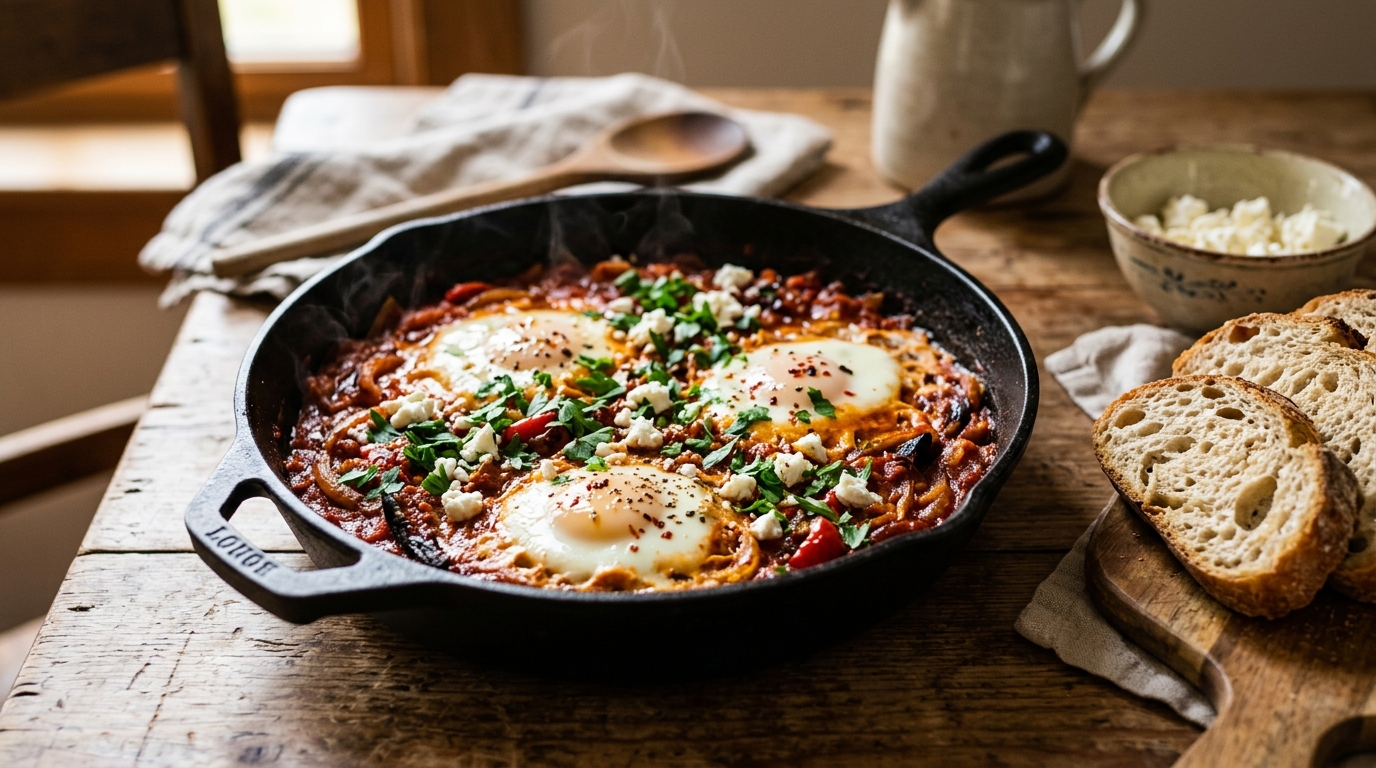
Use the back of a spoon to make 5 wells in the sauce. Crack an egg into each well, then season the eggs lightly with salt.
Cover the skillet and simmer gently for 6–8 minutes, until the egg whites are set but the yolks are still jammy. Check early — they go from perfect to hard-boiled quickly.
Scatter the feta and herbs over the top and serve straight from the pan with plenty of crusty bread for scooping.
Tips for Success
- Do not skimp on cooking the peppers. The 10 minutes of caramelizing builds the sweet, smoky backbone of the whole dish.
- Crack each egg into a small bowl first, then slide it into its well — no shell surprises and no broken yolks.
- The sauce only improves overnight. Make a double batch of the base and poach eggs fresh whenever you want it.
Perfect pairings
These recipes belong on the same table — cook them together for a full spread, or swap in a variation next time.
Frequently Asked Questions
Can I use fresh tomatoes?
Yes — about 2 lbs ripe tomatoes, chopped, work well. Simmer 10 minutes longer to break them down and concentrate the sauce.
Is shakshuka only a breakfast dish?
Not at all. In Israel and across North Africa it is eaten at any time of day, and it makes a fantastic light dinner with a green salad.
How do I know when the eggs are done?
The whites should be fully opaque and set, but the yolks should still wobble when you nudge the pan. If you cut into one and it runs, that is exactly right.
Can I make it dairy-free?
Simply skip the feta. Many traditional versions are dairy-free, and the sauce is rich enough on its own.
Why is my shakshuka watery instead of thick?
Tomatoes release a lot of liquid, and eggs need a thick sauce to poach in. Simmer the sauce uncovered for 8–10 minutes until it has reduced and a spoon drawn through it leaves a clean trail that holds for a moment before filling in. If you used canned tomatoes, drain off some of the juice first, and if the pan still floods, spoon out excess liquid before cracking in the eggs.
Why did my eggs turn out rubbery or overcooked?
Skillets hold heat long after you turn off the stove, so eggs keep cooking. Pull the pan off the heat when the whites are just set and the yolks still wobble — they will finish cooking in the residual heat. Covering the pan with a lid sets the whites gently without cooking the yolks hard; check at 3 minutes and lift the lid earlier if your yolks are running away from you.
Why does my shakshuka taste too acidic?
Ripe-season tomatoes are sweet, but out-of-season or canned ones can lean sharp. Balance the acidity with a pinch of sugar or a teaspoon of honey stirred into the sauce, and finish with a generous drizzle of olive oil — fat rounds out acidity. Cooking the tomato paste (if using) for a minute before adding liquid also deepens and sweetens the base.
Affiliate disclosure: this page contains affiliate links. If you buy equipment through them, Cuisinety earns a small commission at no extra cost to you — it keeps the site free. Picks follow the same research-backed standards as our gear guides. Read ourfull affiliate disclosure.
Browse All Recipes →
Love this recipe? Pin it!
Save it to your Pinterest board so you can find it later.
Pin this Recipe