Ingredients
- 2 pounds (900 g) fresh spinach, or three 10 oz (850 g total) boxes frozen, thawed
- 1/4 cup olive oil, plus more for the pan
- 6 scallions, thinly sliced (white and light green parts)
- 2 cloves garlic, minced
- 8 oz (225 g) feta cheese, crumbled
- 1 cup (250 g) ricotta cheese
- 3 large eggs, lightly beaten
- 1/4 cup fresh dill, chopped
- 2 tablespoons chopped fresh mint or parsley
- 1/4 teaspoon freshly grated nutmeg
- 1/2 teaspoon salt, plus more for the spinach
- Freshly ground black pepper
- 1 lb (450 g) phyllo dough, thawed in the fridge overnight
- 1/2 cup (115 g) butter, melted (or olive oil)
Instructions
Heat the oven to 425°F (220°C). If using fresh spinach, wilt it in a very large skillet in batches over medium-high heat with a splash of water, then tip it into a colander. If using frozen, thaw it completely. Either way, the next step is the one that decides this pie: squeeze the spinach bone-dry in small handfuls, until no more green water runs — this is the entire secret to a firm, sliceable filling.
In the same skillet, warm the olive oil over medium heat. Cook the scallions and garlic for 2 minutes, until soft and fragrant, then scrape them into a large bowl with the spinach.
Add the feta, ricotta, beaten eggs, dill, mint, nutmeg, salt, and a good grind of pepper. Mix until the feta is evenly streaked through the greens. Taste a tiny bit — it should be boldly seasoned, because phyllo is neutral.
Brush the bottom and sides of a 9x13-inch baking dish with melted butter. Lay in 6 sheets of phyllo, brushing each sheet lightly with butter as you go and letting the edges ruffle up the sides. Keep the phyllo stack covered with a damp tea towel so it never dries out.
Spread the filling evenly over the phyllo. Lay 6 more buttered phyllo sheets on top, brushing between every sheet, then tuck the overhang down around the edges. Brush the top generously and score it lightly into 8 squares with a sharp knife.
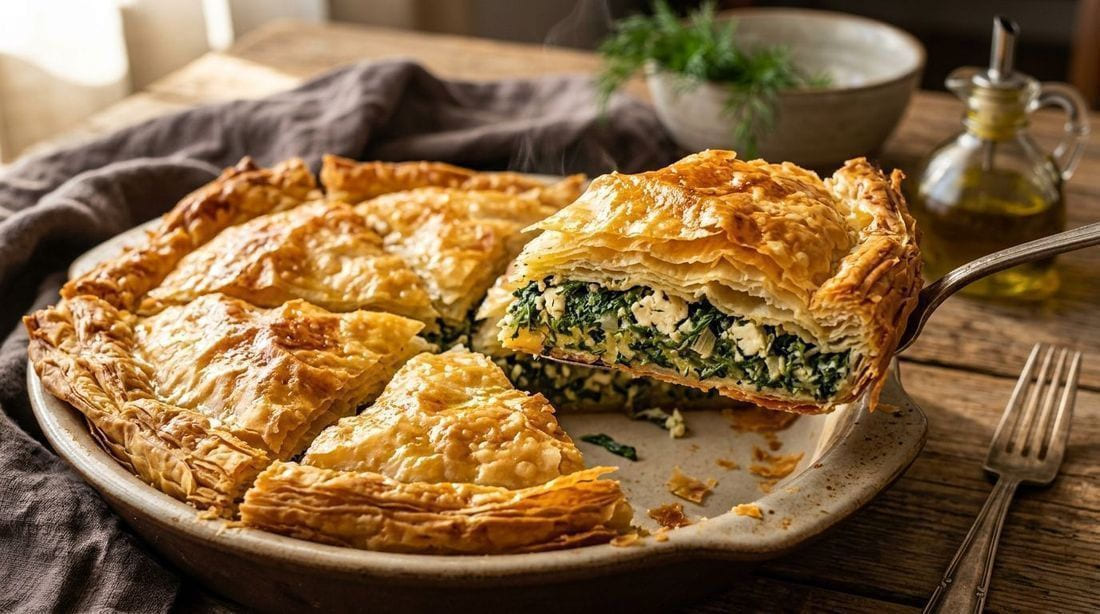
Bake for 35–40 minutes, until the phyllo is deeply golden all over and the filling is bubbling at the seams. Rest in the pan for at least 10 minutes before slicing — patience here is the difference between clean squares and a spinach landslide.
Tips for Success
- Squeeze the spinach until it feels dry even when you are sure it is done — then squeeze once more. Water is the only enemy this pie has.
- Feta ranges from mild and creamy to sharp and salty. Taste it before you season, and hold the salt if your feta is on the salty side.
- Kept covered with a damp towel, phyllo stays workable for an hour. Uncovered, it turns brittle within minutes — work in one direction, sheet by sheet.
Cook's Notes: what to watch for
- The pitfall: Under-squeezed spinach. Any remaining green water turns the filling loose and the bottom phyllo soggy, and the pie slides apart when cut — squeeze handfuls until dry, then squeeze again. Uncovered phyllo cracking mid-fold is the next failure; keep it under a damp towel.
- The step that matters most: Squeezing the spinach bone-dry, handful by handful. Everything else in the recipe is forgiving, but water in the greens is the single point of failure between a firm, sliceable pie and a wet, collapsing one.
- The quirk: The raw filling should taste boldly — almost too — seasoned, because the phyllo is neutral and dilutes it in every bite. And the 10-minute rest in the pan after baking is what turns a spinach landslide into clean squares.
Perfect pairings
Spanakopita is the baked jewel of a Mediterranean spread — pair it with the mezze classics and the quick-cook weeknight heroes.
Frequently Asked Questions
What is spanakopita?
Spanakopita is the Greek spinach-and-feta pie: a filling of spinach, feta, herbs, and eggs wrapped in layers of buttery phyllo pastry and baked until deeply golden. The name is a straight description — "spanaki" means spinach and "pita" means pie. It is served warm or at room temperature, in squares like a sliceable tart, everywhere from home kitchens to Greek bakeries.
Can I use frozen spinach?
Absolutely — in many kitchens it is the default. Thaw it completely, then squeeze it dry in small fists until no water runs; three 10-ounce boxes thaw to about the same volume as 2 pounds of fresh spinach. The one step you cannot skip is the squeezing: frozen spinach holds noticeably more water than fresh, which is exactly why most soggy spanakopita started with frozen spinach.
Can I make spanakopita ahead or freeze it?
Yes on both counts. Assemble the whole pie unbaked, wrap the dish tightly, and refrigerate up to 24 hours or freeze up to 3 months — bake straight from the fridge (add 10 minutes) or from frozen (45–55 minutes), tenting foil if the top browns too fast. Already baked spanakopita reheats beautifully at 350°F for 15 minutes; it is one of the rare pastries that tastes as good on day two.
Why is my spanakopita soggy on the bottom?
Almost always trapped water — spinach that was not squeezed dry enough, or a pie that is cut too soon. Squeeze the spinach in small fists until no green water runs, at least three rounds of squeezing if it came from frozen, and warm the filling slightly if it looks wet before it goes in the dish. Bake on the lower-middle rack at a confident 425°F (220°C) so the bottom phyllo crisps instead of steaming, and let the pie rest in the pan a full 10–15 minutes before slicing — cutting hot releases steam from the filling as moisture that soaks the cut edges. A truly dry filling is the difference between crisp, clean squares and a slumped, soggy middle.
Why does my phyllo tear or crack when I handle it?
Phyllo tears when it is too dry or too cold. Thaw it slowly in the fridge overnight — a counter or microwave thaw leaves the sheets brittle and the butter layers uneven. Keep the stack under a barely-damp tea towel while you work, pull one sheet at a time from the edge rather than the middle, and move with intent: the longer phyllo sits in open air, the faster it dries. Small tears are not a problem — the filling acts as glue — so patch them with a buttered scrap and move on. Cracks at the edges bake into the golden ruffled top and nobody will ever know.
How do I separate phyllo sheets that are stuck together?
Stuck sheets mean the package thawed too fast or sat too long. The fix is patience: peel from a corner, not the middle, with dry hands, and let the sheet warm for 30 seconds if it resists — cold phyllo bonds and snaps, warm phyllo gives. If a sheet tears badly, do not fight it: cut the sheet into larger pieces and overlap them like tiles, brushing butter between, so the assembled layer hides the patch. For future bakes, thaw phyllo in the fridge for a full day and keep the unused portion rolled tight in plastic — phyllo that goes soggy or brittle in the box is phyllo that will not lift in the pan.
Affiliate disclosure: this page contains affiliate links. If you buy equipment through them, Cuisinety earns a small commission at no extra cost to you — it keeps the site free. Picks follow the same research-backed standards as our gear guides. Read ourfull affiliate disclosure.
Browse All Recipes →
Love this recipe? Pin it!
Save it to your Pinterest board so you can find it later.
Pin this Recipe Cuisine