Ingredients
- 3 large eggplants (about 3 lb / 1.35 kg total), cut into 1/2-inch rounds
- 2 1/2 tablespoons salt, divided, plus more to taste
- 1/2 cup olive oil, for frying (plus more as needed)
- 2 lb (900 g) ground lamb (or half lamb, half beef)
- 1 large yellow onion, finely diced
- 3 cloves garlic, minced
- 1/4 cup dry red wine
- 1 can (14 oz / 400 g) crushed tomatoes
- 1 cinnamon stick (or 1/2 teaspoon ground cinnamon)
- 1 teaspoon dried oregano
- 1/4 teaspoon freshly grated nutmeg, divided
- 2 tablespoons tomato paste
- 1 bay leaf
- 1/2 cup (115 g) butter
- 1/2 cup (65 g) all-purpose flour
- 3 1/2 cups (840 ml) whole milk, warmed
- 2 egg yolks
- 1/2 cup (50 g) grated Kefalotyri or Parmesan cheese, divided
- Freshly ground black pepper
- Fresh oregano or parsley, to finish
Instructions
Salt the eggplant: lay the rounds in a single layer on sheet pans and sprinkle both sides with 2 tablespoons of the salt. Let them sit 30 minutes — the salt pulls out the bitter water that would otherwise turn the fry greasy and the bake watery. Pat completely dry with paper towels.
Fry the eggplant: heat the olive oil in a large skillet over medium-high heat and fry the rounds in batches, 2–3 minutes per side, until deeply golden. Drain on a wire rack or paper towels. Properly salted and dried eggplant drinks far less oil than you expect.
Make the ragout: in the same skillet, brown the lamb hard over medium-high heat, breaking it up, until deeply browned, 8–10 minutes. Add the onion and garlic and cook 4 minutes more, then deglaze with the red wine, scraping up the fond. Stir in the crushed tomatoes, tomato paste, cinnamon stick, oregano, half the nutmeg, the bay leaf, and a good grind of pepper. Simmer uncovered for 25–30 minutes, until the sauce is thick enough to stand a spoon in — a wet ragout is the number-one cause of watery layers. Remove the cinnamon stick and bay leaf.
Make the béchamel: melt the butter in a saucepan over medium heat, whisk in the flour, and cook 2 minutes to a blond roux. Whisk in the warm milk a ladle at a time, whisking smooth between additions, then simmer 3–4 minutes until it thickly coats the spoon. Take off the heat, whisk in the egg yolks, the remaining nutmeg, half the cheese, and salt and pepper to taste. Keep it warm — a lukewarm béchamel spreads; a cold one clumps.
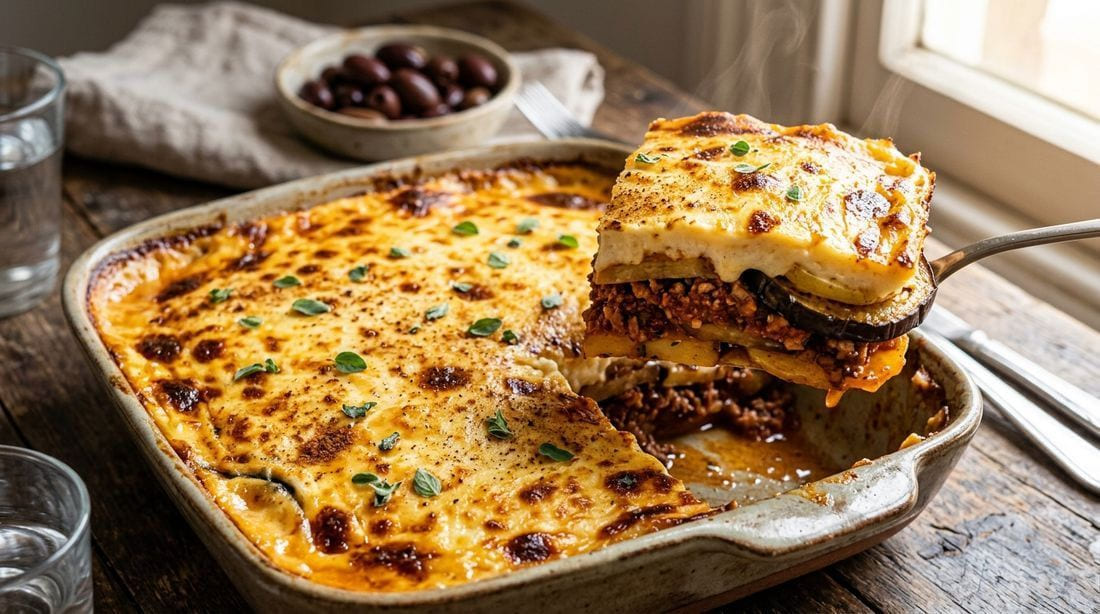
Assemble: heat the oven to 375°F (190°C). Lay half the eggplant in the bottom of a 9x13-inch baking dish, spread the ragout over it evenly, then top with the remaining eggplant. Pour the béchamel over the top, tilt the dish to level it, and scatter the remaining cheese over the surface.
Bake for 45–50 minutes, until the béchamel is deeply blistered and golden-brown at the peaks and the filling is bubbling at the edges. This is the critical part: rest at least 30 minutes before slicing — moussaka served hot is soup, moussaka served warm is architecture. Finish with fresh oregano and serve warm.
Tips for Success
- Do not skip the 30-minute salt on the eggplant — it pulls out the water that would flood the ragout layer and dilute the spice, and it cuts the oil the flesh absorbs while frying by half.
- Cook the ragout uncovered until a spoon dragged through the middle leaves a dry channel. Every drop of excess water in that layer becomes steam in the oven and soup on the plate.
- Moussaka cuts cleanly on day two and reheats beautifully at 350°F for 20 minutes — many Greek cooks consider the second-day bake the better one.
Perfect pairings
Moussaka is the baked monument of a Greek feast — pair it with the mezze that opens the table and the slow-cooked neighbors that share its patience.
Frequently Asked Questions
Why is my moussaka watery in the middle?
Water gets into the bake from three places and all three are fixable: eggplant that was not salted and dried (30 minutes of salting, then pat bone-dry), a ragout that was not reduced thick enough before assembly (it should stand a spoon in — it will loosen again in the oven), and a pie cut before it rested. Moussaka needs a full 30 minutes out of the oven for the layers to set; served straight from the oven, the béchamel and ragout run like lasagna cut too soon. Bake on the lower-middle rack so the bottom layer gets direct heat and dries out as it cooks.
How do I get a smooth béchamel without lumps?
Two rules: warm milk and gradual additions. A cold splash of milk into a hot roux seizes the starch into lumps before it can hydrate — warm the milk first (60 seconds in the microwave is enough), then whisk it in one ladle at a time, whisking completely smooth before the next addition. If you do end up with lumps, push the sauce through a fine-mesh sieve or give it a 20-second blitz with an immersion blender; the yolks go in off the heat afterward either way, so nothing is lost.
Can I make moussaka ahead or freeze it?
Yes — moussaka is one of the great make-ahead bakes. Assemble the whole dish unbaked, cool it completely, wrap tightly, and refrigerate up to 24 hours (bake as directed, adding 10–15 minutes since it starts cold) or freeze up to 3 months (thaw overnight in the fridge first, then bake). Already-baked moussaka also freezes well in portions; reheat covered at 350°F for 25–30 minutes. The second-day bake is genuinely excellent — the flavors settle and the slices come out cleaner.
Why is my moussaka watery in the middle?
Water gets into the bake from three places and all three are fixable: eggplant that was not salted and dried (30 minutes of salting, then pat bone-dry), a ragout that was not reduced thick enough before assembly (it should stand a spoon in — it will loosen again in the oven), and a pie cut before it rested. Moussaka needs a full 30 minutes out of the oven for the layers to set; served straight from the oven, the béchamel and ragout run like lasagna cut too soon. Bake on the lower-middle rack so the bottom layer gets direct heat and dries out as it cooks.
How do I get a smooth béchamel without lumps?
Two rules: warm milk and gradual additions. A cold splash of milk into a hot roux seizes the starch into lumps before it can hydrate — warm the milk first (60 seconds in the microwave is enough), then whisk it in one ladle at a time, whisking completely smooth before the next addition. If you do end up with lumps, push the sauce through a fine-mesh sieve or give it a 20-second blitz with an immersion blender; the yolks go in off the heat afterward either way, so nothing is lost.
Can I make moussaka ahead or freeze it?
Yes — moussaka is one of the great make-ahead bakes. Assemble the whole dish unbaked, cool it completely, wrap tightly, and refrigerate up to 24 hours (bake as directed, adding 10–15 minutes since it starts cold) or freeze up to 3 months (thaw overnight in the fridge first, then bake). Already-baked moussaka also freezes well in portions; reheat covered at 350°F for 25–30 minutes. The second-day bake is genuinely excellent — the flavors settle and the slices come out cleaner.
Affiliate disclosure: this page contains affiliate links. If you buy equipment through them, Cuisinety earns a small commission at no extra cost to you — it keeps the site free. Picks follow the same research-backed standards as our gear guides. Read ourfull affiliate disclosure.
Browse All Recipes →
Love this recipe? Pin it!
Save it to your Pinterest board so you can find it later.
Pin this Recipe Cuisine