Ingredients
- 8 bone-in, skin-on chicken thighs (about 2 1/2 lb)
- 2 tablespoons neutral oil (or lard, for authenticity)
- 2 tablespoons butter
- 2 large yellow onions, thinly sliced (about 4 cups)
- 3 cloves garlic, minced
- 3 tablespoons sweet Hungarian paprika
- 1 tablespoon all-purpose flour
- 1 cup chicken broth
- 1/2 cup crushed tomatoes or 2 tablespoons tomato paste
- 1 red bell pepper, thinly sliced (optional, modern style)
- 1 cup sour cream, room temperature
- Salt and freshly ground black pepper, to taste
- 12 oz wide egg noodles or spaetzle, for serving
- Fresh parsley, chopped, for garnish
Instructions
Pat the chicken thighs completely dry and season generously with salt and pepper. Heat the oil in a large Dutch oven or deep skillet over medium-high heat until shimmering.
Sear the thighs skin-side down in a single layer, 5–6 minutes, until the skin is deeply golden and releases easily. Flip and cook 3–4 minutes more. Transfer to a plate; pour off all but 2 tablespoons of the fat.
Lower the heat to medium and add the butter. Cook the onions with a pinch of salt, stirring occasionally, for 8–10 minutes until soft and golden at the edges — this sweetness is the backbone of the sauce.
Stir in the garlic and cook 30 seconds until fragrant. Remove the pan from the heat and stir in the paprika and flour; the off-heat bloom keeps the paprika from scorching, which would make the whole dish bitter.
Return the pan to medium-low heat and pour in the chicken broth, scraping up the browned bits. Stir in the crushed tomatoes (or tomato paste) and bell pepper, if using, and bring to a gentle simmer.
Nestle the chicken thighs back in, skin-side up, skin above the sauce. Cover and simmer on the lowest heat for 25–30 minutes, until the chicken is tender and cooked through (165°F at the thickest point).
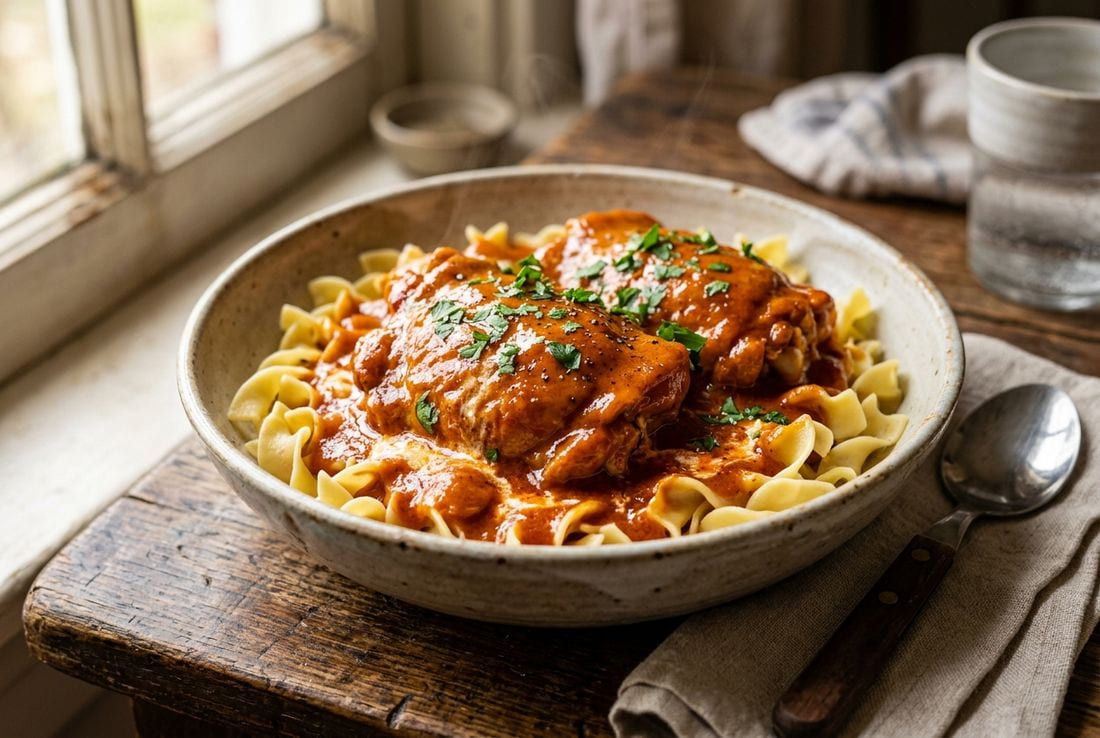
Take the pot off the heat and let it settle for 2 minutes. Stir in the sour cream a ladleful at a time, whisking until the sauce is uniformly silky and a deep coral pink. Season with salt and pepper to taste.
Meanwhile, cook the egg noodles in generously salted water until al dente, drain, and toss with a little butter. Serve the paprikash over the noodles, spooning the sauce over the chicken, and shower with parsley.
Tips for Success
- Use real sweet Hungarian paprika (edesnemes) if you can find it — it is the difference between a brick-red, sweet, aromatic sauce and a dull, dusty one. Store it sealed and use it within six months; paprika is a spice that goes stale fast.
- Never let the paprika touch high heat. Blooming it off the heat in the fat, then adding liquid at medium-low, prevents the bitter, burnt-paprika flavor that ruins paprikash.
- Room-temperature sour cream stirred in off the heat keeps the sauce smooth. Cold cream or a boiling pot will make it split. If your sauce still looks thin, simmer it uncovered for 5 minutes before adding the cream.
Perfect pairings
Paprikash is a braise-and-noodles affair — pair it with its European neighbors and weeknight chicken classics.
Frequently Asked Questions
Can I use boneless, skinless chicken breasts instead of thighs?
Yes, but expect drier, less flavorful results. Boneless breasts cook faster — add them in step 6 and simmer just 12–15 minutes, pulling them at 160°F. Thighs stay juicy through the longer braise, which is why they are the traditional choice.
What is the difference between paprikash and goulash?
Paprikash is a braised dish finished with sour cream, giving a creamy, coral-colored sauce. Goulash is a thinner, soup-like stew with no cream, more onion, and often potato or caraway. Paprikash is always served with noodles or spaetzle; goulash is eaten from a bowl.
Can I make chicken paprikash ahead of time?
Yes — it actually improves overnight as the flavors meld. Store in the fridge for up to 3 days. Reheat gently on the stove and, if the sauce has thickened too much, loosen it with a splash of broth. Freeze for up to 3 months, though the sour cream may separate slightly on thawing — whisk it back together while reheating.
Is this gluten-free?
Almost. The only gluten is the spoonful of flour in the sauce and the noodles. Skip the flour (the sauce thickens on its own from the onions and a few extra minutes of simmering) and serve with gluten-free noodles or spaetzle for a fully gluten-free dinner.
Why is my paprikash sauce bitter?
The paprika burned. Paprika scorches faster than almost any spice — if it blackens in the pan, the whole sauce turns bitter. Always bloom it off the heat (step 4) and add liquid before returning the pan to the burner. Old paprika also turns bitter and dusty: if your jar is over six months old or smells flat, replace it.
Why did my sour cream curdle or split?
Either the pot was too hot when it went in, or the cream was cold. Take the pot fully off the heat and let it settle for 2 minutes, use room-temperature sour cream, and stir it in a ladleful at a time. If it still splits, whisk in a tablespoon of cold butter or a splash of cream over very low heat to bring the sauce back together.
Why is my sauce watery when the chicken is done?
The onions need more time to melt down, or the pot was covered too long. Let the onions cook a full 8–10 minutes until golden before adding liquid, and once the chicken is cooked, remove it and simmer the sauce uncovered for 5–7 minutes to concentrate. The cream also thickens the sauce further — stir it in and give it a minute before judging.
Affiliate disclosure: this page contains affiliate links. If you buy equipment through them, Cuisinety earns a small commission at no extra cost to you — it keeps the site free. Picks follow the same research-backed standards as our gear guides. Read ourfull affiliate disclosure.
Browse All Recipes →
Love this recipe? Pin it!
Save it to your Pinterest board so you can find it later.
Pin this Recipe Cuisine