Ingredients
- 2 1/4 lb (1 kg) Maris Piper or russet potatoes
- 2 to 3 quarts peanut or vegetable oil, for frying
- Flaky sea salt, for finishing
- 4 thick, skinless white fish fillets (about 6 oz each) — cod or haddock are traditional
- 1/2 cup all-purpose flour, for dusting the fish
- 1 1/4 cups all-purpose flour, for the batter
- 1 1/2 teaspoons baking powder
- 1/2 teaspoon fine salt
- 1 1/4 cups ice-cold lager beer, plus more if needed
- 1 tablespoon vodka (optional, for extra crispness)
- Malt vinegar, for dousing
- Tartar sauce and lemon wedges, for serving
- Mushy peas, for serving (optional but traditional)
- Freshly ground black pepper, to taste
Instructions
Cut the potatoes into 3/4-inch (2 cm) thick chips — stout and square-cut, not thin fries. Rinse them in cold water until the water runs clear, then soak in a bowl of cold water for 30 minutes (or overnight in the fridge). Pat completely dry before frying.
Heat the oil in a large, heavy pot to 300°F (150°C); the pot should be no more than half full. Fry the chips in two batches for 5–6 minutes — they should come out pale gold and tender, not browned. Lift them out with a spider strainer, drain on a wire rack or paper towels, and let them cool completely, at least 30 minutes (they can sit at room temperature for a few hours).
Make the batter: whisk the 1 1/4 cups flour with the baking powder and salt, then whisk in the ice-cold lager until just combined — a few lumps are fine and actually help; overmixing makes the batter tough and heavy. Keep the bowl in the fridge for 15 minutes so it stays cold, and stir in the vodka just before you start frying.
Heat the oil to 350°F (175°C) using a deep-fry thermometer. Season the fish fillets with salt and pepper, dust lightly with the 1/2 cup flour, and tap off the excess. Dip each fillet into the batter, hold it over the bowl, and let the excess drip off.
Second-fry the chips in batches at 350–365°F for 3–4 minutes, until deep golden and shatter-crisp outside with tender, fluffy middles. Drain on a wire rack and season with flaky salt immediately.
Fry the fish one or two fillets at a time at 350°F for 4–5 minutes, until deep golden brown all over and craggy, turning once. The fish should register 145°F at the thickest point. Drain on a wire rack set over a tray, and keep warm in a low oven while you fry the rest — but never cover them; steam is the enemy of crisp batter.
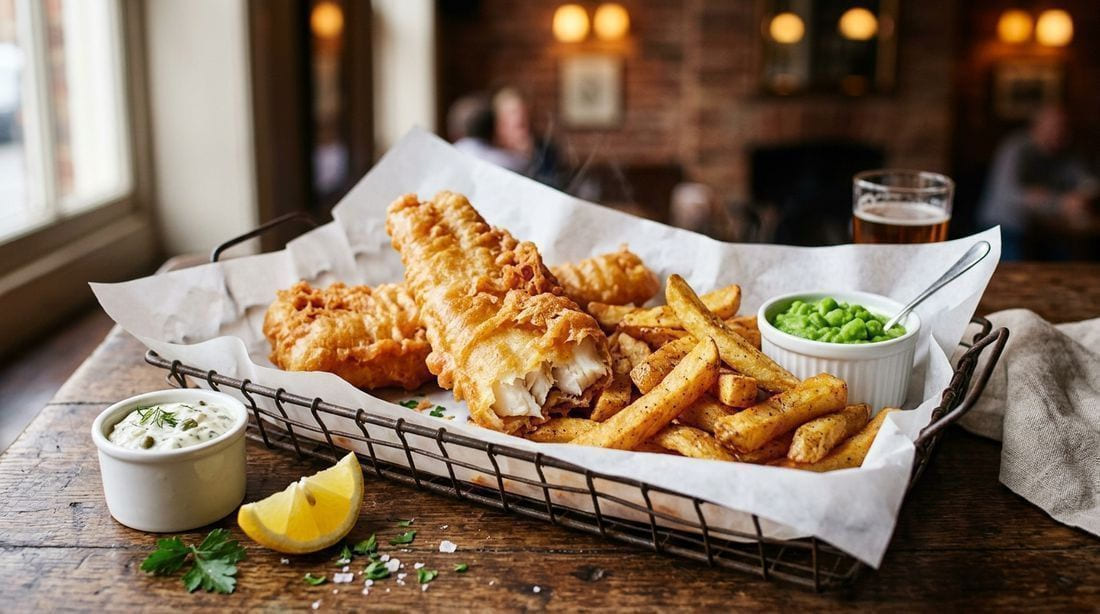
Serve immediately, within minutes of the last piece leaving the oil: pile the chips high, lay the fish on top, and pass the malt vinegar, tartar sauce, lemon wedges, and mushy peas at the table. Fish and chips waits for no one.
Tips for Success
- Ice-cold everything is the whole trick. Cold beer (straight from the fridge), cold ingredients, an optional ice cube resting in the batter bowl between batches — a warm batter absorbs oil and turns greasy. The vodka adds crunch because alcohol boils off below frying temperature, leaving crispness behind.
- The twice-fried chip is non-negotiable: the first fry at 300°F cooks the potato all the way through, and the second at 350°F+ crisps the outside. Waxy potatoes will never crisp properly — use Maris Piper, russets, or another high-starch spud.
- Oil temperature is everything, and it lies. Use a probe thermometer and give the oil a full minute to recover between batches — overcrowding drops the temperature and turns crisp batter soggy. Skim out stray batter bits with the spider strainer so they do not burn and flavor the next batch.
- If you only take one shortcut, make the chips first and hold them: the fish is a 4-minute cook at the end. Everything else in the recipe is built around protecting that final crispy window.
Perfect pairings
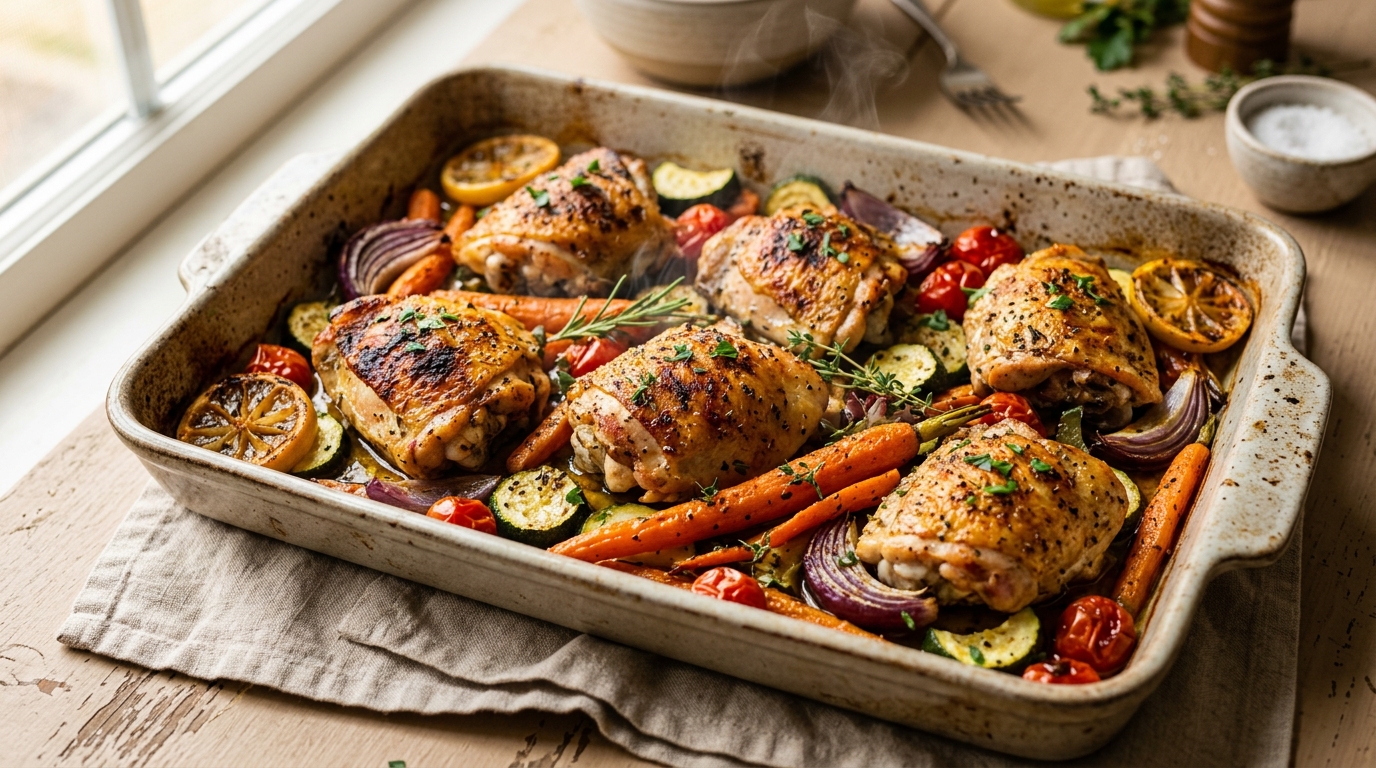
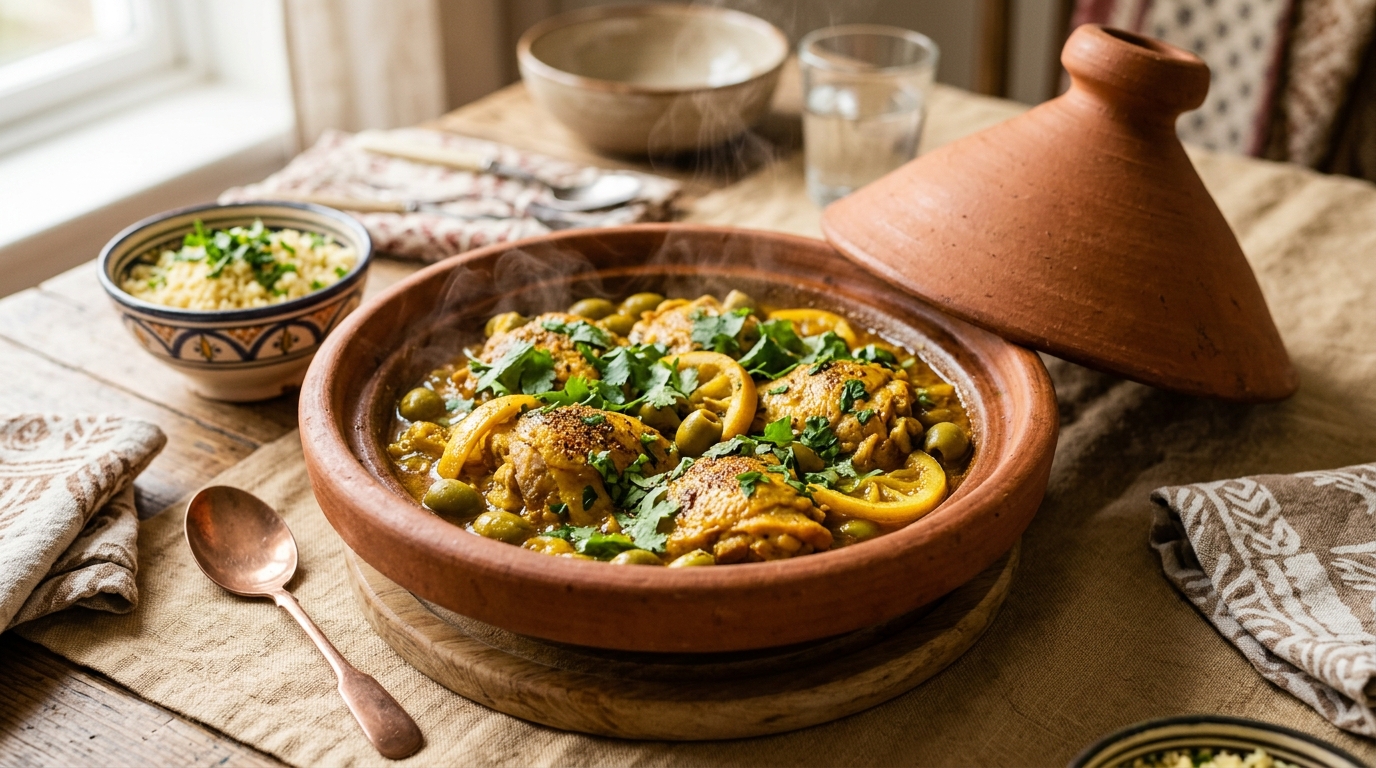
Fish and chips is the whole show, but the pub table around it makes the night — braised comfort and a crispy chicken dinner all earn their place.
Frequently Asked Questions
Which fish is best for fish and chips?
Cod and haddock are the traditional choices — firm, thick, white fillets that steam inside the batter without falling apart. Pollock and whiting are a budget-friendly swap with the same flaky texture. Whatever you choose, buy thick fillets (about 6 oz each): thin ones overcook in the 4–5 minutes the batter needs to turn golden.
Can I make the batter gluten-free?
Yes. Swap the all-purpose flour for a gluten-free all-purpose blend and whisk in 1 tablespoon of cornstarch or rice flour for extra crispness. Skip the beer (gluten) and use ice-cold sparkling water instead — you lose a little maltiness but the batter stays light and crunchy. Everything else in the recipe is unchanged.
Can I bake or air-fry fish and chips instead of deep-frying?
The chips, absolutely: toss cut chips in a little oil and bake at 425°F for 35–40 minutes, turning once, or air-fry at 400°F for 18–20 minutes. A wet batter needs deep oil to set, though — for an oven version, coat the fish in seasoned panko crumbs and bake at 425°F for 12–15 minutes. It is good food; it is just not the shattering-batter classic.
Why is my batter soggy instead of shatteringly crisp?
Batter goes soggy for three reasons: it is too warm going into the oil, the oil is too cool, or steam gets trapped in the finished pile. Keep the batter ice-cold (cold beer, cold bowl, even an ice cube resting in it between batches) and fry at a steady 350°F (175°C), letting the oil fully recover between batches — overcrowding drops the temperature and the batter drinks the oil. After frying, drain on a wire rack and never cover the fish while it waits; an uncovered low oven (200°F) keeps it crisp for the few minutes it takes to finish the rest, and a paper plate starved of air will undo all of it.
Can I use sparkling water instead of beer in the batter?
Yes — and it makes a fine, light batter. Beer contributes three things: cold carbonation for lift, a touch of bitterness that balances the fish, and a malty aroma that deepens the crust. Sparkling water keeps the bubbles and the lightness but loses the maltiness and bitterness. To close the gap, add a teaspoon of malt vinegar to the water and about a half-teaspoon of sugar to the batter, and it gets remarkably close. The golden rule is identical either way: the liquid must be ice-cold.
How should I reheat leftover fish and chips without turning it rubbery?
The oven and air fryer revive the crunch; the microwave ruins it. Reheat the chips in a 400°F (200°C) oven or air fryer for 5–7 minutes, then add the fish for another 3–4 minutes directly on the rack — the hot oven drives off the steam that the fridge trapped in the batter. Skip reheating in a covered dish entirely; the trapped steam softens the batter in under a minute. Leftovers are best eaten the next day, and the batter will never be quite as shattering as fresh — that is the honest trade for cooking it to order.
Affiliate disclosure: this page contains affiliate links. If you buy equipment through them, Cuisinety earns a small commission at no extra cost to you — it keeps the site free. Picks follow the same research-backed standards as our gear guides. Read ourfull affiliate disclosure.
Browse All Recipes →
Love this recipe? Pin it!
Save it to your Pinterest board so you can find it later.
Pin this Recipe Cuisine