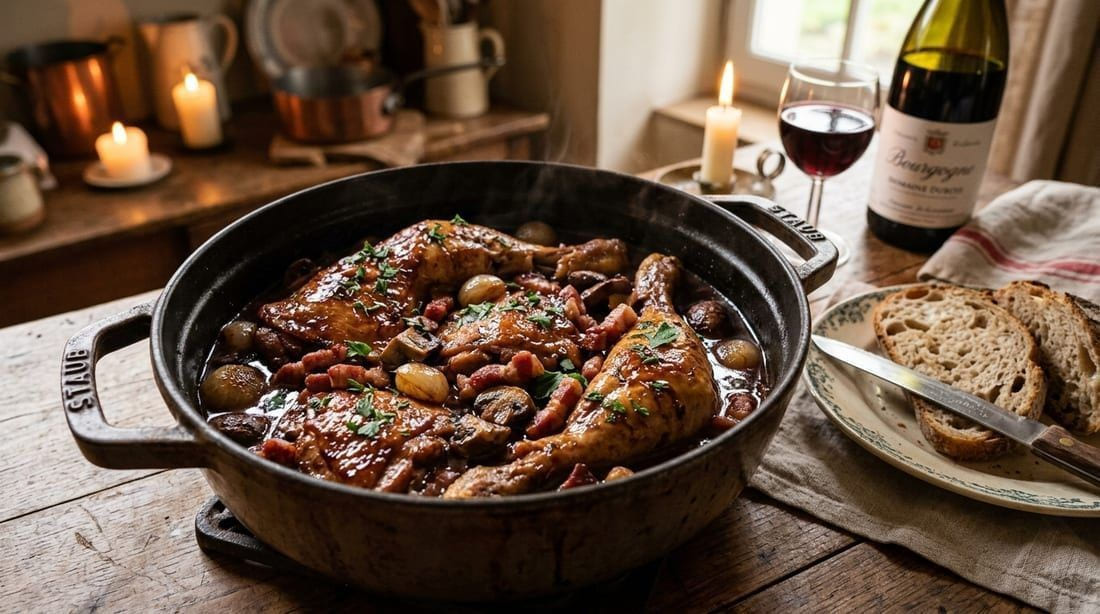
Render the lardons: cook the bacon in a large Dutch oven over medium heat until the fat has rendered and the pieces are crisp-edged, 8–10 minutes. Lift the lardons out with a slotted spoon and set them aside, leaving the bacon fat in the pot — this is the flavor base of the whole dish.
Sear the chicken: pat the chicken dry and season all over with the salt and pepper. Working in batches over medium-high heat, lay the pieces skin-side down in the bacon fat and sear undisturbed until deeply golden, 5–6 minutes per side. Transfer to a plate. Do not crowd the pot — a real crust here means a real sauce later.
Sear the vegetables and build the base: add the mushrooms to the hot pot in a single layer and let them brown undisturbed for 4–5 minutes before stirring. Add the pearl onions and garlic and cook 3 minutes more, then stir in the tomato paste and let it darken slightly, about 1 minute.
Deglaze and assemble: pour in the brandy (if using) and let it bubble for 30 seconds, then add the whole bottle of wine and the chicken stock, scraping up every browned bit from the bottom. Return the chicken skin-side up along with any accumulated juices, tuck in the thyme and bay leaves, and bring to a bare simmer.
Braise low and slow: cover the pot partially — the lid ajar — and keep the sauce at the gentlest simmer on the stove top or in a 325°F (160°C) oven. Cook until the chicken is fork-tender and pulling from the bone, 1 3/4 to 2 hours, turning the pieces once halfway through. The liquid should barely tremble; a rolling boil toughens the meat and clouds the sauce.
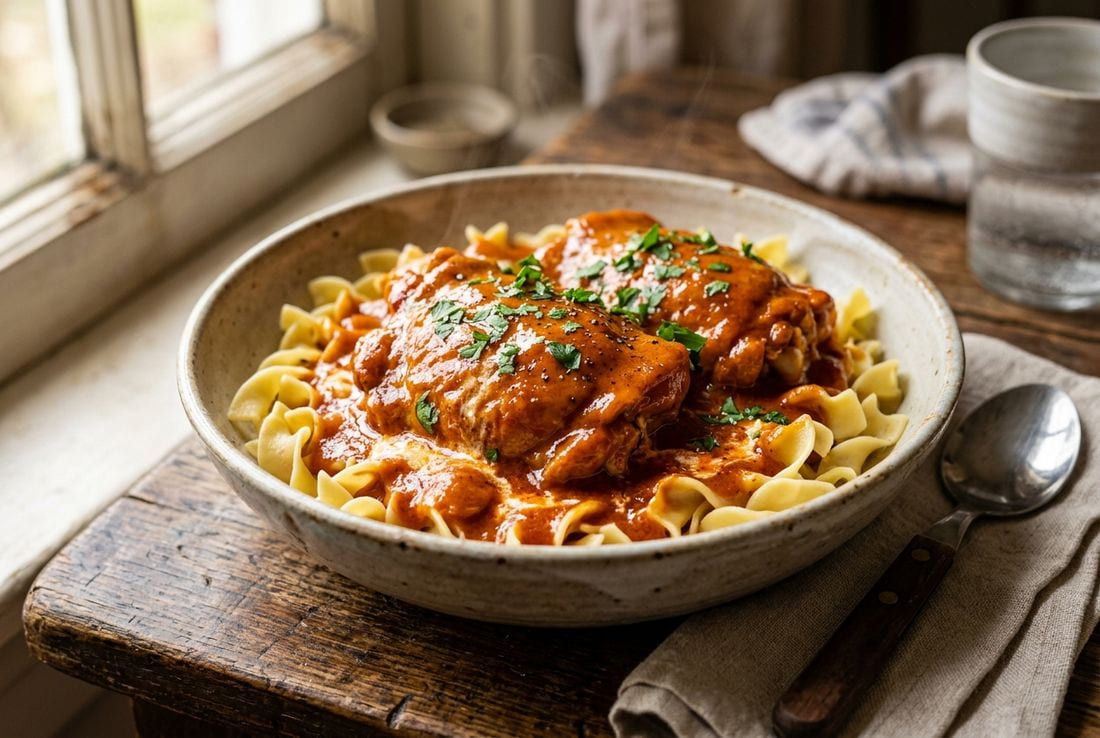
Finish the sauce: lift the chicken onto a warm platter and tent with foil. Stir the butter-flour paste (beurre manié — mash the butter and flour together with a fork) into the simmering sauce in small pinches, whisking until the sauce turns glossy and thick enough to coat the back of a spoon, 5–8 minutes. Return the chicken and lardons to the pot, taste and adjust salt and pepper, and shower with parsley. Serve over buttered egg noodles, mashed potatoes, or with a crusty baguette.
What wine is best for coq au vin?
A dry Pinot Noir — ideally Burgundy, since the dish comes from Burgundy — is the traditional choice, but any medium-bodied, low-tannin dry red works: Gamay, Grenache, or a soft Merlot. The wine cooks down to be the entire soul of the sauce, so use a bottle that actually tastes good (about $10–15 is plenty) and never salted "cooking wine." Skip heavy, tannic reds like Cabernet or Syrah; their tannins concentrate during the long braise and can turn the sauce bitter.
Can I make coq au vin with boneless, skinless chicken breasts?
You can, but the dish loses something essential. Bone-in thighs and legs have the collagen and connective tissue that melt into the sauce over the long braise, plus skin that sears into flavor — breast meat has neither, and 2 hours of braising turns it stringy and dry. If you must use breasts, cut the braise time to 30–40 minutes and expect a lighter sauce. Thighs and drumsticks are the honest version: cheap, forgiving, and built for exactly this dish.
Can coq au vin be made ahead of time?
Yes — and it should be. Like most braises, coq au vin tastes better the next day, when the wine has fully married with the chicken. Cook it completely, cool the pot, and refrigerate for up to 3 days. The fat will set into a cap on top; lift most of it off, then reheat gently over low heat for 15–20 minutes until the chicken is warmed through. Loosen the sauce with a little chicken stock if it has thickened past glossy, and refresh the parsley at the table.
Why did my coq au vin turn bitter?
Almost always the wine. Big, tannic reds like Cabernet or Syrah concentrate during the long braise, and their tannins go from structured to harsh — the sauce ends up bitter and drying instead of velvet. Use a low-tannin, medium-bodied red (Pinot Noir, Gamay, Grenache) that you would happily drink, and keep the simmer gentle: a hard boil concentrates the tannins faster than the flavors can balance them. If the pot is already bitter, you can soften it somewhat with a knob of butter stirred in at the end and a spoon of tomato paste or a splash of stock — but prevention is the real fix.
Why did my chicken come out dry?
Almost always too much heat for too long, especially with white meat in the pot. Chicken braised at a rolling boil squeezes the muscle fibers until they go chalky; it needs the gentlest simmer — the surface barely trembling — for the collagen to melt and the meat to turn silky. Use bone-in thighs and drumsticks rather than breasts (dark meat carries 2+ hours of braise easily), keep the pot partially covered, and pull the bird when it is fork-tender, not shred-able. If your burner only has two settings, move the braise to a 325°F oven where the heat wraps the pot evenly.
What can I substitute for the bacon (lardons)?
Pancetta is the closest swap — same pork fat, same render, slightly different seasoning; salt pork (blanched first to tame the salt) is the old-school French stand-in. For no-pork options, smoked turkey thigh or duck fat both carry the smoky-sear foundation; or go vegetarian-leaning with butter plus mushrooms sautéed hard in olive oil and a pinch of smoked paprika to mimic the cured depth. The bacon is doing two jobs — rendering fat for the sear and adding smoke — so whatever replaces it needs to deliver both.
 Cuisine