Sear the beef: pat the chuck cubes completely dry and season with salt and pepper. Heat the tallow in a heavy Dutch oven over medium-high until it shimmers, then sear the beef in three batches, leaving space between pieces, until deeply browned on at least two sides — 6–8 minutes per batch. Lift each batch out with a slotted spoon and set aside. Crowding the pot steams the meat gray, and the fond — the browned glaze on the pot bottom — is where the whole dish gets its depth.
Build the base: pour off all but 2 tablespoons of fat. Lower the heat to medium and cook the onions in the rendered fat for 10–12 minutes, stirring occasionally, until soft, sweet, and just beginning to color at the edges. Add the garlic and cook 1 minute more.
Bloom the paprika — the critical move: take the pot OFF the heat and let it cool for 30 seconds. Stir in the sweet paprika, smoked paprika, caraway, and tomato paste, tossing constantly so the spices coat the onions in the residual heat. This step must happen off the flame: paprika scorching over direct heat turns the entire pot bitter and there is no rescue. 30 seconds of blooming releases the color and perfume.
Deglaze and simmer: return the pot to medium heat, add 1 cup of the stock, and scrape every bit of fond off the bottom. Return the beef with any accumulated juices, the bay leaf, and the remaining stock — the meat should be just covered. Bring to a bare simmer, then cover partially (leave a spoon-width gap) and cook gently for 1 hour to 1 hour 15 minutes, adjusting the heat so it burbles lazily, never boils. Boiling tightens the beef; a whisper-simmer relaxes it.
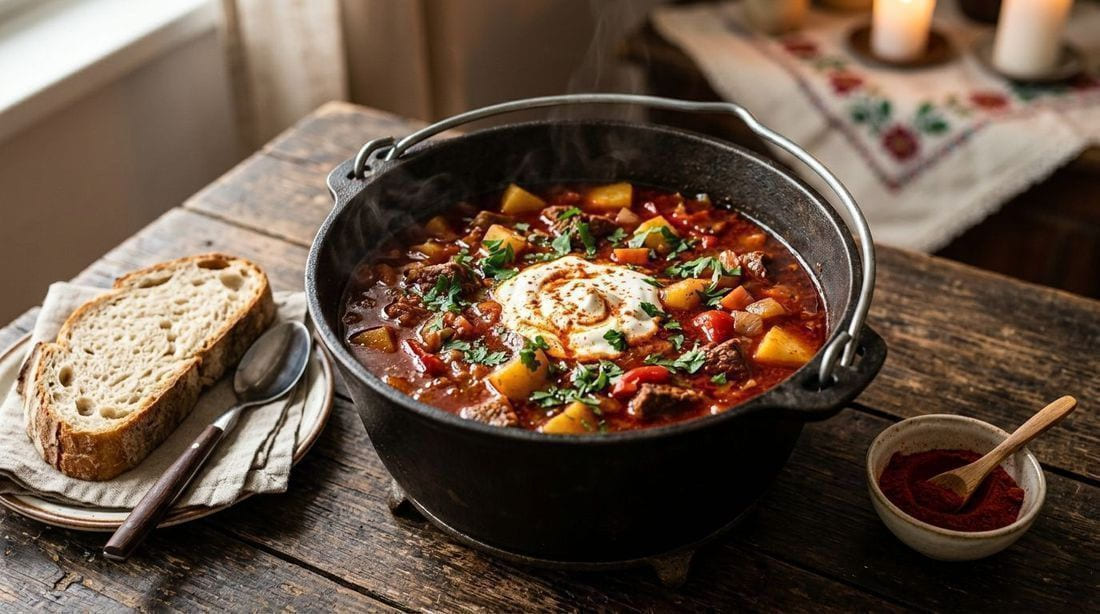
Add the vegetables: stir in the potatoes, carrots, and bell peppers. If the broth sits more than a finger-width above the solids, add a splash more stock — goulash is stew-thick, not soup-loose. Simmer uncovered for 35–45 minutes more, until the beef shreds against a spoon, the potatoes are tender, and the broth has thickened from the starch. Skim any fat pooling on the surface.
Rest and serve: fish out the bay leaf, season to taste with salt and pepper, and rest the pot off the heat for 10 minutes — the broth settles and thickens one final degree. Ladle into deep bowls, top with a spoonful of sour cream and a scatter of parsley, and serve with crusty bread for dunking, the way it has been eaten on the Hungarian plains for centuries.
Is goulash a soup or a stew?
Both, deliberately. Hungarian gulyás sits between the two: the broth is looser than a classic stew — loose enough to dunk bread, the way the herdsmen ate it — but thick enough to coat the spoon, thickened naturally by the potatoes breaking down as they simmer. If yours reads like a thin soup, simmer it uncovered to reduce; if it reads like gravy, it is still delicious but you have drifted toward pörkölt, the thicker Hungarian cousin.
Sweet paprika or smoked paprika for goulash?
Sweet Hungarian paprika (édesnemes) is the classic and the backbone — it brings the crimson color and the warm, fruity pepper perfume without heat. Smoked paprika is a modern depth-booster, not traditional: use at most a teaspoon alongside, never instead. Hot paprika (erős) can substitute for a pinch of the sweet if you want genuine warmth. The one absolute rule: bloom the paprika off the heat — scorch it and the pot turns bitter beyond rescue.
What is the best cut of beef for goulash?
Beef chuck is the answer — well-marbled, full of collagen, and it turns spoon-tender over the long gentle simmer while enriching the broth. Brisket point and beef shank also work beautifully (shank adds remarkable body). Avoid lean round or pre-cut "stew beef" mixes: they cook dry and grainy. Whatever you choose, sear it hard in batches first — the browned fond is where the depth comes from.
Why is my goulash bitter, and how do I save it?
Almost always scorched paprika: the spice fried over direct heat instead of blooming gently, and burnt paprika is irreversibly bitter. Prevention is the whole game — take the pot off the flame before stirring in the paprika, keep the simmer lazy, and never boil hard after the spice goes in. If the pot is already bitter, you can mask it partially with a teaspoon of sugar, a splash of vinegar, and an extra seared batch of beef, but honestly: start over. Paprika deserves better.
How do I thicken goulash without flour or cornstarch?
The Hungarian way is structural, not dusty: the cubed potatoes release starch as they simmer and thicken the broth naturally. Simmer uncovered for the last 20–30 minutes to reduce and concentrate, and lightly crush a few potato cubes against the pot wall to release extra starch. If you must rescue a thin pot in a hurry, mash a ladleful of the potatoes and stir the purée back in — no flour, no cornstarch, no cloudiness.
Can goulash be made in a slow cooker or Instant Pot?
Yes, with technique adjustments. Slow cooker: do the sear, the onion cook-down, and the off-heat paprika bloom on the stovetop first, then transfer everything to the crock on LOW for 7–8 hours, adding the potatoes for the final 2 hours so they do not dissolve. Instant Pot: sear and bloom using sauté mode, then pressure cook the beef in the liquid 35 minutes, quick-release, add the vegetables, and simmer on sauté for 20–25 minutes until tender and thickened. In both cases the stovetop steps are non-negotiable — the fond and the bloomed paprika are the dish.