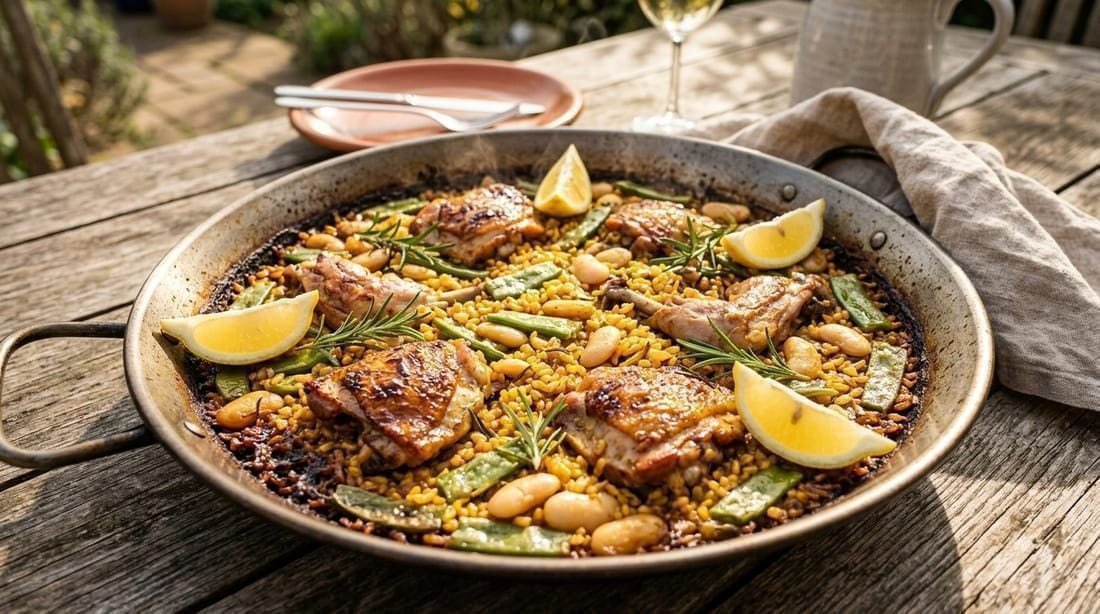
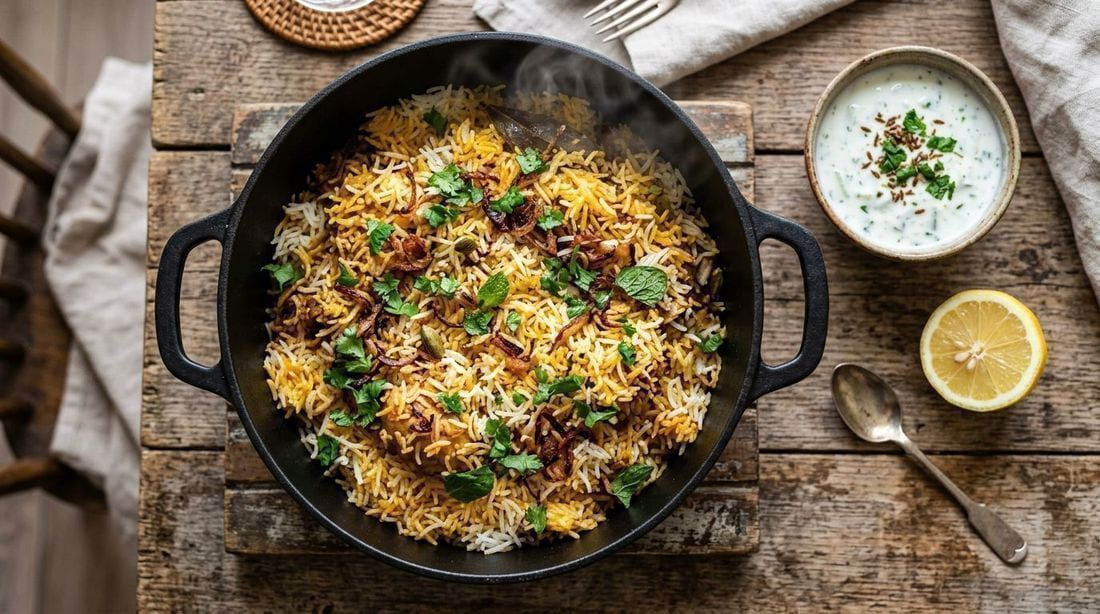
Brown the meat: heat the olive oil in a 15-inch paella pan (or the widest skillet you own) over medium-high. Season the chicken and rabbit with salt, add to the pan in a single layer, and brown hard, turning occasionally, for 10–12 minutes until deeply golden on all sides. This browning is the foundation of the whole dish — color here is flavor later.
Build the sofrito: push the meat to the edges, add the garlic to the center and cook 30 seconds, then stir in the grated tomato and paprika. Cook 3–4 minutes, stirring the tomato through the oil until it darkens and the mixture looks like a thick, rust-colored paste — the raw edge should be completely cooked away.
Simmer the stock: pour in the hot chicken stock (hold back the saffron infusion), scrape the pan bottom, add the green beans and butter beans, and simmer gently for 20 minutes, partially covered, until the meat is tender and the stock tastes rich. Taste and salt assertively — the rice will absorb most of it. Stir in the saffron infusion; the liquid should turn a deep sunset gold.
Add the rice and do not touch: sprinkle the bomba rice across the pan in an even layer, using a wooden spoon to distribute it in a cross shape then spreading outward — then stop stirring, permanently. Boil vigorously over medium-high heat for 8 minutes; the liquid will drop and the rice will surface.
Finish low, then make the socarrat: reduce the heat to medium-low and cook 10–12 more minutes, uncovered, until the rice is just tender and most of the liquid is gone (add a splash of hot stock down the side if the pan dries before the rice is done). Tuck the rosemary sprig into the rice. For the socarrat, crank the heat to high for 60–90 seconds — you will hear faint crackling and smell toasting; pull it the moment it smells nutty, not burnt.
Rest and serve: take the pan off the heat, lay a clean tea towel or foil loosely over the top, and rest 5 minutes — the steam finishes the top layer of rice while the socarrat sets below. Scatter lemon wedges over the pan and bring the whole thing to the table in its pan, eating straight from the center outward.
Bomba, Calasparra, or arborio — which rice should I use for paella?
Bomba first, Calasparra a close second — both are Spanish short-grain varieties grown to absorb two to three times their weight in stock while the grains stay separate and al dente. Arborio, the risotto rice, is a serviceable fallback: it absorbs less liquid (use about 30% less stock) and releases starch as it cooks, so the result is creamier and softer — closer to a baked risotto than a true paella, and the socarrat is harder to achieve. Long-grain rice (basmati, jasmine) is the one real wrong answer: it stays too firm, does not drink the stock, and turns the dish into loose rice with saffron sprinkles.
Can I get a socarrat without a proper paella pan?
Yes — the pan matters less than the heat management. Any wide, heavy skillet (carbon steel, stainless, or a well-seasoned cast-iron) works if the rice layer stays shallow. For the socarrat, the trick is listening: in the final minutes, raise the heat and listen for a soft crackling sound like light rain — that is the last moisture popping off the bottom and the crust forming. Give it 60–90 seconds from that moment, sniff for toasted-nut aroma, and pull it. A thin nonstick pan is the one thing to avoid: its coating dulls the high heat burst that caramelizes the crust, and metal spoons scratch it.
What can I substitute for saffron in paella?
Nothing matches saffron exactly — its honeyed-floral depth is the signature of the dish — but there are honest stand-ins. The best is a pinch of good quality turmeric plus a teaspoon of sweet paprika: you lose the floral top notes but keep color and a warm earthiness (this is what many Spanish home cooks use on weeknights anyway). A few crushed annatto seeds steeped in the stock add peppery color. What not to use: "saffron powder" blends from the supermarket spice aisle, which are mostly dyed turmeric at saffron prices. If saffron is out of budget, make the dish anyway with turmeric-paprika — a paella without saffron is still delicious; a paella without socarrat is the real loss.
Why is my paella rice mushy or crunchy in the middle?
Both failures come from the same root: the rice-to-liquid-heat balance slipped. Mushy paella means too much stock, too deep a rice layer, or — the classic mistake — stirring, which pops the grains and releases starch like risotto. Crunchy centers mean the rice ran out of liquid before it finished hydrating: either the heat was too high in the low phase (steam escaped before the rice drank) or you skipped the hot-stock top-up down the side of the pan. Diagnosis for next time: keep the layer about half an inch deep, boil hard for 8 minutes then low for 10–12, and if the pan looks dry but the rice still has bite, add hot stock in a splash — never cold, which shocks the grains and stalls the cook.
Do you really stir paella, or is that a myth?
You never stir paella after the rice goes in — and it is not a myth, it is architecture. Risotto is stirred to force starch out and make creaminess; paella is the opposite discipline: the rice sits still so the grains hydrate from the saffron stock while the bottom layer toasts into the socarrat. Stirring mid-cook releases the starch, floods the pan with creaminess, and destroys any chance of a crust — you end up with saffron porridge. The only legitimate movements are the initial cross-spread to distribute the rice evenly in the first 30 seconds, and nudging a lemon wedge or beans that sit proud of the liquid. Everything else stays hands-off.
Can I make paella ahead, and how do I reheat it without losing the socarrat?
Paella is genuinely best in the first 30 minutes out of the pan, but it holds well with one caveat: the socarrat softens under steam no matter what. To make ahead, cook the paella fully, spread it in the pan or on a sheet tray so it cools fast, and refrigerate within an hour. Reheat spread out on a sheet tray at 350°F (175°C) for 10–12 minutes, covered loosely with foil for the first 8 and uncovered at the end — tray reheating keeps the rice layer shallow and dries the bottom slightly, which is the closest you will get to a re-formed crust. Do not microwave: it steams the rice rubbery and kills every texture the dish worked for. Add seafood fresh on reheating day, never before.