Marinate: in a large bowl, whisk together the yogurt, ginger-garlic paste, 1 teaspoon of the Kashmiri chili powder, 1/2 teaspoon of the garam masala, and 1/2 teaspoon of the salt. Add the chicken chunks and coat thoroughly. Rest at room temperature for 20–30 minutes, or cover and refrigerate up to overnight.
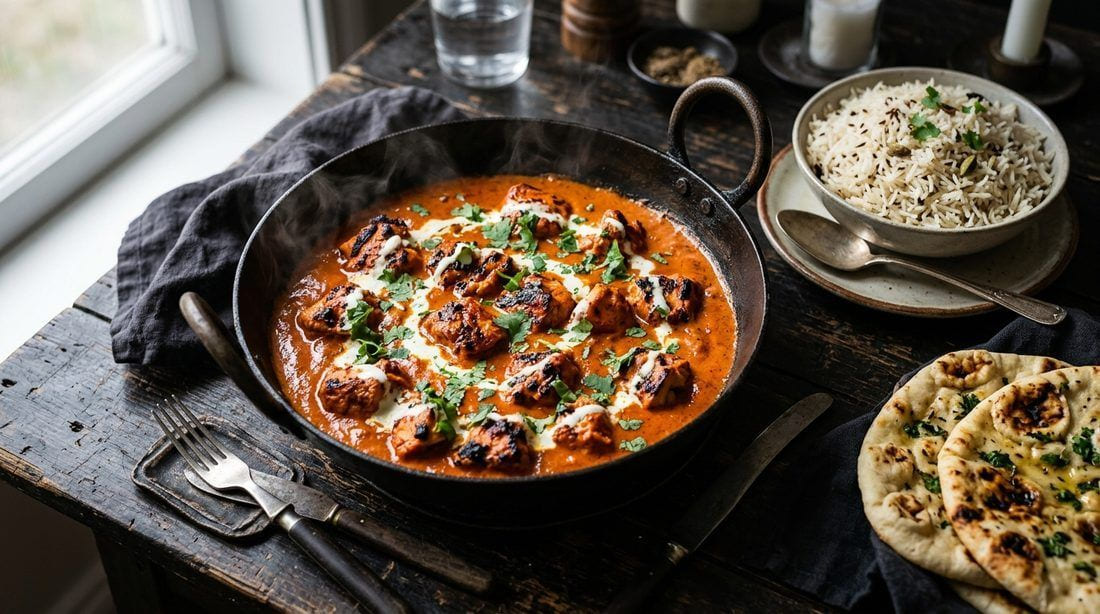
Sear the tikka: heat 1 tablespoon of the ghee in a heavy skillet or cast-iron pan over medium-high heat. Working in batches so the pan stays hot, sear the chicken chunks 3–4 minutes per side until deeply browned with charred edges (a few blackened spots are the point). They do not need to be cooked through — set aside on a plate.
Build the base: reduce the heat to medium and add the remaining ghee. Cook the onion for 6–8 minutes until golden at the edges, then add the garlic and ginger and cook 1 minute until fragrant.
Bloom the sauce: add the remaining chili powder, garam masala, cumin, coriander, turmeric, and paprika to the pan and stir for 30 seconds — the spices should sizzle and darken but not burn.
Simmer: pour in the crushed tomatoes plus 1/2 cup water, scrape up the charred bits from the bottom, and simmer uncovered for 10–12 minutes until the sauce darkens, thickens, and glistens with released oil. Blend smooth with an immersion blender for a restaurant-texture gravy, or leave it rustic.
Finish: lower the heat to a gentle simmer and stir in the cream, the remaining salt, and the seared chicken with any resting juices. Simmer 5–8 minutes until the chicken is cooked through and the sauce coats a spoon. Crush the kasuri methi between your palms over the pan, simmer 2 minutes more, and finish with cilantro. Serve with basmati rice and naan.
Why is my tikka masala sauce too thin?
The sauce was never reduced enough before the cream went in. Crushed tomatoes carry a lot of water, so give them the full 10–12 minutes of uncovered simmering — the sauce should darken, look glossy, and hold a trail when you drag a spoon through it. If the finished dish is still loose, simmer it gently uncovered for a few more minutes, or mash a few chicken chunks into the sauce to release starch. Avoid adding flour or cornstarch — the silky texture comes from reduction, not thickener.
Why did my yogurt marinade curdle or the sauce split?
Heat is the usual culprit. Yogurt splits over high heat, which is why the marinated chicken is seared fast in a hot pan rather than simmered — the char seals the marinade. For the sauce, keep the pot at a gentle simmer once the cream is in, never a rolling boil, and stir as it goes in. Cold cream hitting a hot sauce can also shock it — warm the cream for 30 seconds in a cup first. If it does split, an immersion blender usually brings it back together.
What is the difference between chicken tikka masala and butter chicken?
They are cousins with different accents. Butter chicken (murgh makhani) is built on tandoori-style chicken folded into a buttery tomato sauce with honey-sweet richness and a heavy cream finish — milder and silkier. Chicken tikka masala leans on its charred, spice-forward tikka pieces and a brighter, tangier tomato gravy — a little smokier, a little bolder in the spice. Both end in a tomato-cream sauce, but the masala tastes smoky-edged and punchy where the makhani tastes velvet and sweet.
Why is my tikka masala sauce too thin?
The sauce was never reduced enough before the cream went in. Crushed tomatoes carry a lot of water, so give them the full 10–12 minutes of uncovered simmering — the sauce should darken, look glossy, and hold a trail when you drag a spoon through it. If the finished dish is still loose, simmer it gently uncovered for a few more minutes, or mash a few chicken chunks into the sauce to release starch. Avoid adding flour or cornstarch — the silky texture comes from reduction, not thickener.
Why did my yogurt marinade curdle or the sauce split?
Heat is the usual culprit. Yogurt splits over high heat, which is why the marinated chicken is seared fast in a hot pan rather than simmered — the char seals the marinade. For the sauce, keep the pot at a gentle simmer once the cream is in, never a rolling boil, and stir as it goes in. Cold cream hitting a hot sauce can also shock it — warm the cream for 30 seconds in a cup first. If it does split, an immersion blender usually brings it back together.
What is the difference between chicken tikka masala and butter chicken?
They are cousins with different accents. Butter chicken (murgh makhani) is built on tandoori-style chicken folded into a buttery tomato sauce with honey-sweet richness and a heavy cream finish — milder and silkier. Chicken tikka masala leans on its charred, spice-forward tikka pieces and a brighter, tangier tomato gravy — a little smokier, a little bolder in the spice. Both end in a tomato-cream sauce, but the masala tastes smoky-edged and punchy where the makhani tastes velvet and sweet.
 Cuisine