Ingredients
- 1 1/2 lb boneless, skinless chicken thighs, cut into bite-size pieces
- 1 cup plain full-fat yogurt
- 2 tablespoons ginger-garlic paste (or 1 tablespoon grated ginger plus 4 cloves garlic, minced)
- 1 1/2 teaspoons garam masala, divided
- 1 teaspoon Kashmiri chili powder (or 1/2 teaspoon cayenne plus 1/2 teaspoon sweet paprika)
- 1 teaspoon salt, divided
- 3 tablespoons ghee or butter, divided
- 1 large yellow onion, finely chopped
- 4 ripe tomatoes, chopped (about 2 cups), or 1 (14-oz) can crushed tomatoes
- 1 teaspoon ground cumin
- 1 teaspoon ground coriander
- 1/2 teaspoon ground turmeric
- 1 cup heavy cream
- 1 tablespoon kasuri methi (dried fenugreek leaves), optional
- 2 tablespoons butter, for finishing
- Fresh cilantro, chopped, for serving
Instructions
Marinate: in a bowl, stir together the yogurt, ginger-garlic paste, 1 teaspoon of the garam masala, the chili powder, and 1/2 teaspoon of the salt. Add the chicken and coat each piece well. Let it rest at room temperature for 15–30 minutes (or overnight in the fridge — longer is better here).
Heat 1 tablespoon of the ghee in a heavy pot or deep skillet over medium-high heat. Sear the chicken in batches, 2–3 minutes per side, until lightly browned — it does not need to cook through. Set the chicken aside on a plate.
Add the remaining 2 tablespoons of ghee and lower the heat to medium. Cook the onion until soft and golden, 6–8 minutes, scraping up any browned bits.
Add the tomatoes, cumin, coriander, turmeric, the remaining 1/2 teaspoon of garam masala, and the remaining 1/2 teaspoon of salt. Simmer for 8–10 minutes, stirring occasionally, until the tomatoes break down into a thick, brick-red sauce.
For a restaurant-silky texture, blend the sauce until smooth with an immersion blender (or carefully in a blender). Leave it rustic if you prefer — the dish works either way.
Return the chicken and any accumulated juices to the pot. Simmer gently for 10–12 minutes, until the chicken is cooked through and the sauce has thickened around it.
Stir in the heavy cream, then the kasuri methi (crush it between your fingers first, if using). Simmer for 3–4 minutes more, stirring — keep it at a gentle bubble, not a rolling boil, or the cream can split.
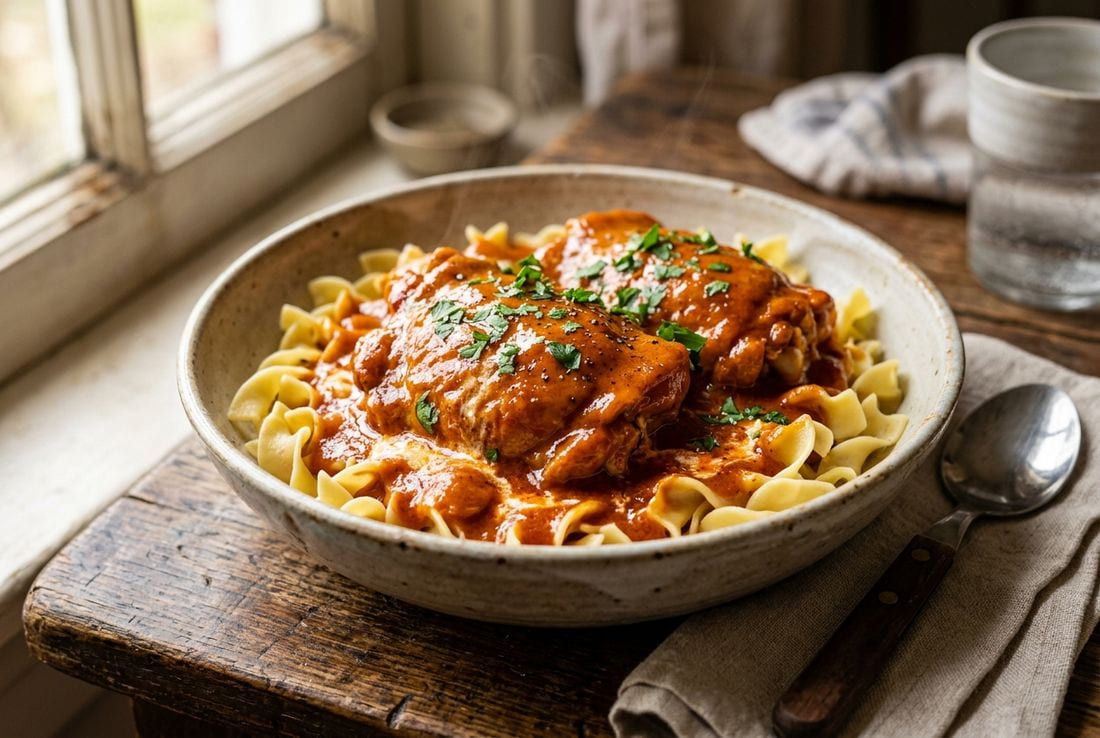
Finish by swirling in the 2 tablespoons of butter until it melts to a glossy sheen. Taste, adjust salt, shower with cilantro, and serve hot with naan or basmati rice.
Tips for Success
- Chicken thighs are non-negotiable here — they stay juicy through the simmer and their fat enriches the sauce. Breasts work if you swap them in, but cook them just until done and pull them out before blending the sauce so they do not dry out.
- The yogurt marinade is doing real work: it tenderizes the chicken and gives the sauce body. Do not skip it, and do not rush it — even 15 minutes helps, and overnight makes it exceptional.
- Kasuri methi (dried fenugreek leaves) is the secret restaurant touch — it adds a faint bitter-sweet, almost maple note that makes butter chicken taste like the takeout version. It keeps for months in a sealed jar; skip it or use a pinch of fenugreek powder if you do not have it.
- The dish only gets better the next day: the flavors meld overnight. Reheat gently over low heat with a splash of water or cream, never a hard boil.
Perfect pairings
Butter chicken is a naan-and-rice dish at heart — pair it with its Indian table-mates and the Desi dinner spread.
Frequently Asked Questions
Can I use chicken breast instead of thighs?
Yes, but treat it differently: cut the breasts into uniform pieces, skip the initial sear-browning step (just coat and set aside), and add them with the sauce instead, simmering only 8–10 minutes until just cooked. Breast meat dries out fast in a long simmer, so keep the gentle-heat window tight. Thighs remain the better — and more authentic — choice.
Why did my sauce curdle or split?
Almost always heat that is too high when the cream goes in. Cream splits at a rolling boil, so keep the pot at a gentle simmer and stir constantly after adding it. Cold cream hitting a hot sauce can also break it — warm the cream slightly in a cup first. If it does split, an immersion blender often rescues it, and a pat of butter stirred in helps it come back glossy.
Can I make butter chicken dairy-free?
Yes, with two swaps: use coconut cream in place of the heavy cream (it adds a faint coconut note that most people do not notice under the spice) and a good plant-based butter or extra ghee substitute for the finishing butter. Skip the yogurt marinade or use a plain plant-based yogurt — or marinate in lemon juice and spices instead. The sauce is shorter on creaminess but still deeply flavorful.
Why is my butter chicken sauce watery or thin?
The sauce needs time to concentrate. Let the tomatoes simmer down into a thick base before you add the cream — if they are still watery, the finished sauce will be too. Simmer the blended sauce uncovered for 5–8 minutes at a gentle boil until it holds its shape on a spoon, then add the cream. A last-minute fix: simmer the finished dish uncovered for a few extra minutes to cook off moisture, stirring so the cream does not split.
Can I substitute another spice blend for garam masala?
Garam masala is a warm blend of cumin, coriander, cardamom, clove, cinnamon, and black pepper, so its substitute depends on what you have. A mix of 1 teaspoon ground coriander, 1/2 teaspoon ground cumin, and 1/4 teaspoon each of cardamom and cinnamon comes close; or in a pinch, use a little more cumin and coriander and skip the sweet spices. Buy it pre-mixed whenever you can — it is the backbone of the dish and the jar lasts months.
Can I make butter chicken in a slow cooker or Instant Pot?
Yes. Slow cooker: sear the chicken and cook the onion, then add everything except the cream and butter and cook on low for 4–5 hours; stir in the cream and butter in the last 20 minutes. Instant Pot: use the sauté function for the onion and tomatoes, add the chicken and cook on high pressure 10 minutes, quick-release, then finish the sauce on sauté with the cream. In both cases, brown the chicken first for flavor — skipping the sear is the top mistake in pressure-cooker versions.
Affiliate disclosure: this page contains affiliate links. If you buy equipment through them, Cuisinety earns a small commission at no extra cost to you — it keeps the site free. Picks follow the same research-backed standards as our gear guides. Read ourfull affiliate disclosure.
Browse All Recipes →
Love this recipe? Pin it!
Save it to your Pinterest board so you can find it later.
Pin this Recipe Cuisine