Salt the eggplant (optional but kind): toss the cubes with 1 teaspoon of salt in a colander and let them drain 20–30 minutes, then pat thoroughly dry. This seasons the flesh all the way through and keeps the eggplant from drinking half the oil in the pan.
Sear each vegetable in its own turn: heat 2 tablespoons of olive oil in a wide Dutch oven or deep skillet over medium-high heat. Brown the eggplant in a single layer for 6–8 minutes, until golden-edged and just tender, then lift it out. Repeat with the zucchini (4–5 minutes, it cooks faster), then the peppers (4–5 minutes), adding oil only as needed. Set all three aside — this staged browning is what keeps each vegetable tasting of itself instead of water.
Build the base: add the last 2 tablespoons of oil to the pot, drop the heat to medium, and cook the onion with a pinch of salt for 8–10 minutes, until soft and translucent. Add the garlic and thyme and cook 1 minute more, until fragrant.
Stew the tomatoes: pour in the grated or crushed tomatoes with the bay leaf, black pepper, and a pinch of sugar if the tomatoes taste sharp. Simmer 10–12 minutes, stirring now and then, until the sauce thickens and darkens and the raw tomato edge cooks off.
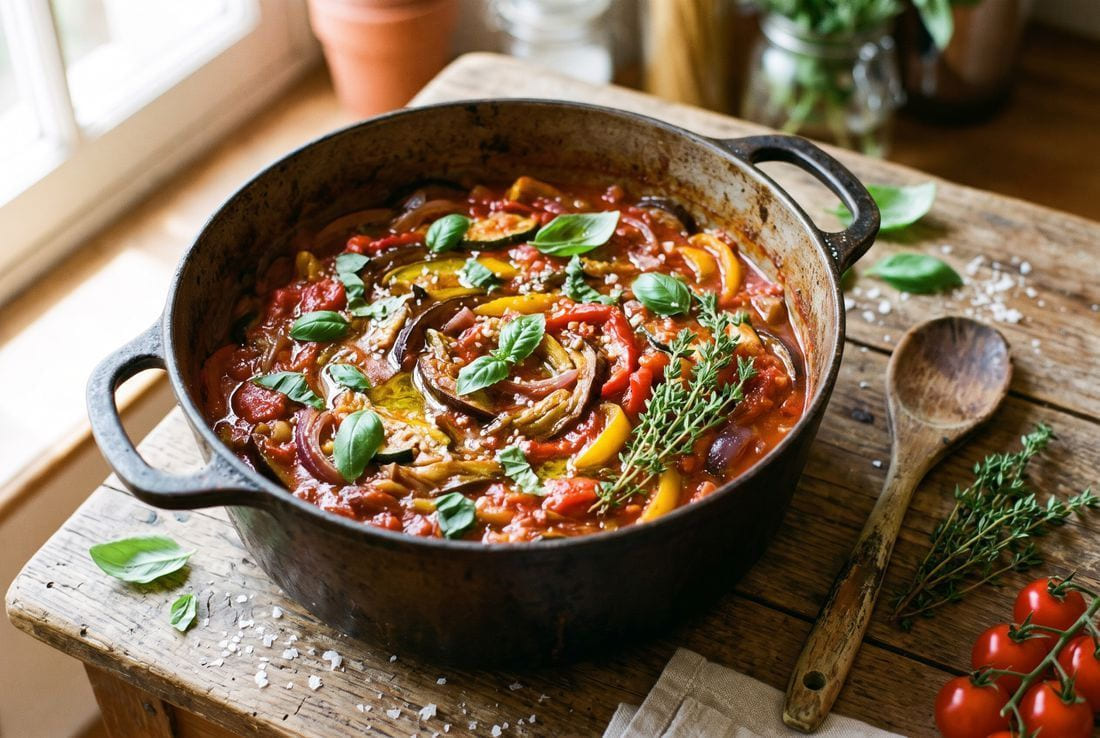
Marry the pot: return the eggplant, zucchini, and peppers to the pot and fold gently — you want tender vegetables, not smashed ones. Half-cover (a lid ajar) and simmer on the lowest heat for 20–25 minutes, stirring occasionally, until everything is silky and the olive oil shimmer on top. The stew should be thick enough to mound on a spoon, never soupy.
Finish and rest: fish out the bay leaf, stir in the torn basil, and taste for salt. Rest the pot off the heat for 10 minutes before serving — ratatouille improves dramatically with a little patience, and even more overnight.
Do I really have to salt and drain the eggplant?
No — modern eggplant is bred far less bitter than the old varieties, so salting is optional. But it still earns its 20 minutes: salt draws out water so the cubes brown instead of steam, and it seasons the flesh all the way through instead of only the surface. If you skip it, pat the eggplant dry anyway and expect to give it 2–3 extra minutes in the pan.
Can I make ratatouille ahead of time, and how do I store it?
Yes — and you should. Ratatouille is at its best the day after it is made, when the flavors have married. Keep it covered in the refrigerator for up to 5 days and reheat gently over low heat, or eat it cold or room temperature straight from the container, Provençal-style. It also freezes well for up to 3 months; thaw overnight in the fridge and warm it slowly, adding a spoonful of olive oil to bring back the gloss.
What do you serve with ratatouille?
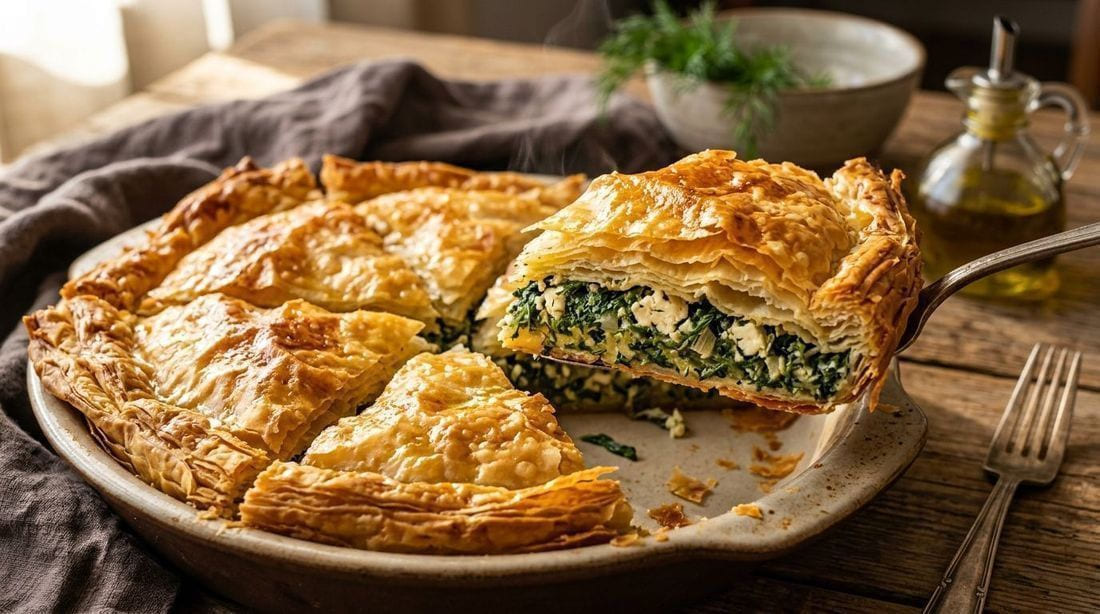
Crusty bread is the non-negotiable — ratatouille is practically a sauce. Beyond that: spoon it over rice, couscous, or creamy polenta; crown toasted sourdough with it and a fried egg; or serve it alongside roast chicken, grilled fish, or lamb chops, where its sweetness cuts the char. In summer it is a superb room-temperature dish for a mezze-style table, next to things like spanakopita or a grain bowl.
Why did my ratatouille turn out watery and mushy?
Almost always a moisture-management failure with three contributing causes. Vegetables cooked all together in one pot steam in each other’s juice instead of browning, so stage them — eggplant, zucchini, peppers each get their own turn in the pan. Overcrowded pans drop the temperature and trap steam, so work in batches and use a wide Dutch oven. And keep the lid ajar during the final simmer: fully covered, the vegetables weep into the sauce and you spend the last 10 minutes boiling it back off. A little salt-draining of the eggplant (20–30 minutes, then pat dry) is the finishing touch.
Can I use frozen vegetables or out-of-season tomatoes?
Frozen eggplant and zucchini work acceptably in the stew — skip any browning (they release water as they thaw and will never sear), add them straight to the tomato base, and simmer a few minutes less so they do not collapse entirely. The bigger win is on the tomato side: canned whole peeled tomatoes, crushed, are reliably sweeter and deeper than pale winter fresh tomatoes, so out of season the can is the honest choice. In August, grate fresh ripe tomatoes and use no sugar at all.
What is the difference between rustic ratatouille and the tian or confit-byaldi style from the movie?
Rustic ratatouille is a stew: cubes of vegetable browned separately, then simmered together in a tomato-onion base until the boundaries melt. The tian style slices the vegetables into thin rounds and shingles them in overlapping rows over an aromatic base, then bakes them — the juices reduce in the oven rather than on the stove, and every serving keeps its stripes. Confit byaldi (the film’s version, from chef Thomas Keller) stacks the shingles over a piperade and slow-bakes them low, then serves a compact tower with a vinaigrette. Same pantry, three textures: the stew is the easiest and the best make-ahead; the tian is the most dramatic on the plate.