Soften the potatoes: place the sliced potatoes and onion in a 10-inch nonstick or well-seasoned skillet with 1 1/4 cups of olive oil — the slices should be mostly submerged; this is a shallow confit, not a fry. Heat over medium until the oil shimmers gently around the edges (small bubbles, never a rolling boil), then cook for 18–22 minutes, stirring and turning the slices gently every few minutes, until the potatoes are completely tender and bend without resistance but hold their shape and stay pale gold. A fork should slide in with zero pressure. Do not brown them — color comes later.
Drain: set a colander over a large heatproof bowl and drain the potato-onion mixture, reserving the oil (strain it; it is now golden, lightly potato-scented, and genuinely good for the next batch — this is how Spanish kitchens do it). Let the potatoes sit in the colander 5 minutes so steam escapes.
Build the batter: crack the eggs into a large bowl, add 1 1/4 teaspoons salt and a few grinds of pepper, and beat just until the whites and yolks are uniform — do not whip air into them. Fold in the warm (not hot) potato-onion mixture and let it sit for 10 minutes, pressing gently with a spatula: the eggs begin to coat every slice and the starch thickens the mixture so it sets as one cake instead of a potato scramble.
First side: wipe the same skillet, add 2 tablespoons of the reserved oil, and heat over medium-high until it shimmers. Pour in the egg-potato mixture, spread it level, and immediately drop the heat to medium-low. Cook for 5–6 minutes, shaking the pan in a small circular motion every minute (the tortilla should slide freely — this prevents sticking and keeps the interior creamy), until the edges are set and the bottom is deeply golden when you lift an edge with a spatula. The center should still look wet.
The flip: place a large dinner plate (or a flat lid) over the skillet, hold it firmly with one hand, and in one confident motion invert the pan so the tortilla lands golden-side up on the plate. Slide it back into the pan, uncooked side down, tucking any ragged edges in with a spatula as it settles.
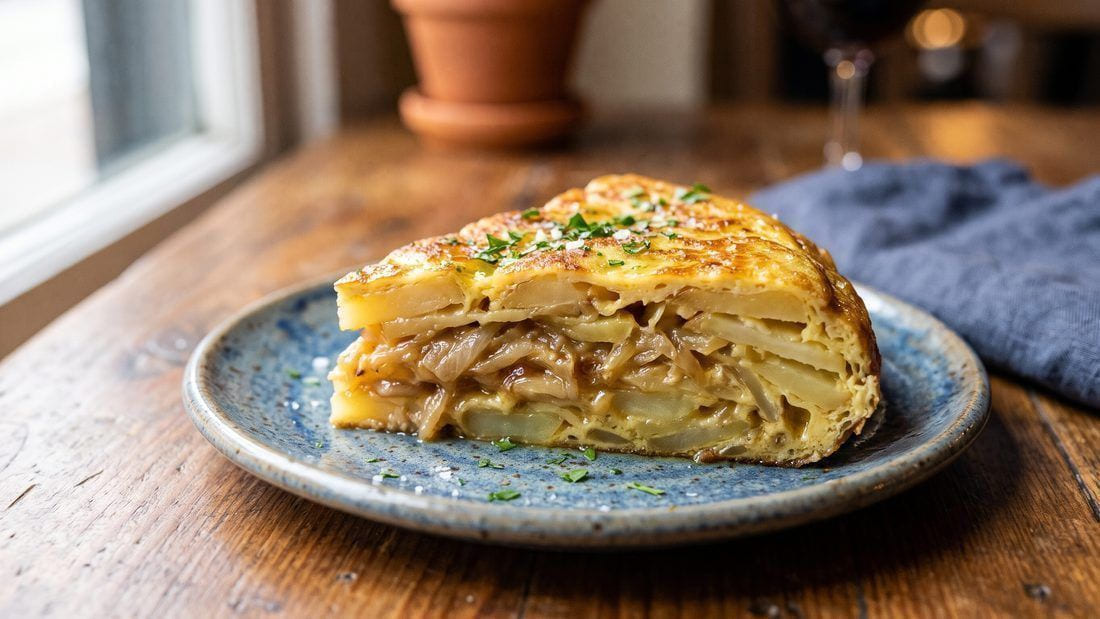
Second side: cook over medium-low for 4–5 minutes more, shaking the pan occasionally, until the second side is golden and the center is just set — a skewer or thin knife should come out clean but the interior should still tremble slightly for the creamy version (see FAQ for doneness styles). Slide onto a plate and rest for at least 10 minutes before cutting; the tortilla firms as it cools and is honestly better warm or at room temperature than hot.
Serve: cut into 6 wedges for dinner, or into 1 1/2-inch cubes each skewered with a toothpick for tapas, at room temperature, with olives, marinated peppers, or a simple green salad alongside.
How do I flip the tortilla without breaking it?
Confidence plus the right tools: the tortilla must slide freely in the pan before you flip (shake the pan — if it moves as one piece, you are ready; if it sticks, slide a spatula all around and under it first). Use a plate wider than the pan rim, press it flush against the tortilla, hold pan-handle and plate-edge firmly together, and flip in one fast motion — hesitation is what breaks it. Do it over the sink or a counter so any drip lands safely, and know that even Spanish home cooks lose one now and then: torn tortilla still tastes exactly the same, it just becomes "tortilla de scrambling".
Can I make tortilla española without frying the potatoes in so much oil?
Yes, with a texture trade-off you should know about. The classic confit is what makes the potatoes silky and the interior creamy — that is the dish. A lighter version: steam or boil the sliced potatoes and onion until tender (8–10 minutes), drain well, then fold into the eggs and pan-cook as directed. You get a genuinely good everyday tortilla, closer to a fluffy omelet with potato layers. What you lose is the silky, almost-dense restaurant texture. The oven method — tossing the slices in 3 tablespoons oil and roasting at 400°F until tender — splits the difference and keeps the pan free.
Why is my tortilla rubbery or dry in the middle?
Two causes: overcooked eggs or potatoes that were too wet. Eggs that cook past just-set turn rubbery fast — the center should still tremble slightly when you pull it, because residual heat finishes it on the rest (carryover is real with a thick egg cake). And if the potato-onion mixture was not drained well after the confit, watery oil and steam get trapped in the eggs and curdle them. Drain in a colander for a full 5 minutes, let the mixture cool until just warm before folding in, and pull the tortilla a shade earlier than feels safe the first time — err wet over dry, and rest it.
Why did my tortilla stick to the pan or fall apart when I flipped it?
Two checks before any flip: the pan must be genuinely nonstick or well-seasoned with enough oil to coat, and the tortilla must slide freely when you shake the pan — if it moves as one piece, it is ready; if it drags, slide a spatula all around the edge and underneath before you commit. Use a plate wider than the pan rim, press it flush against the surface, hold both firmly, and flip in one fast, confident motion over the counter — hesitation is what breaks tortillas. A slightly underdone first side is also safer: the surface sets more as the second side cooks, so err early rather than late.
Can I make tortilla española ahead of time?
You should — it is a make-ahead dish by nature. The tortilla holds for 3 days refrigerated and is traditionally eaten warm or at room temperature, never hot: bake it in the morning, rest it fully, then serve wedges or toothpick cubes straight from the counter all evening. To reheat, warm slices gently in a low oven (250°F for 10 minutes) or eat cold; avoid the microwave, which turns the egg rubbery. It also travels and picnics brilliantly, which is exactly why every Spanish table grows up with it.
What is the difference between tortilla española and a French omelet or frittata?
A French omelet is eggs first — soft, quick, rolled, cooked in minutes. A frittata is eggs again, baked in the oven with fillings scattered through. Tortilla española is potatoes first: the slices are confited in olive oil until silky, folded into just enough egg to bind them into one dense, creamy cake, and cooked slowly on the stovetop, flipped once like a pancake. The egg-to-potato ratio runs the opposite way — more potato than egg — and the texture is something no omelet or frittata imitates: dense and silky at once, excellent at room temperature, cut in wedges like a cake.