Ingredients
- 1 1/4 cups (250 g) dried chickpeas, soaked 8–12 hours (see note for canned)
- 1 teaspoon baking soda (for the simmer — the peel-and-overcook trick)
- 2/3 cup (160 g) good-quality tahini, well stirred (runny, pourable, seeds-separated kind)
- 1 small clove garlic (or 1/2 large clove), roughly chopped
- 3 tablespoons fresh lemon juice (about 1 lemon), plus more to taste
- 1/2 teaspoon fine salt, plus more to taste
- 1/4 cup ice-cold water, plus more as needed
- To finish: extra-virgin olive oil, sweet paprika, a handful of reserved whole chickpeas (warmed), chopped parsley
- For serving: warm pita or crusty bread, crudités, pickles, olives
Instructions
The night before, cover the dried chickpeas with 3 inches of cold water and soak 8–12 hours. They should double in volume.
Cook them past soft: drain the soaked chickpeas, put them in a saucepan with the baking soda and fresh water to cover by 2 inches, and bring to a boil. Skim the foam (and the loosening skins) as it rises, then simmer briskly, partially covered, for 30–45 minutes — far beyond just-tender — until many skins float free and a chickpea crushes to paste between two fingers. Do not salt the pot.
Reserve a handful of whole chickpeas for garnish, then tip the rest (with their cooking liquid) into a bowl of cold water. Swirl with your hand: loose skins float up and rinse away; rub the chickpeas between your fingers to slip off any stubborn ones. Skim and discard every skin you catch.
Blend the base: in a food processor, whirl the garlic and lemon juice alone for 30 seconds, then let it sit 5 minutes — the raw garlic mellows into the acid while the machine is busy elsewhere. Strain out the solids (you want the flavor, not a harsh bite).
Add the tahini and salt to the processor and blend until pale, thick, and stiff — it should nearly seize, about 1 minute. Scrape down the sides.
With the machine running, add the peeled, overcooked chickpeas a scoop at a time, blending a full minute after each addition, until everything is pale and smooth.
With the motor still running, drizzle in the ice-cold water, 1 tablespoon at a time. Watch the hummus turn white, glossy, and billowy — 2–4 tablespoons total, until it falls from the spoon in a slow ribbon and still holds a soft peak.
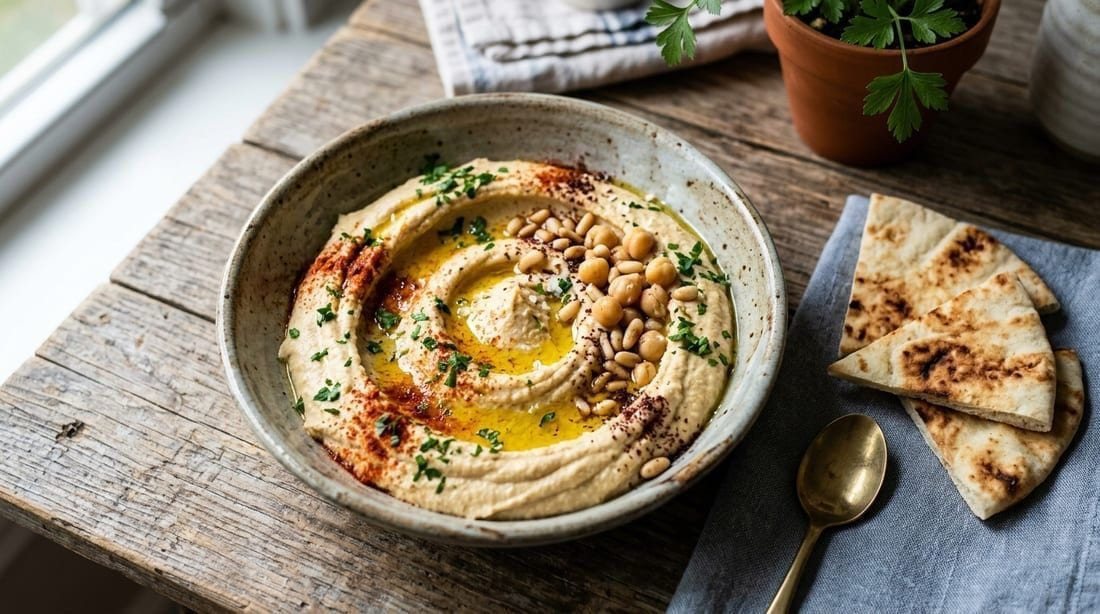
Taste and adjust — more lemon for brightness, more salt, a drizzle more water if it stiffens. Spread it in a shallow bowl, swipe a spoon-back swirl through the center, and pool olive oil into the trough. Scatter with paprika, the warmed whole chickpeas, and parsley. Serve at room temperature (never fridge-cold) with warm pita.
Tips for Success
- Peel and overcook — the two moves that make it silky. Skins and undercooked chickpeas are what read as gritty, bitter, or gluey. The baking-soda simmer loosens the skins so they rinse away, and overcooking lets the blades emulsify the chickpeas completely instead of leaving flecks.
- Buy tahini that pours. Real tahini separates: oil on top, seed paste below, and you stir it back together like a good nut butter. Thick, chalky, stir-proof tahini makes hummus that tastes like paste — warm it gently with a splash of the chickpea cooking liquid to loosen it if needed.
- Ice water and room temperature are the finishing secrets. Cold water whipped into the emulsion turns it white and airy (the contrast with the warm chickpeas also helps it set silky); and hummus served straight from the fridge tastes flat and stiff — pull it out 20 minutes before serving.
Perfect pairings
These recipes belong on the same table — cook them together for a full spread, or swap in a variation next time.
Frequently Asked Questions
Can I make hummus with canned chickpeas?
Yes, with two adjustments. Simmer the canned chickpeas (drained) with the baking soda and fresh water for 15–20 minutes — this is the step that erases the tinny taste and lets them whip smooth — then peel what peels easily and continue with the recipe. Add a splash of the cooking liquid or an extra tablespoon of tahini for body. It is genuinely good hummus; it just will not be quite as silken as the dried-chickpea version.
Why did my hummus turn out grainy or stiff?
Grainy means the chickpeas were not cooked past soft, or the skins stayed on — cook them 30–45 minutes with baking soda and rinse the skins away before blending. Stiff (almost dry, paste-like) means too little liquid or under-powered blending: drizzle in ice water 1 tablespoon at a time with the motor running, and give the processor a full 2–3 minutes once everything is in — hummus lightens dramatically in the final minute of blending.
How long does homemade hummus keep, and can I freeze it?
It keeps 4–5 days in an airtight container in the fridge — press plastic wrap onto the surface to stop it from crusting, and refresh it with a stir, a squeeze of lemon, and a drizzle of cold water when you serve it again. It also freezes well for up to 3 months (without the olive-oil finish); thaw overnight in the fridge and re-whip it in the processor with a splash of cold water to bring back the fluff.
Why is my homemade hummus grainy instead of creamy?
Grainy hummus almost always traces back to the chickpeas: skins left on, or chickpeas that were only cooked to tender instead of past-soft. Simmer the soaked chickpeas with 1 teaspoon of baking soda for 30–45 minutes — well beyond tender — until the skins loosen and float free, then rinse them away in cold water before blending. Then give the food processor a full 3–4 minutes with the ice water drizzled in: hummus that looks done at 1 minute turns billowy by minute 4.
Why does my hummus taste bitter?
Two usual suspects: bitter (stale or burnt) tahini, or raw garlic left in big pieces. Taste your tahini before it goes in — it should be nutty, not harsh; if it is bitter, switch brands, because no amount of lemon will fix it. And either blend the garlic with the lemon juice first and strain (the acid mellows it), or use only half a small clove. Over-blending overheated tahini can also turn it slightly bitter — pulse in short runs and scrape down.
Can I use dried chickpeas without soaking overnight?
Yes — the quick way is a 1-hour boil: cover the dried chickpeas with water, bring to a boil for 2 minutes, then let them sit covered off the heat for 1 hour. After that quick soak, cook them with the baking soda as directed. The texture is very close to the overnight version. True no-soak cooking (a 2–3 hour simmer) works too, but the baking soda step becomes even more important to soften the skins.
Affiliate disclosure: this page contains affiliate links. If you buy equipment through them, Cuisinety earns a small commission at no extra cost to you — it keeps the site free. Picks follow the same research-backed standards as our gear guides. Read ourfull affiliate disclosure.
Browse All Recipes →
Love this recipe? Pin it!
Save it to your Pinterest board so you can find it later.
Pin this Recipe Cuisine