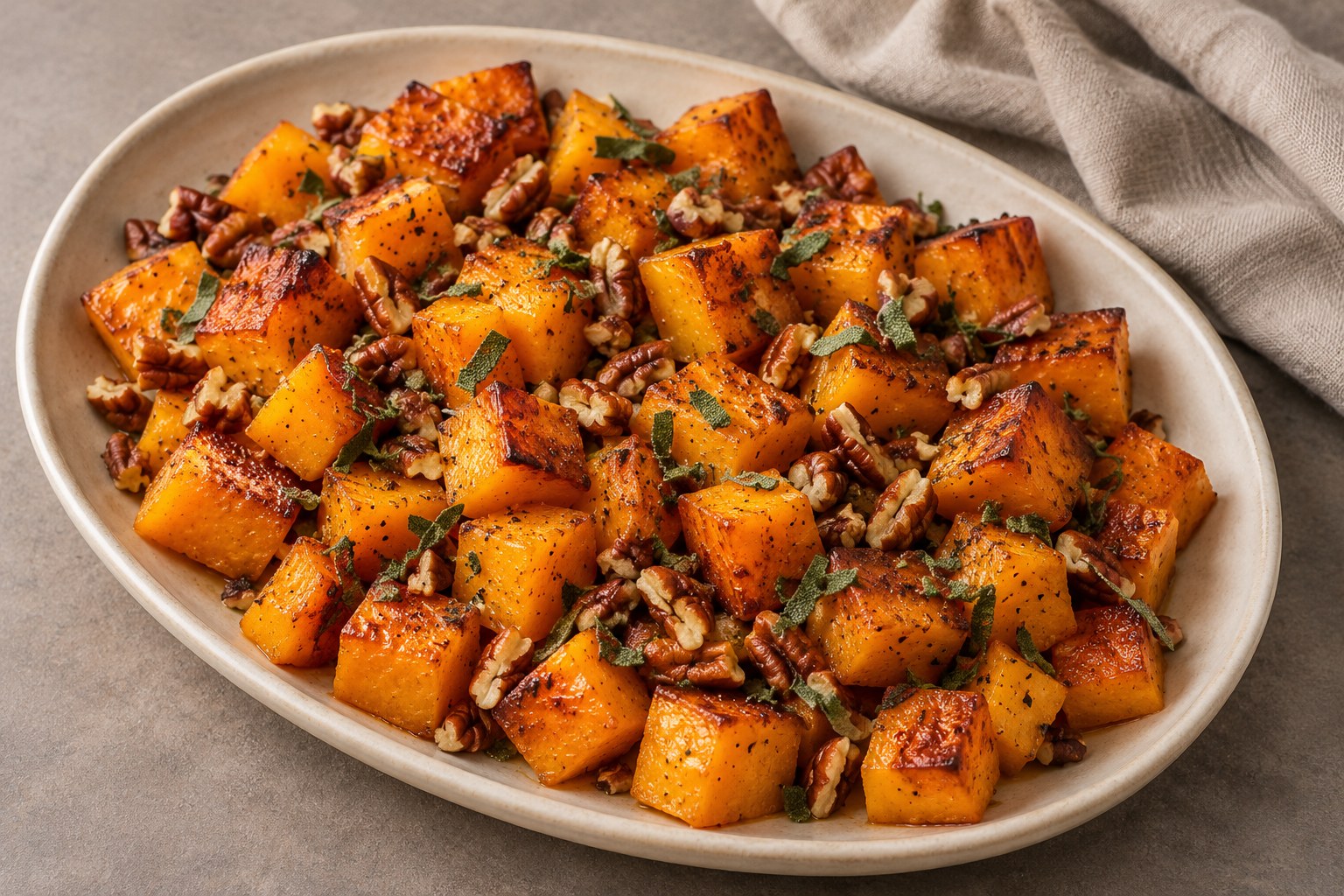
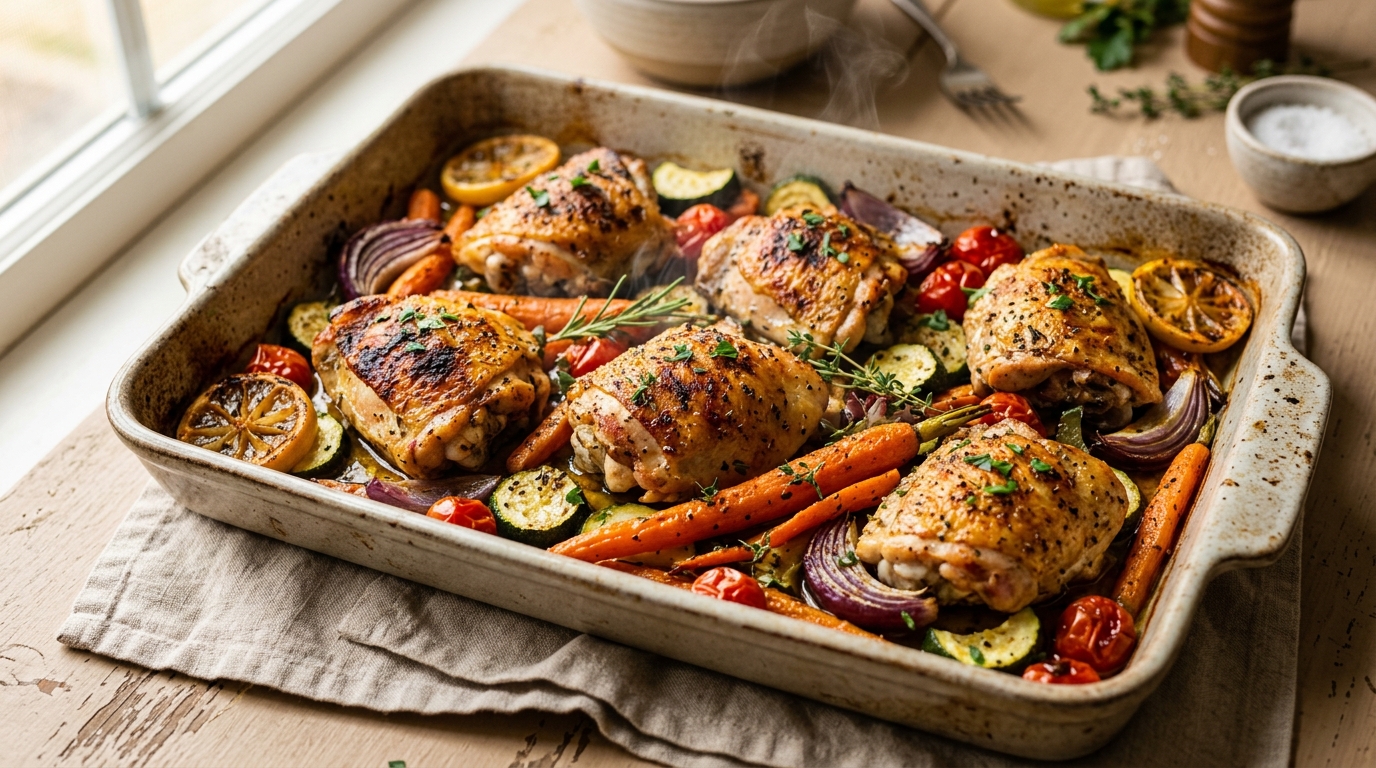
A platter of roasted butternut squash can do a lot for a November dinner. The cubes bring a little sweetness to roast chicken or a pot of lentil soup, and the toasted pecans give each spoonful some crunch. Serve the squash warm from the oven for a weeknight meal, or pile it onto a wide platter for a holiday table where guests can help themselves. The timing below is an estimate, and this recipe has not been kitchen-tested. Use the color at the edges and the feel of a knife through the center to decide when the squash is ready.
The method gives each ingredient a chance to do its job. Olive oil helps the cut surfaces brown, and a splash of cider vinegar gives the maple syrup enough tang to keep the finish lively. Add the maple and chopped sage near the end, once the squash has already colored, so the glaze has only a short spell in the hot oven. Toast the pecans separately in a skillet while the squash roasts, then scatter them on just before serving. That keeps their crunch and lets you control their color independently of the vegetables.
By AmiraPreparation time is estimated; not kitchen-tested.
Ingredients
4
800 g peeled and seeded butternut squash
2 tablespoons olive oil
1/2 teaspoon fine sea salt
1/4 teaspoon ground black pepper
2 tablespoons pure maple syrup
1 tablespoon apple cider vinegar
1 tablespoon finely chopped fresh sage
50 g pecans, roughly chopped
Instructions
Set a rack in the middle of the oven and heat to 220°C (425°F). Set out a large rimmed sheet pan. If starting with a whole squash, trim the ends, peel it and scoop out the seeds before weighing the flesh.
Cut the squash into roughly 2 cm cubes. Pat the cut surfaces dry, then toss the cubes on the pan with the oil, salt and pepper until lightly coated. Spread them in a single layer with a little space between pieces and put a flat face of each cube against the metal.
Roast for 25–30 minutes, turning the cubes once halfway through with a thin spatula. Look for golden undersides and a center that a small knife can pierce with slight resistance. Cubes from the narrow end may brown sooner, so check several pieces before glazing.
While the squash roasts, toast the pecans in a dry skillet over medium heat for 3–5 minutes, shaking the pan frequently. When the nuts smell toasty and the cut faces deepen in color, tip them onto a plate. Stir the maple syrup, vinegar and sage together in a small bowl.
Take the sheet pan out and pour the maple mixture over the squash. Turn the cubes gently to coat them and spread them out again. Roast for 4–5 minutes more, until the glaze looks glossy and a knife slides easily through the largest cube. Watch the thin drips along the edges of the pan, which darken first.
Slide a spatula under the glazed cubes and lift them onto a serving platter. Scatter the toasted pecans across the top just before serving so they stay crisp. Serve warm, allowing guests to scoop up a little of the sage glaze with each portion.
Use a broad, rimmed metal pan. Crowded squash releases moisture into the gaps and can turn soft before it colors. If your pan is small, split the cubes between pans and swap their positions when you turn the squash.
Chop the sage just before mixing the glaze. Stack the leaves and slice them into thin ribbons, then chop across the ribbons. The finer pieces spread through the syrup and keep any one bite from tasting strongly of sage.
For a holiday meal, peel and cube the squash ahead and keep it covered in the refrigerator. Toast the pecans separately and let them cool before covering them. Pat the squash dry when you are ready to roast, then glaze it and add the nuts close to serving.
Perfect pairings
These recipes belong on the same table — cook them together for a full spread, or swap in a variation next time.
A crowded pan or wet cut surfaces can slow browning. If you have yet to add the glaze, spread the cubes out and give them a few more minutes uncovered. If they are already glazed and very tender, take them out and rely on the toasted pecans for contrast. Extra oven time at that point can scorch the syrup while the cubes lose their shape.
Can I use dried sage or a different nut?
Use 1 teaspoon rubbed dried sage in place of the tablespoon of fresh sage and stir it directly into the glaze. Chopped walnuts can replace the pecans by weight. Toast them in the skillet and use their aroma as your cue, since their darker skins make color changes harder to see.
How can I reheat the squash for dinner guests?
If you plan to reheat it, keep the toasted nuts separate. Spread the cooked squash on a sheet pan and warm it in a moderate oven until hot, checking early because the cubes are already tender. Lift them gently onto the platter and add the pecans at the table.
Affiliate disclosure: this page contains affiliate links. If you buy equipment through them, Cuisinety earns a small commission at no extra cost to you — it keeps the site free. Picks follow the same research-backed standards as our gear guides. Read ourfull affiliate disclosure.