Ingredients
- 1 1/2 lb boneless, skinless chicken thighs, cut into large chunks
- 1/2 cup plain whole-milk yogurt
- 2 tablespoons lemon juice, divided
- 1 tablespoon ginger-garlic paste
- 1 teaspoon salt, or to taste
- 1 teaspoon Kashmiri chili powder or 1/2 teaspoon paprika + a pinch of cayenne
- 1 teaspoon ground cumin
- 1 teaspoon ground coriander
- 1/2 teaspoon turmeric
- 1/2 teaspoon garam masala
- 1/2 teaspoon black pepper
- 1/4 teaspoon ground fenugreek (optional)
- 1 teaspoon neutral oil, for the marinade
- 1 tablespoon butter or ghee, melted, for basting
- For serving: mint chutney, lemon wedges, red onion rings, fresh coriander
Instructions
In a large bowl, whisk the yogurt, 1 tablespoon of lemon juice, ginger-garlic paste, salt, chili/paprika, cumin, coriander, turmeric, garam masala, black pepper, and fenugreek (if using). The marinade should be thick enough to coat.
Add the chicken chunks and toss to coat thoroughly. Cover and marinate for at least 1 hour at room temperature, or up to 24 hours refrigerated - longer is better. For extra depth, add the second tablespoon of lemon juice to the marinade before cooking.
If using wooden skewers, soak them in water for 30 minutes. Thread the chicken onto skewers, leaving small gaps so the heat reaches every side.
Option 1 – Grill: preheat a charcoal or gas grill to high. Grease the grates, then grill the skewers over medium-high heat for 12–15 minutes, turning every 3–4 minutes, until blistered, charred, and cooked through (165°F).
Option 2 – Oven/broiler: arrange on a greased sheet pan and broil at 475°F for 12–15 minutes, turning once, until charred and cooked through.
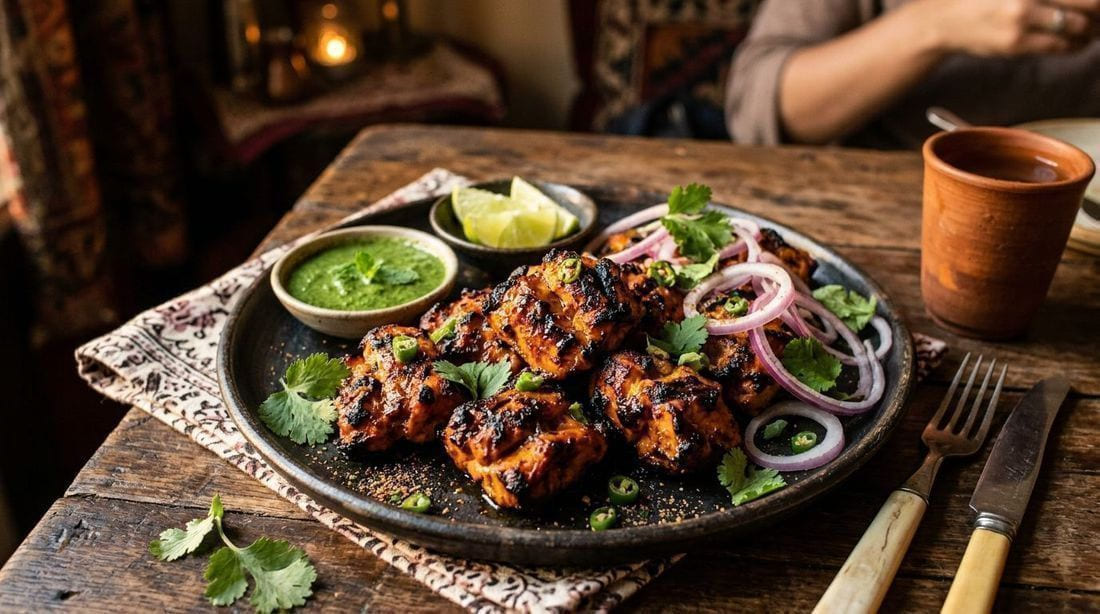
Baste with the melted ghee during the last minute, then serve immediately, still hot, with mint chutney, lemon wedges, red onion rings, and fresh coriander. Great rolled in naan.
Tips for Success
- The single best upgrade is time: a 24-hour marination develops a flavor depth you cannot rush. The acid in the yogurt and lemon also helps tenderize the chicken.
- Bone-in dark meat stays juiciest, but boneless thighs are easiest for tikka. Skewering with small gaps lets the heat char the surface instead of steaming in the middle.
- Do not let the marinade burn - the sugars in the yogurt can scorch. Cook over medium-high, not volcanic, heat and turn frequently.
Perfect pairings
Chicken tikka is the grill-table anchor — pair it with its kebab brothers and a cooling base.
Frequently Asked Questions
Can I use chicken breast instead of thighs?
Yes, but thighs are juicier and more forgiving. If using breast, marinate it and cook it a little less time so it does not dry out - pull it at 160°F and let it rest; carryover heat finishes it.
What is the difference between chicken tikka and tandoori chicken?
Both use the same yogurt-and-spice marinade and the tandoor. The difference is cut: tikka is boneless chunks (often skewered), while tandoori chicken is bone-in pieces or a whole bird. Tikka cooks faster and is easier to eat out of hand.
Why is my chicken tikka dry?
Overcooking is the usual culprit, or using lean breast. Cook only until it reaches 165°F, keep the pieces reasonably large, and use thighs or a well-marinated breast. Basting with ghee at the end adds moisture and flavor.
Is chicken tikka gluten-free?
The chicken and marinade as written are gluten-free. Just make sure your spice blends contain no added wheat and serve with gluten-free bread or rice.
Why is my chicken tikka dry?
Overcooking or using lean breast. Cook only until the thickest piece hits 165°F, keep the chunks large, and prefer thighs over breast. Basting with a little ghee at the end adds moisture and gloss.
What is the difference between chicken tikka and tandoori chicken?
Both share the yogurt-and-spice marinade and the tandoor. The difference is cut: tikka is boneless chunks (often skewered), while tandoori chicken uses bone-in pieces or a whole bird. Tikka cooks faster and is easier to eat out of hand.
Can I make chicken tikka in the oven?
Yes. Broil/grill at 475–500°F on a greased sheet pan for 12–15 minutes, turning once, until the edges char and the meat hits 165°F. Skewering helps even cooking, but chunks on a tray work fine.
Affiliate disclosure: this page contains affiliate links. If you buy equipment through them, Cuisinety earns a small commission at no extra cost to you — it keeps the site free. Picks follow the same research-backed standards as our gear guides. Read ourfull affiliate disclosure.
Browse All Recipes →
Love this recipe? Pin it!
Save it to your Pinterest board so you can find it later.
Pin this Recipe Cuisine