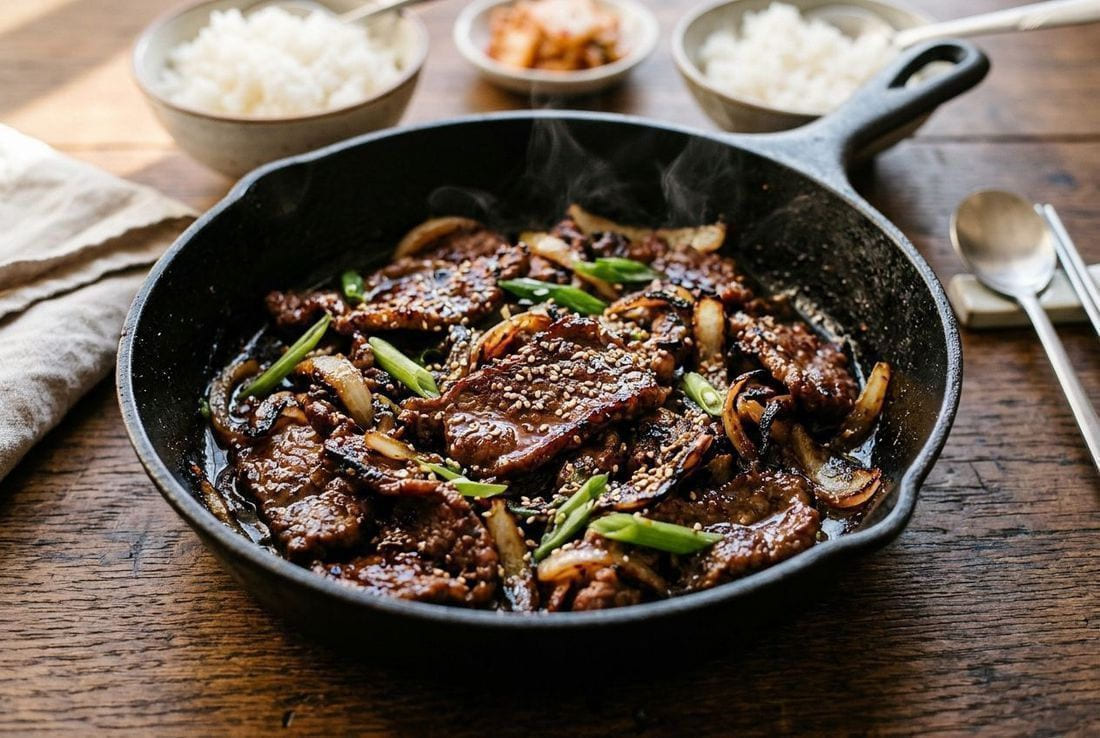
Bulgogi is the Korean dish that proves a marinade is a tool, not a bath. Thin-shaved beef spends an hour with grated Asian pear, soy, garlic, and sesame oil — the pear does two jobs at once, adding the signature sweetness while its natural enzymes help the slices stay tender through a fast, hard sear. Then the pan takes over: cast iron heated until it smokes, the beef laid down in a single uncrowded layer so every slice browns instead of steams, onions and scallions folded in at the end to catch the caramelized edges. Bulgogi means "fire meat," and the name is the instruction — the flavor lives in the browned bits. Wrap it in lettuce leaves with ssamjang, pile it over steamed rice, or eat it straight from the pan when nobody is looking; it works as a dinner party and as a Tuesday.
1/2 ripe Asian pear, coarsely grated (about 1/2 cup)
5 tablespoons soy sauce
2 1/2 tablespoons brown sugar
1 tablespoon honey
1 tablespoon toasted sesame oil
8 garlic cloves, minced
1/2 teaspoon freshly ground black pepper
1 medium yellow onion, thinly sliced
3 scallions, cut into 2-inch lengths
1 tablespoon neutral oil, for the pan
1 tablespoon toasted sesame seeds
Steamed rice, red-leaf lettuce, and ssamjang (Korean dipping paste), for serving
Instructions
Slice the beef: freeze the meat for 1–2 hours until firm but not solid, then slice across the grain as thinly as you can — 1/8 inch or less. Paper-thin slices marinate fast and sear in under a minute. (A butcher with a slicer is the cheat code; ask for "bulgogi cut.")
Make the marinade: in a large bowl, combine the grated pear with all its juice, the soy sauce, brown sugar, honey, sesame oil, garlic, and pepper. Massage the mixture with your hands for 30 seconds — the pear pulp should dissolve into the liquid.
Marinate: add the beef and toss with your hands until every slice is coated, then press it down so the marinade covers everything. Marinate at least 1 hour at room temperature (or up to overnight in the fridge; cold beef goes straight to the pan).
Heat the pan: place a cast-iron skillet (or heavy stainless pan) over high heat until it just begins to smoke, about 3 minutes. Add half the neutral oil.
Sear in batches: lift the beef from the marinade, letting excess drip off, and lay it in a single layer — do not crowd, or it steams. Cook 1–2 minutes per side until deeply browned at the edges, then transfer to a plate. Repeat with the remaining beef.
Finish the pan: return all the beef to the skillet over medium heat, add the onion and scallions, and toss 2–3 minutes until the vegetables soften and the pan sauce glazes everything glossy. (If the pan looks dry, splash in a few tablespoons of water and scrape up the browned bits.)
Serve: shower with sesame seeds and eat immediately — over steamed rice, or as lettuce wraps with a smear of ssamjang.
Tips for Success
Thin slices are the whole dish. If you cannot slice paper-thin at home, ask the butcher for shaved beef or "bulgogi cut" — frozen-and-thawed once is fine.
Crowding is the enemy of browning. Two quick batches beat one steaming batch every time; the pan should stay hot enough that the beef sizzles on contact.
The marinade doubles and freezes: tuck raw marinated beef in a freezer bag for up to 3 months and you are one thaw away from the fastest impressive dinner you own.
Perfect pairings
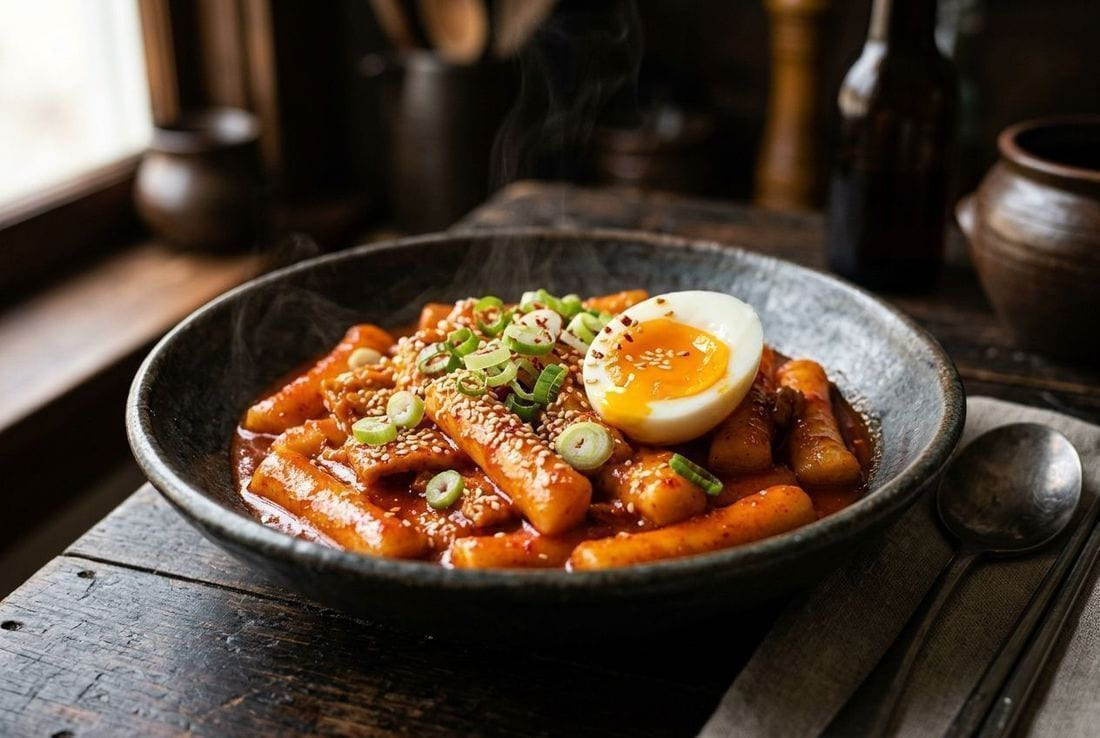
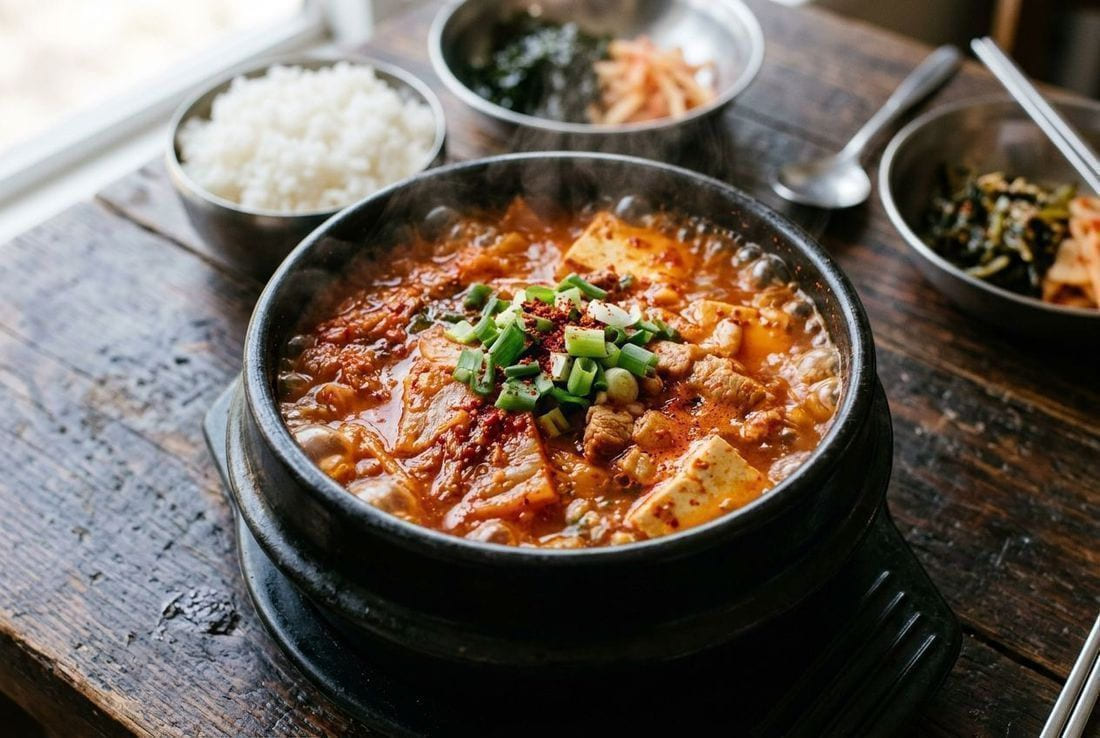
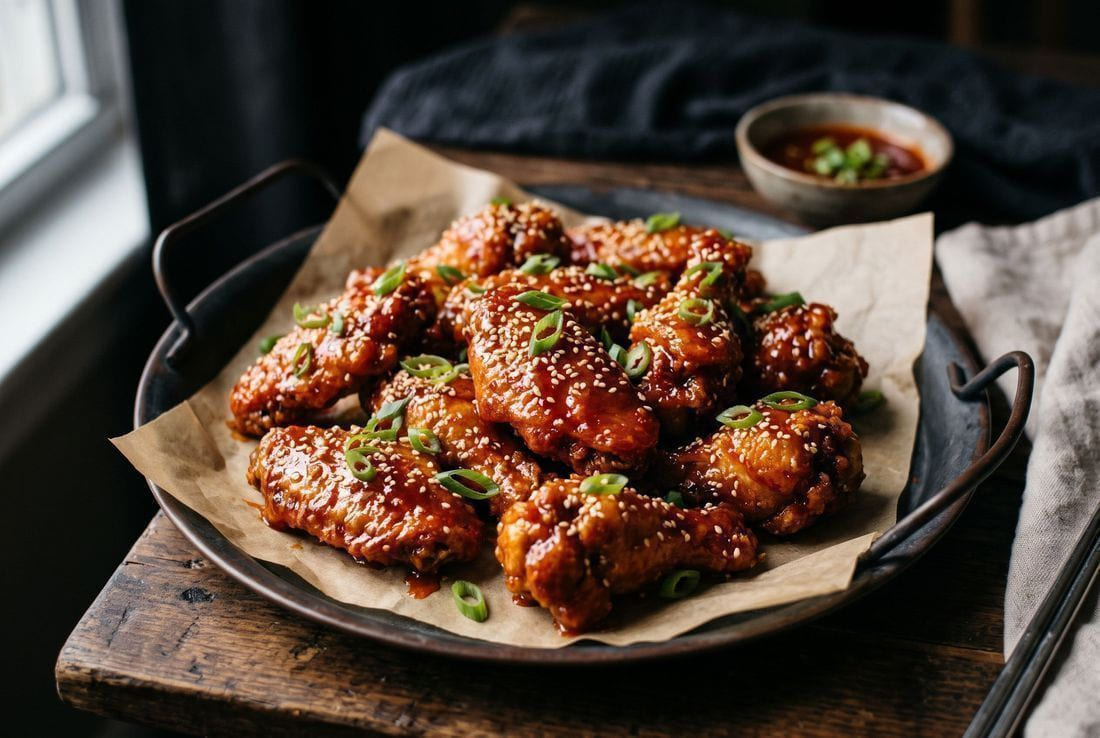
These recipes belong on the same table — cook them together for a full spread, or swap in a variation next time.
Ribeye is the classic choice — well-marbled, tender, and quick to sear. Sirloin is a leaner and cheaper option that still works well when sliced very thin. What matters most is the thickness: shaved-thin beef absorbs the marinade and cooks in minutes no matter the cut, while thick slices stay chewy no matter how long they sit in the marinade.
Can I marinate bulgogi overnight?
Yes — overnight marinating is common and deepens the flavor. Two cautions: keep it in the fridge, and know that beyond about 12 hours the pear enzymes and soy can start to give the surface a slightly mushy texture rather than more flavor. If you plan to marinate overnight, slice the pear harder and keep the beef in a single tight layer so it stays evenly coated.
What do you serve with bulgogi?
The traditional spread is steamed short-grain rice, red-leaf or perilla lettuce for wrapping, and ssamjang — a thick paste of soybean paste, gochujang, sesame, and garlic that turns each wrap into its own course. Kimchi or a quick cucumber salad cuts the richness. If you skip the wraps, bulgogi over rice with a fried egg on top is the weeknight version, and leftovers make excellent fried rice the next day.
Affiliate disclosure: this page contains affiliate links. If you buy equipment through them, Cuisinety earns a small commission at no extra cost to you — it keeps the site free. Picks follow the same research-backed standards as our gear guides. Read ourfull affiliate disclosure.