Cook the rice: rinse the rice in cold water until the water runs clear, drain, then cook with 1 3/4 cups water in a covered pot over medium-low heat for 15 minutes. When done, keep it covered off the heat — the steamed, slightly sticky surface is what will later fry into a crust.
Season the spinach: blanch the spinach in boiling salted water for 30 seconds, drain, rinse under cold water, and squeeze hard to remove excess water. Toss with 1 teaspoon sesame oil, 1 teaspoon soy sauce, 1 clove of the minced garlic, and a pinch of salt. Set aside in its own small bowl.
Season the sprouts: blanch the bean sprouts for 2 minutes until just tender, drain well, and toss with 1 teaspoon sesame oil, 1 teaspoon soy sauce, and a pinch of salt. Keep in a separate bowl — the point of bibimbap is that every vegetable keeps its own seasoning.
Cook the carrots and mushrooms: in a lightly oiled skillet over medium-high heat, sauté the julienned carrots with a pinch of salt and 1 teaspoon sugar for 2 minutes until glossy and just tender. Remove. In the same pan, sauté the shiitake slices in 1 tablespoon neutral oil with the remaining garlic clove and 1 tablespoon soy sauce for 4–5 minutes until deeply browned and the pan is nearly dry. Pat the salted cucumber dry; it stays raw.
Make the gochujang sauce: whisk the gochujang, rice vinegar, sugar, 1 teaspoon soy sauce, and 1 teaspoon sesame oil in a small bowl until smooth. Taste — it should be punchy and a little sweet, since it will be spread thinly across a whole bowl.
Fry the eggs: in a nonstick skillet over medium heat, fry the eggs sunny-side-up in a little oil until the whites are set and the edges are lacy but the yolks are still liquid, about 3 minutes. Slide onto a plate and set aside.
Build the crust: heat 1 tablespoon neutral oil in a heavy cast-iron skillet (or a clean, oiled stone or stainless bowl) over high heat until it shimmers. Add all the rice, spread it into an even layer, press it down firmly with a spatula, and cook undisturbed for 4–5 minutes until you hear aggressive crackling and smell toasted rice. Do not stir — the crust only forms where the rice sits still and presses against the hot metal.
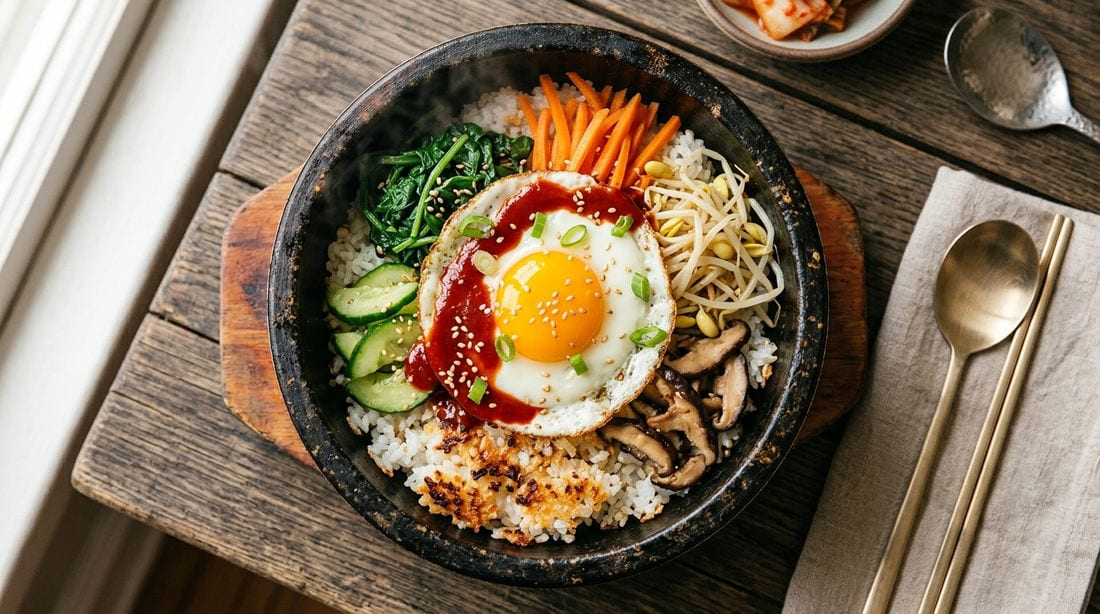
Assemble: arrange the spinach, sprouts, carrots, mushrooms, and cucumber in neat wedges over the rice like spokes of a wheel, each in its own section. Place the fried egg in the center, drizzle the gochujang sauce over everything, scatter sesame seeds and green onions on top, and serve immediately — with a warning that everything gets stirred together violently right before eating.
What can I substitute for gochujang?
Gochujang — Korean fermented chili paste — brings sweetness, funk, and heat in one spoonful, and nothing matches it exactly. The closest stand-in is a mix of 1 tablespoon miso paste (for the fermented depth), 1 tablespoon sriracha or sambal oelek (for heat), and 1 teaspoon honey (for the sweetness), thinned with a little water or rice vinegar. Plain sriracha works in a pinch but tastes flatter and sharper. If you can find gochujang at an Asian grocery or online, it keeps for months in the fridge and unlocks dozens of Korean dishes beyond this one — it is worth owning.
How do I get crispy rice without a dolsot (stone bowl)?
A heavy cast-iron skillet is the most reliable home stand-in. Heat it until a drop of water skitters, add a thin layer of oil, press the cooked rice into a firm, even layer, and let it cook undisturbed over high heat for 4–5 minutes. The pressing matters as much as the heat: loose rice steams instead of frying. A preheated stainless steel pan or even a well-seasoned carbon steel wok also works. The rice should sizzle loudly and smell nutty; when the edges look deep golden and the bottom releases in one crackling sheet, it is done. Never stir mid-crisp — stirring is the enemy of every crust in cooking.
Which vegetables should I use in bibimbap?
The classic core is spinach, soybean sprouts, carrot, shiitake mushrooms, and often bell pepper or zucchini, finished with raw or quick-pickled cucumber. That said, bibimbap was historically a way to empty the banchan (side dish) containers in the fridge, so substitution is traditional, not cheating. Aim for five or so vegetables with contrasting colors and textures, always including at least one leafy green and one crunchy element. Whatever you add, season each vegetable on its own — lightly salted, dressed with sesame oil and soy, or sautéed — rather than seasoning the bowl as a whole.
What is the difference between bibimbap and fried rice?
They look similar in a bowl but they are opposite dishes. Fried rice cooks everything together in one pan so the flavors merge into a single identity. Bibimbap does the reverse: every vegetable is seasoned separately, arranged unmixed on top of the rice, and only combined at the table — which is why the name literally means mixed rice. Bibimbap also leans on texture contrast (the crackling nurungji rice crust, raw or crisp vegetables against hot rice) rather than the uniform wok flavor of fried rice. If your bibimbap tastes like fried rice, the vegetables were pre-mixed or dressed together.
Can bibimbap be made vegan?
Easily. Skip the fried egg — or replace it with crumbled seasoned tofu or a drizzle of extra sesame oil — and check two pantry items: gochujang brands sometimes contain egg white or honey, so pick one labeled vegan (most classic brands are simply chili, glutinous rice, and fermented soybean), and skip any honey in the sauce in favor of sugar. Everything else in the standard vegetable build — spinach, sprouts, carrots, mushrooms, cucumber — is already plant-based, and the sesame-soy namul seasoning carries the dish just fine without the egg.
Can I prepare the vegetables (namul) ahead of time?
Yes — this is the classic meal-prep trick. Each seasoned vegetable keeps 3–4 days refrigerated in its own airtight container (do not mix them until serving), and the gochujang sauce keeps a week in a jar. Cooked rice, however, is best fresh; day-old rice loses the moisture it needs to form a proper crust. So on a weeknight the whole dish becomes a 10-minute assembly: reheat or re-crisp the rice, warm the namul briefly or serve at room temperature — bibimbap is traditionally served with vegetables at room temperature — fry the egg, and build the bowl.