Soak the noodles: put the rice noodles in a large bowl and cover with hot (not boiling) tap water. Soak 8–10 minutes, until they are pliable and bend easily but still have a firm white core — they finish cooking in the wok. Drain well and set aside. Do not soak longer, or they turn to paste in the pan.
Make the sauce: stir the tamarind paste, fish sauce, palm sugar, and lime juice together in a small bowl until the sugar dissolves. Taste it: it should be sour first, sweet second, salty third — adjust with a little extra sugar or lime if one note dominates. Set it by the stove with everything else.
Prep the wok station: have the garlic, shallot, shrimp, beaten eggs, bean sprouts, peanuts, and green onions arranged within reach. Heat the oil in a wok (or a large cast-iron or nonstick skillet) over high heat until it shimmers and a wisp of smoke rises.
Cook the aromatics and shrimp: add the garlic and shallot and stir-fry 20–30 seconds until fragrant, then add the shrimp and cook 1–2 minutes, tossing, until just pink and curled. Push everything to one side of the wok.
Scramble the eggs: pour the beaten eggs into the cleared space and let them set 10 seconds, then scramble with your spatula into soft ribbons. Toss to combine with the shrimp.
Add noodles and sauce: add the drained noodles and the sauce. Toss constantly with a flip-and-fold motion for 1–2 minutes, until the noodles are tender, glossy, and evenly coated — the sauce should cling, not puddle. If the pan looks dry, add a splash of water; if it looks soupy, keep tossing, it will tighten fast.
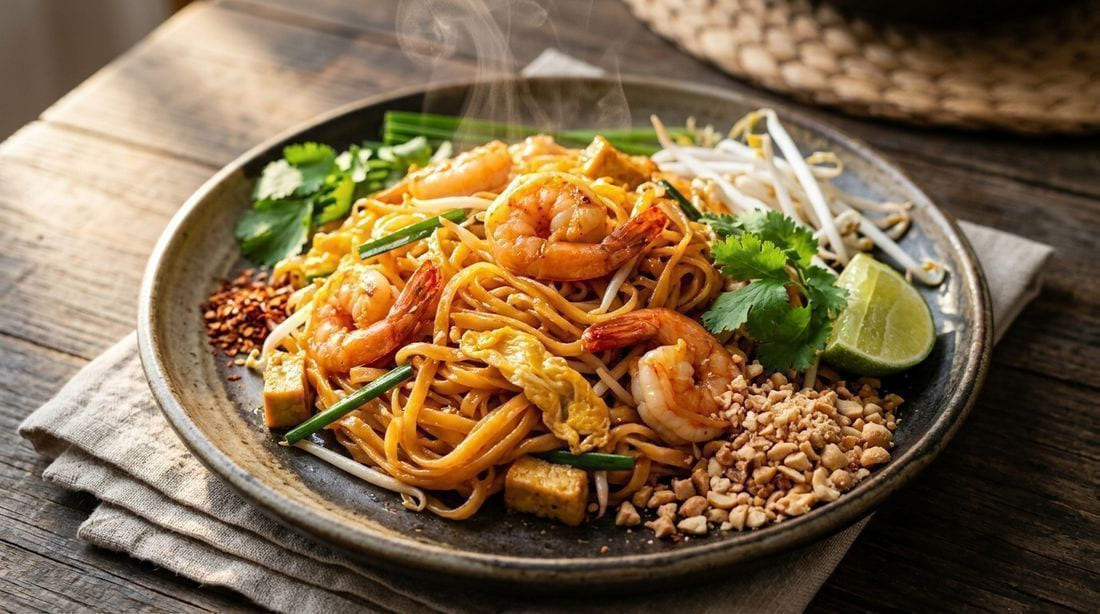
Finish and serve: add the bean sprouts and green onions, toss 30 seconds, then pile onto plates. Top generously with crushed peanuts and cilantro, and serve with lime wedges and chili flakes — the lime goes on at the table, never in the wok.
What can I substitute for tamarind?
Tamarind's deep, fruity sourness has no perfect twin, but a decent stand-in is 1 1/2 tablespoons lime juice plus 1 1/2 tablespoons water and 1 teaspoon brown sugar, or 2 tablespoons of tamarind concentrate (thicker than paste — use a little less and add water). Rice vinegar with a pinch of brown sugar is the weakest option but works in a pinch. Skip ketchup-based "pad thai sauces" — they turn it into something that is neither Thai nor particularly good. If you can find tamarind paste blocks or jars, they keep for months.
Why are my noodles sticky and clumping together?
Almost always over-soaking or a crowded, cool pan. Soak the noodles in hot — not boiling — water for 8–10 minutes max, and drain them thoroughly; trapped water makes the sauce thin and gummy. Then cook over the highest heat your stove has, tossing constantly, and give the noodles room: two servings is the limit for a home wok or large skillet. If they still clump mid-cook, add a splash of water and keep tossing hard — the steam untangles them. And add the bean sprouts at the very end so they stay crunchy, not stewed.
Can I make pad thai without a wok?
Yes — a large cast-iron skillet or a heavy nonstick pan works beautifully. The skillet needs to be ripping hot; heat it longer than you think you should, until a drop of water dances across the surface. A nonstick pan needs a little less heat and less oil. The only real difference is the flip-and-fold toss, which you can fake with two spatulas in a skillet. What you cannot fake is heat: a timid pan steams the noodles instead of stir-frying them, and steaming is what makes them sticky.
Can I use chicken or tofu instead of shrimp?
Yes — both are classic swaps. Chicken: slice 8 oz (225 g) of breast or thigh thin, add it with the garlic and shallot, and stir-fry 2–3 minutes until cooked through before the eggs go in (thigh stays juicier). Tofu: press a block of firm or extra-firm tofu for 15 minutes, cut into cubes, and fry them separately in a little oil until golden on all sides — then set aside and fold back in with the noodles. Tofu added directly to the wok with everything else steams instead of crisping. And for a vegetarian pad thai, swap the fish sauce for soy sauce or a vegetarian fish sauce, and the shrimp for tofu or extra egg.
Is pad thai gluten-free?
Yes with two caveats. Rice noodles, tamarind, palm sugar, and lime are naturally gluten-free, so the base is safe. The caveats: make sure your fish sauce has no wheat (most are just anchovies and salt, but check the label), skip any soy sauce in favor of tamarind or a gluten-free tamarind-based sauce, and verify the peanuts are plain roasted rather than a seasoned mix that may list wheat starch. If you are very sensitive, make the sauce at home rather than using a bottled pad thai sauce, which often contains soy sauce or wheat-based thickeners.
How do I store and reheat leftover pad thai?
Pad thai is best the minute it is tossed, but leftovers survive a day. Refrigerate in an airtight container up to 24 hours — beyond that the noodles turn soft and the flavors dull. Reheat in a hot, lightly oiled wok or skillet with a splash of water, tossing until steaming and glossy again; this restores the wok texture in about 2 minutes. A microwave works in a pinch but steams the noodles into mush, so if you must, reheat in 30-second bursts with a damp paper towel over the plate. Always finish with a fresh squeeze of lime, a handful of raw bean sprouts, and extra peanuts — the leftovers are a vehicle for the garnishes that went missing the first time.
 Cuisine