Velvet the beef: slice the flank steak thin against the grain and toss it in a bowl with 1 tablespoon soy sauce, the Shaoxing wine, and 2 teaspoons cornstarch until every slice is coated. Rest 10 minutes at room temperature.
Make the sauce: whisk together the remaining 1/4 cup soy sauce, oyster sauce, brown sugar, sesame oil, beef stock, and the remaining 1 tablespoon cornstarch in a small bowl until smooth. Set it by the stove.
Blanch the broccoli: bring a pot of salted water to a boil and blanch the florets for 60–90 seconds until bright green and just tender-crisp. Drain well and set aside.
Sear the beef in batches: heat 2 tablespoons of the neutral oil in a large wok or skillet over high heat until it shimmers. Lay the beef slices in a single layer — do not crowd the pan — and sear 45–60 seconds per side until browned but still pink at the edges. Transfer to a plate; the beef finishes in the sauce later.
Sauté and combine: add the last tablespoon of oil to the wok, then the garlic and ginger, and stir for 20–30 seconds until fragrant. Add the blanched broccoli and toss 1 minute, then return the beef with any resting juices.
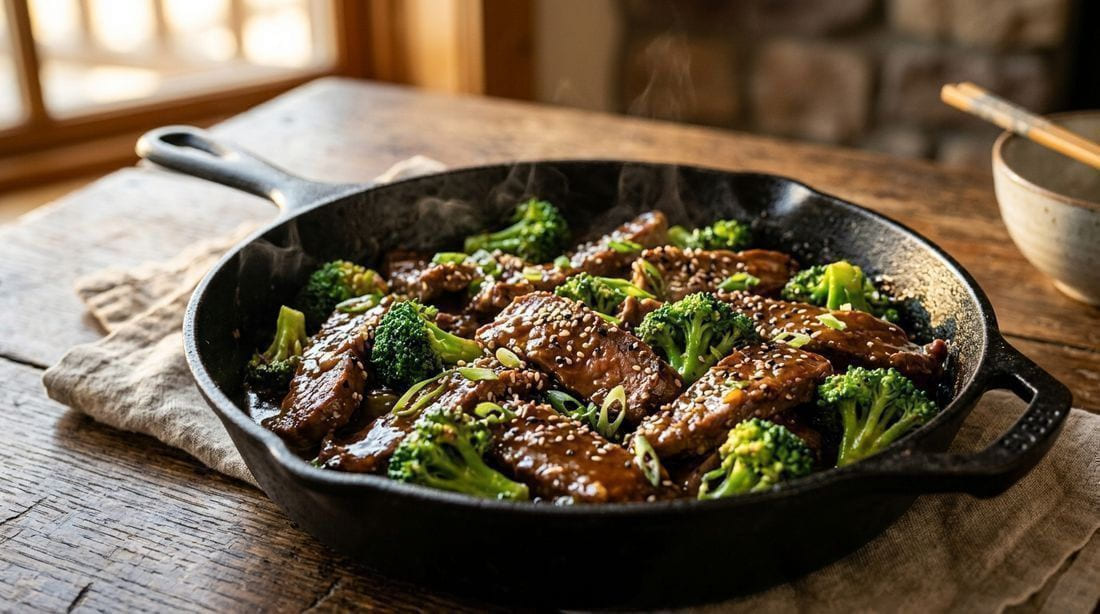
Glaze and serve: give the sauce a quick re-stir and pour it into the wok. Toss constantly for 1–2 minutes as it bubbles and thickens to a dark, glossy glaze that coats everything. Pull it off the heat the moment it clings — it keeps thickening as it sits. Finish with green onions and sesame seeds and serve hot over steamed rice.
Why is my beef and broccoli chewy?
Three usual suspects, in order: the beef was cut with the grain instead of against it, the cornstarch velveting was skipped, or the beef was cooked too long. Slice flank steak paper-thin across the grain (a 15-minute trip to the freezer makes this easy), give it the 10-minute soy-and-cornstarch marinade, and sear it in a single layer at high heat only until browned at the edges — it finishes in the sauce. Well-marbled sirloin is more forgiving than flank if you are nervous.
How do I thicken the sauce without cornstarch?
Cornstarch is the classic because it stays glossy, but arrowroot works in the same amount, and a potato-starch slurry is nearly identical. Avoid flour — it turns the sauce cloudy and pasty. Whatever thickener you use, mix it with cold liquid before it goes into the wok and bring the sauce to a full boil for a minute, or it will never activate. If the sauce is thin at the table, simmer it a minute more rather than adding more starch.
Can I use frozen broccoli?
Yes, with one change: do not thaw it, and skip the blanch. Frozen florets go straight into the hot wok after the garlic and ginger, where they steam-fry in about 3 minutes from their own ice — add a splash of water and cover for a minute to finish the thick stems. Expect slightly softer florets than fresh, but the glossy sauce hides it well. Pat off excess surface moisture before the sauce goes in so it does not dilute the glaze.
Why is my beef and broccoli chewy?
Three usual suspects, in order: the beef was cut with the grain instead of against it, the cornstarch velveting was skipped, or the beef was cooked too long. Slice flank steak paper-thin across the grain (a 15-minute trip to the freezer makes this easy), give it the 10-minute soy-and-cornstarch marinade, and sear it in a single layer at high heat only until browned at the edges — it finishes in the sauce. Well-marbled sirloin is more forgiving than flank if you are nervous.
How do I thicken beef and broccoli sauce without cornstarch?
Cornstarch is the classic because it stays glossy, but arrowroot works in the same amount, and a potato-starch slurry is nearly identical. Avoid flour — it turns the sauce cloudy and pasty. Whatever thickener you use, mix it with cold liquid before it goes into the wok and bring the sauce to a full boil for a minute, or it will never activate. If the sauce is thin at the table, simmer it a minute more rather than adding more starch.
Why did my beef and broccoli turn out watery?
Water got into the pan unaccounted for. The usual culprits: broccoli went in wet after washing (pat it dry or blanch and drain well), the beef released juices because the pan was not hot enough before it went in, or the sauce never reached a full boil so the cornstarch slurry did not activate. Cook the beef in batches at high heat, bring the sauce to a rolling bubble for a full minute, and stop there — it keeps thickening on the plate.