Ingredients
- 2 lb (900 g) boneless, skinless chicken thighs
- 1/2 teaspoon salt
- 1/4 teaspoon black pepper
- 1 tablespoon neutral oil (such as canola or grapeseed)
- 1/4 cup soy sauce
- 1/4 cup mirin
- 2 tablespoons sake (or dry white wine — see FAQ for swaps)
- 1 1/2 tablespoons sugar
- 1 tablespoon fresh ginger, finely grated
- 2 cloves garlic, minced
- 2 green onions, thinly sliced, for garnish
- 1 teaspoon toasted sesame seeds, for garnish
- Steamed rice, for serving
Instructions
Make the glaze first: stir the soy sauce, mirin, sake, sugar, ginger, and garlic together in a small bowl until the sugar dissolves. Grate the ginger fine so it melts into the sauce rather than leaving fibrous bits.
Pat the chicken thighs completely dry with paper towels, then season both sides with the salt and pepper. Dry chicken is the whole difference between a hard sear and watery, steamed meat.
Heat the oil in a large skillet over medium-high heat until it shimmers. Lay in the thighs in a single layer — do not crowd the pan; cook in two batches if needed — and sear for 4–5 minutes per side, until deeply golden and crisp at the edges.
Turn the heat down to medium and pour the glaze into the hot pan. It will bubble up violently at first; that is the sugar and mirin reacting with the pan, and it is exactly what you want. Let it simmer for 4–6 minutes, turning the chicken once or twice to coat, until the sauce has reduced to a syrupy glaze that clings to the meat.
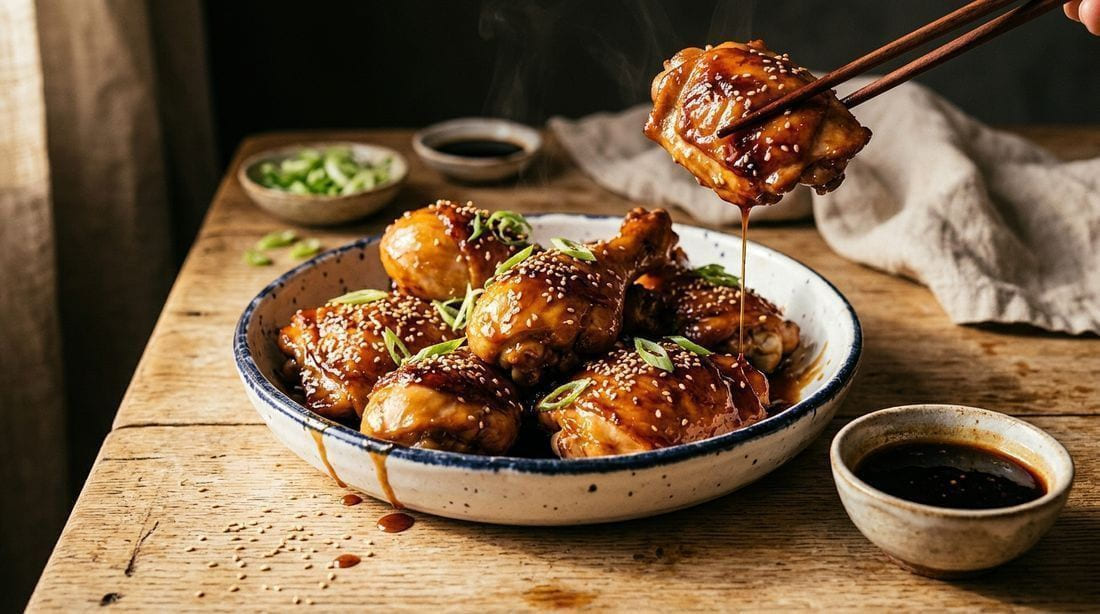
For the lacquered finish, tilt the pan so the glaze pools on one side and spoon it over the chicken repeatedly for the last minute — the extra coats build the glossy shell that makes teriyaki teriyaki. The sauce should be thick enough to coat the back of a spoon.
Rest the chicken off the heat for 2 minutes, then slice against the grain into thick strips (or leave whole). Serve over steamed rice, spooning every last drop of glaze on top, and finish with green onions and sesame seeds.
Tips for Success
- Sear the chicken before the sauce goes in — no exceptions. If the glaze hits raw or under-seared chicken, it steams instead of glazes and you end up with gray meat in thin soup.
- The glaze thickens as it cools, so pull it off the heat a touch earlier than you think you should. If it goes too far and turns taffy-like, whisk in a tablespoon of water over low heat to loosen it.
- Grate the ginger on a fine microplane and scrape it straight into the sauce with the juices — that ginger liquid carries most of the flavor. The garlic goes in the same way.
Cook's Notes: what to watch for
- The pitfall: Adding the glaze to un-seared chicken. Without a hard golden sear first, the sugary sauce steams the meat gray and reduces into thin soup instead of lacquer. Crowding the pan causes the same failure — sear in batches if needed.
- The step that matters most: The hard, undisturbed sear before any sauce touches the pan. Deep golden thighs give the glaze something to cling to and build the fond that flavors it; this single ordering decision is the difference between glazed chicken and gray chicken in syrup.
- The quirk: The glaze erupts violently when it hits the hot pan — the mirin and sugar flashing is exactly what should happen, not a sign of trouble. It also thickens as it cools, so pull it while still slightly loose; a taffy glaze loosens with a spoonful of water.
Perfect pairings
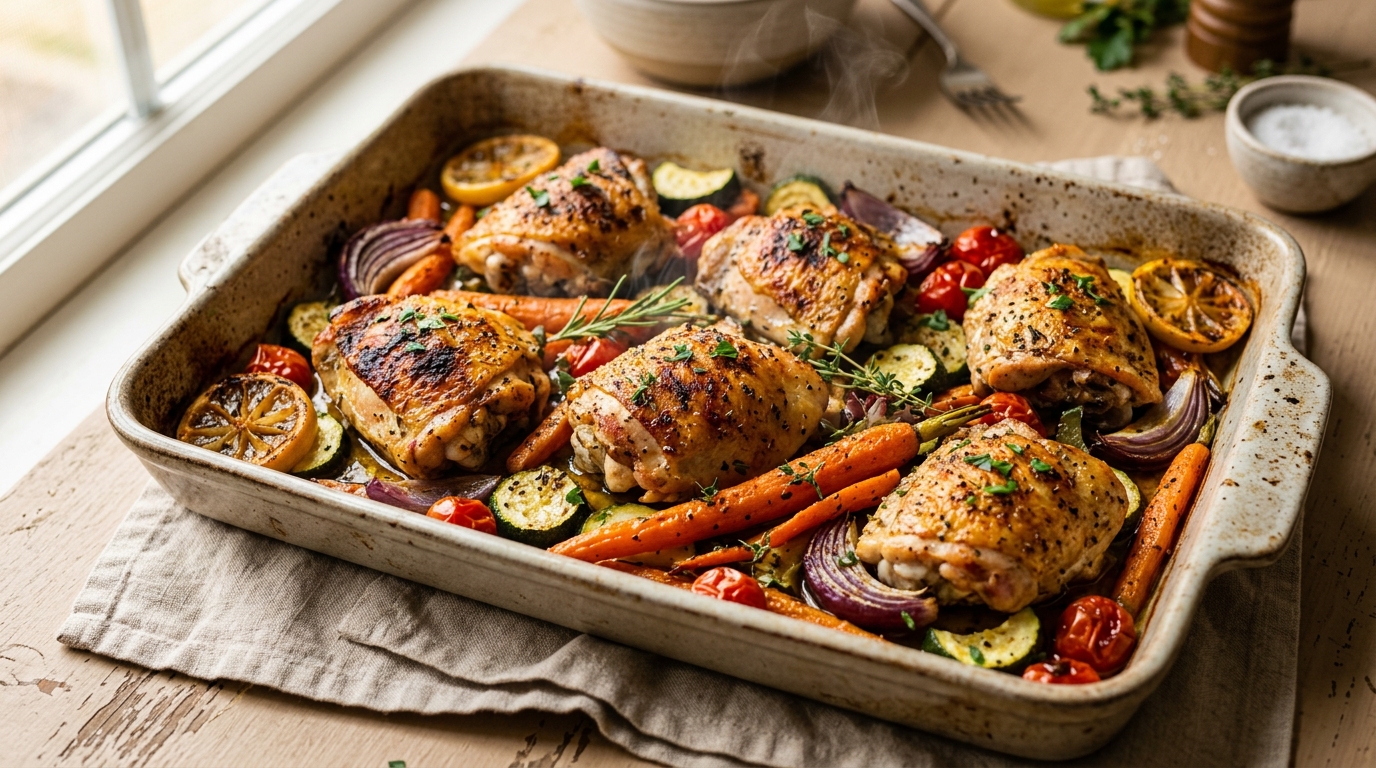
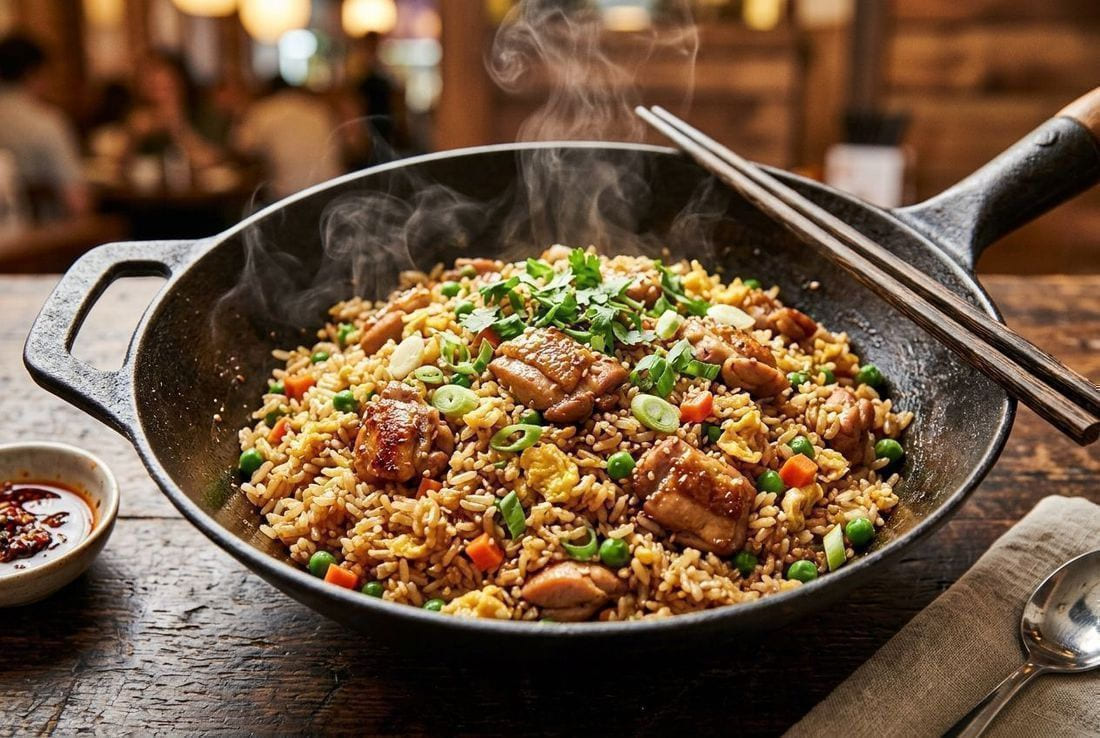
Teriyaki is the lacquered heart of a Japanese weeknight — pair it with the wok classics and the sheet-pan standby.
Frequently Asked Questions
What does teriyaki mean?
Teriyaki is two Japanese words: "teri" means shine or luster, and "yaki" means grilled or pan-seared. The name describes the technique — food cooked with a soy-mirin-sugar glaze that caramelizes to a glossy, shining finish. It became famous in the West through Japanese restaurants in the mid-20th century, but the home-style skillet version is a Japanese weeknight staple that takes a fraction of the time.
Can I use chicken breast instead of thighs?
Yes, with two tweaks. Boneless skinless breasts cook faster and leaner, so cut them into 1-inch strips and sear about 3 minutes per side rather than 4–5. They also dry out quickly, so simmer them in the glaze for 3–4 minutes and pull them at 160°F (71°C) — the carryover finishes them. Thighs are the safer bet for the classic lacquered result because their extra fat keeps them juicy through the glazing.
Can I make chicken teriyaki ahead of time?
You can, but keep the glaze on the side. Cook and glaze the chicken, then refrigerate the meat and the extra glaze separately for up to 3 days. The glaze stiffens as it cools, so reheat it with a splash of water and rewarm the chicken in a skillet or the oven, brushing on fresh glaze at the end. It will never be quite as glossy as fresh from the pan, but it reheats into a genuinely good lunch.
Why is my teriyaki glaze thin and watery instead of sticky?
The glaze was not reduced enough — the sauce needs time at a gentle boil to evaporate its water and concentrate the sugar and mirin. After you pour it over the seared chicken, let it simmer (not just bubble once) for a good 4–6 minutes, turning the chicken to keep the coating even, until the glaze has shrunk by about half and coats the back of a spoon. One more common culprit: a pan that is too wide, which spreads the sauce into a thin layer that evaporates oddly slowly and steams the chicken instead of glazing it — use a 10-to-12-inch skillet so the sauce pools around the meat rather than vanishing across the whole surface. If you are still short on time or sauce, pull a few tablespoons out before serving for a thicker final nap.
Why did my teriyaki sauce turn bitter and burned-tasting?
Heat too high at the wrong moment. The sugar in the glaze caramelizes beautifully at a gentle simmer, but at a rolling, volcanic boil — especially after the alcohol cooks off — it scorches, and burnt sugar tastes bitter no matter how much soy is in the pan. The fix is timing: pour the glaze in only after the chicken is seared and the pan is back down to medium heat. If it starts to smell nutty or darken too fast, pull the skillet off the heat, stir in a splash of water, and continue over low heat. And deglaze promptly: the first violent bubble is the alcohol flashing off, which is fine, but never walk away from a sugared glaze while it reduces.
What can I use instead of mirin (or sake)?
No mirin? The closest quick swap is dry sherry or Chinese Shaoxing wine plus a touch of sugar: for each tablespoon of mirin, use 1 tablespoon of dry sherry (or white wine) and 1/2 teaspoon of sugar — mirin is essentially sweetened rice wine, so you are re-creating both its alcohol and its sweetness. A non-alcoholic version works too: 1 tablespoon white grape juice with a few drops of rice vinegar per tablespoon of mirin. For sake, any dry white wine (or dry sherry again) replaces it measure for measure in the glaze; the sake adds depth and a clean finish, but the soy-mirin-sugar trio is what the glaze actually tastes like.
Affiliate disclosure: this page contains affiliate links. If you buy equipment through them, Cuisinety earns a small commission at no extra cost to you — it keeps the site free. Picks follow the same research-backed standards as our gear guides. Read ourfull affiliate disclosure.
Browse All Recipes →
Love this recipe? Pin it!
Save it to your Pinterest board so you can find it later.
Pin this Recipe Cuisine