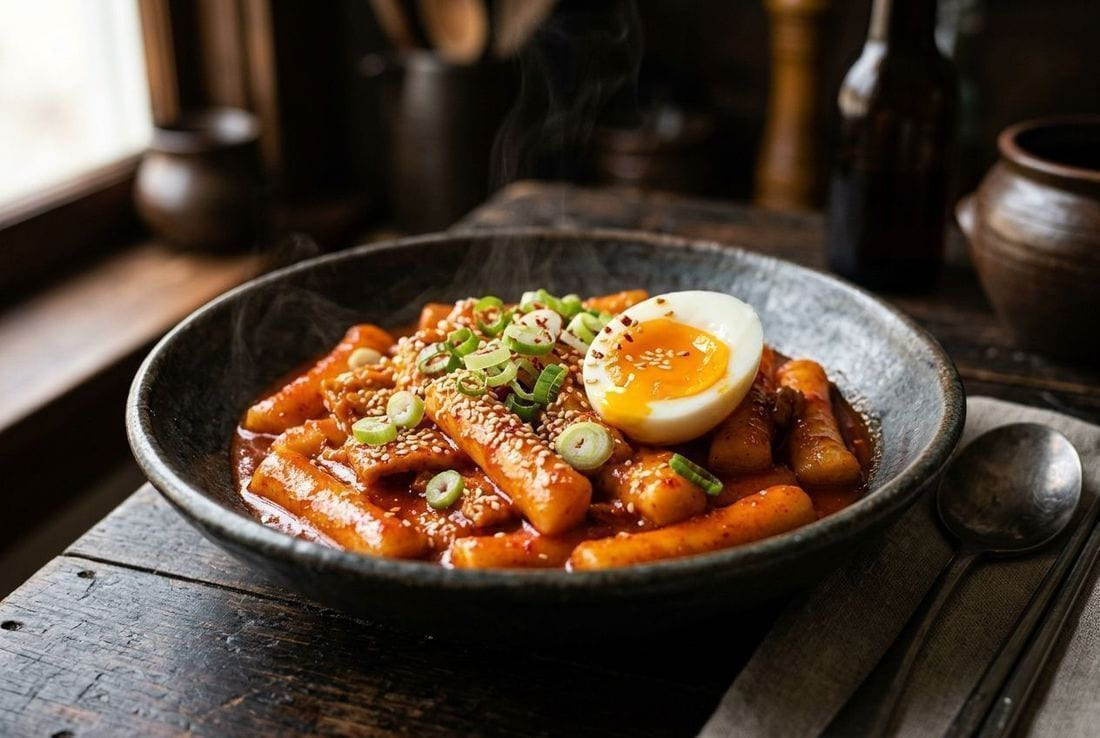
Tteokbokki is texture first, sauce second, and both are non-negotiable. The tteok — dense little rice cakes about the size of your thumb — go into a simmering gochujang sauce and come out bent toward the soft side of chewy, each one lacquered in a sauce that clings like paint. The sauce itself is a balance act: gochujang brings the fermented heat, sugar brings the sweetness that Seoul street vendors lean on, and a quick broth built from kelp and dried shiitake gives the whole pot a savory floor without any fish (the traditional version often uses anchovy broth — this one keeps it vegetarian and loses nothing). Everything simmers in one pan for about ten minutes while the sauce reduces from soup to glaze, and then the scallions and sesame go in. There is a reason this dish owns Korean street corners: it is cheap, fast, and dangerously easy to finish the whole pan.
By AmiraFounder & Editor-in-Chief · Mediterranean & Moroccan
✓ Method-reviewed by our editors
Ingredients
4
1 lb fresh or frozen cylinder tteok (Korean rice cakes), thawed if frozen
4 cups water
1 piece dried kelp (about 4 inches)
4 dried shiitake mushrooms
2 1/2 tablespoons gochujang
1 tablespoon gochugaru (Korean chili flakes)
1 1/2 tablespoons sugar
1 tablespoon soy sauce
3 garlic cloves, minced
1 bunch scallions, whites and greens separated, cut into 2-inch pieces
1 teaspoon toasted sesame oil
1 tablespoon toasted sesame seeds
2 soft-boiled eggs, halved (optional, for topping)
Instructions
Soak the tteok: if your rice cakes are refrigerated or frozen, cover them with warm water for 10 minutes and pull the pieces apart so they do not stick. Fresh ones can skip this.
Build the broth: bring the water, kelp, and shiitake to a bare simmer in a wide pot or deep skillet. Simmer gently for 10 minutes, then fish out the kelp (it turns slimy if left in) — leave the shiitake in for texture, or slice them and return them to the pot.
Make the sauce: whisk the gochujang, gochugaru, sugar, soy sauce, and garlic into the broth until completely dissolved. It should taste boldly sweet-spicy — remember the rice cakes are neutral and will carry it.
Simmer: add the tteok and the scallion whites. Cook over medium heat, stirring often, for 8–10 minutes. The sauce will start out loose and soupy, then thicken and turn glossy as the starch from the rice cakes releases — keep it moving so nothing sticks and burns on the bottom.
Finish: when the sauce coats the tteok thickly (it will keep tightening as it cools, so pull it while still pourable), stir in the sesame oil. Top with scallion greens, sesame seeds, and soft-boiled egg halves if using. Eat hot, straight from the pot if you are alone.
Tips for Success
Wide pan beats deep pot — a shallower, wider surface reduces the sauce faster and gives every rice cake room to coat evenly.
The sauce continues to thicken off the heat. Stop when it still drips slowly off the tteok; leave it on the stove too long and you get chewy rice cakes in sticky paste.
Leftover sauce is a gift: keep any extra and reheat it around another handful of tteok, or simmer halved rice cake slices in it for a second snack entirely.
Perfect pairings
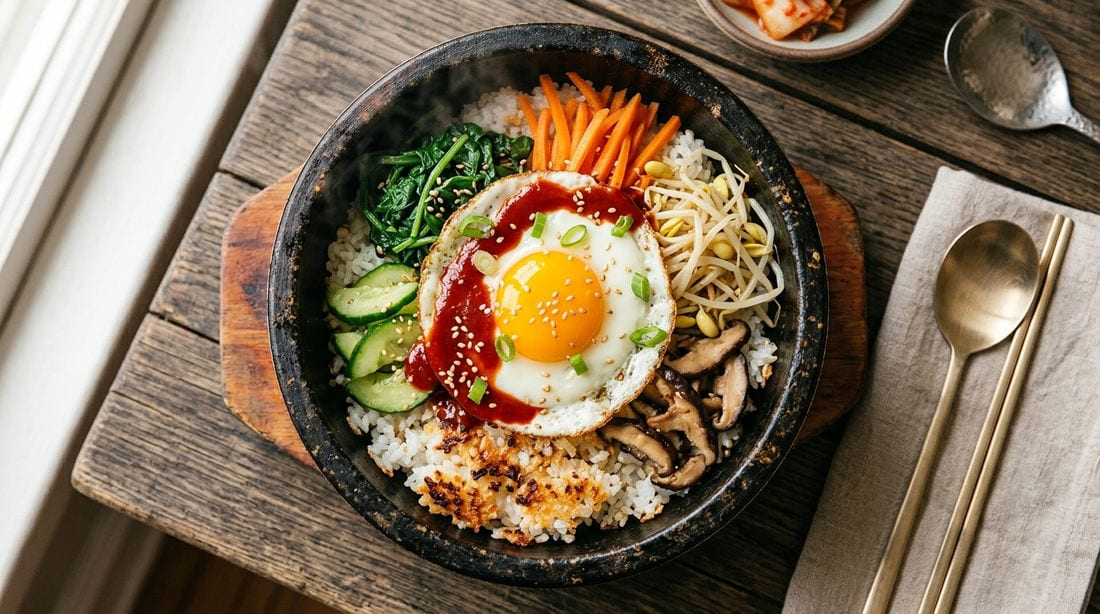
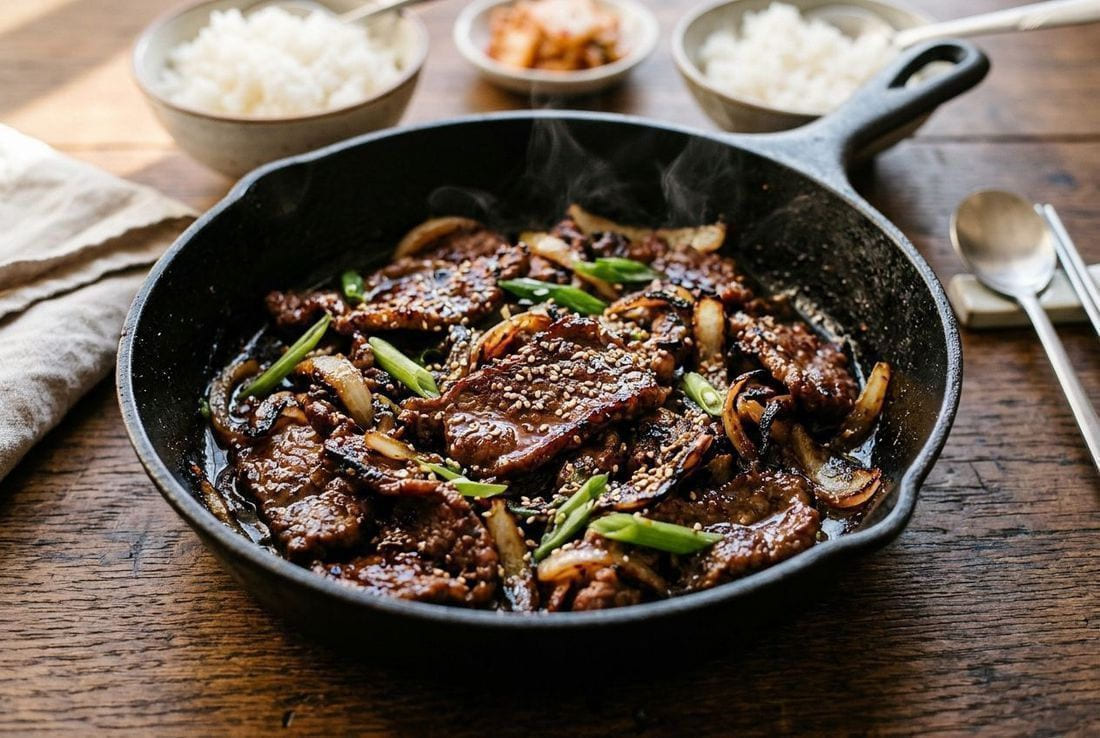
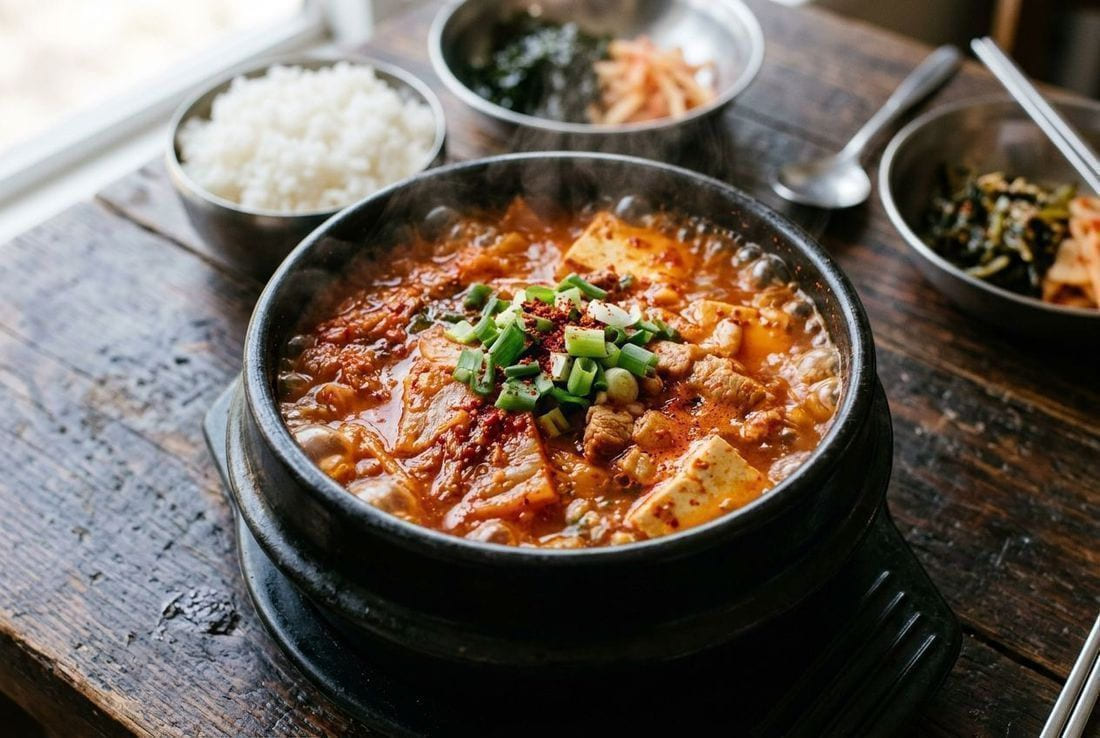
These recipes belong on the same table — cook them together for a full spread, or swap in a variation next time.
Any Korean grocery store carries refrigerated or frozen garaetteok — the white cylinders you want for tteokbokki. Look for them near the tofu or in the freezer. They keep in the fridge for a few weeks and freeze well. Some larger Asian supermarkets stock them too; if all you can find are sliced oval rice cakes (used for tteokguk soup), those also work — the dish just gets a different shape, not a different soul.
Why are my rice cakes hard instead of chewy?
Two usual causes: they went into the pot cold and unsoaked, or they boiled too long and seized up. Frozen or refrigerated tteok need a warm-water soak first so the centers soften; and once the sauce is thick, keep the heat moderate — a hard rolling boil over a long simmer turns the outside chalky. Properly cooked tteok bend easily when you bite them and stay springy, never firm in the middle.
How spicy is tteokbokki, and can I adjust it?
Standard street-style tteokbokki has a building, warming heat rather than a sharp burn — the sugar in the sauce keeps it in balance. For a milder bowl, cut the gochugaru in half and add an extra half tablespoon of sugar; for more fire, add a little more gochugaru rather than gochujang, which would also add sweetness. A soft-boiled egg on top is the traditional heat-absorber — that yolk is doing real work.
Affiliate disclosure: this page contains affiliate links. If you buy equipment through them, Cuisinety earns a small commission at no extra cost to you — it keeps the site free. Picks follow the same research-backed standards as our gear guides. Read ourfull affiliate disclosure.
Equipment I Used
Wide deep skillet or shallow pot:UK - US - IT - AU - DE - FR - ES - UAE