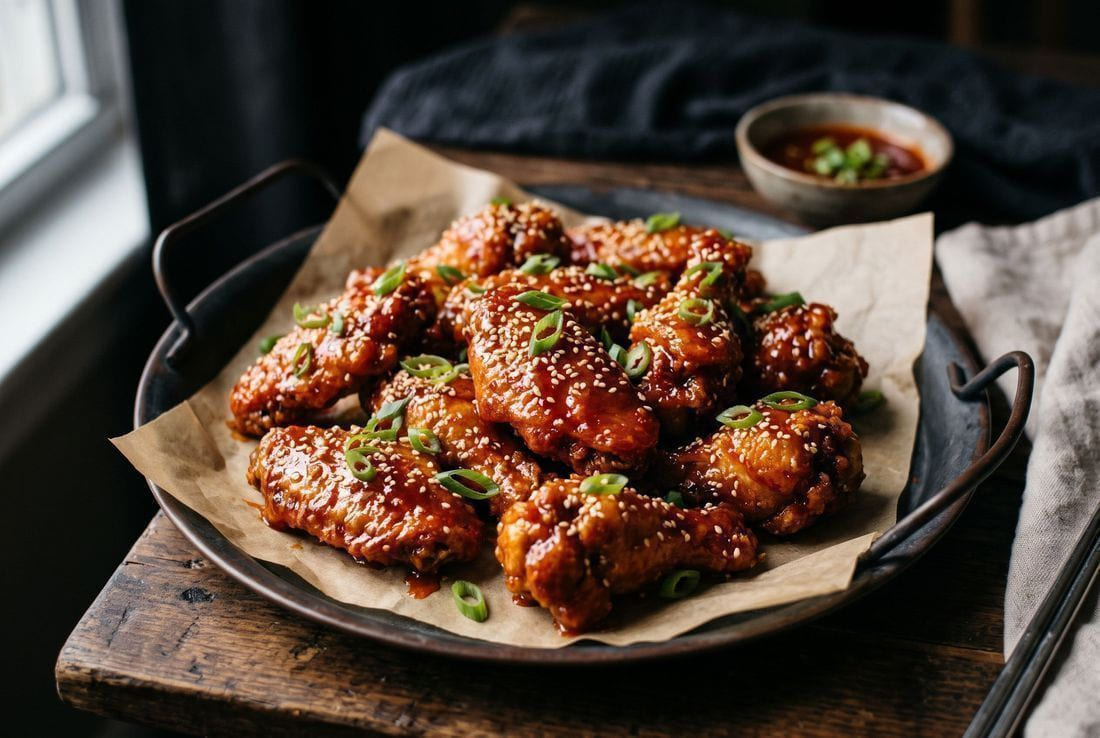
Korean fried chicken is built differently from its Southern cousin, and the difference is the crust. Instead of a thick breaded armor, the chicken wears a thin, glassy shell of starch that gets fried twice: once to cook it through, once — in hotter oil — to drive out moisture and shatter-proof the surface. Then comes the yangnyeom sauce, a glossy glaze of gochujang, honey, garlic, and soy that is cooked down until it clings, so the chicken wears it like lacquer instead of drowning in it. The result snaps when you bite it and stays crisp long after the saucing — which is why Seoul's fried-chicken culture pairs it with beer and long evenings, a combination so universal it has its own portmanteau, chimaek. At home this is a Dutch-oven project of about an hour: the double fry sounds fussy, takes ten extra minutes, and rewards you with the crispiest chicken that will ever come out of your kitchen.
By KarimMiddle Eastern & Grill · Middle Eastern & Grill
✓ Method-reviewed by our editors
Ingredients
4
2 1/2 lb chicken wings and drumettes, split at the joint if large
1/2 cup potato starch
1/4 cup all-purpose flour
1 teaspoon baking powder
1 teaspoon salt
1/2 teaspoon white or black pepper
1/2 teaspoon garlic powder
About 6 cups neutral oil, for frying
For the yangnyeom sauce: 2 1/2 tablespoons gochujang, 1 tablespoon gochugaru, 3 tablespoons ketchup, 1/4 cup honey, 2 tablespoons brown sugar, 2 tablespoons soy sauce, 4 garlic cloves (minced), 1 tablespoon rice vinegar, 1 teaspoon toasted sesame oil
Toasted sesame seeds and sliced scallions, to finish
Instructions
Dry the chicken: pat the wings and drumettes thoroughly with paper towels — surface moisture is the enemy of a crisp crust. Set them on a rack while you mix the dredge.
Dredge: whisk the potato starch, flour, baking powder, salt, pepper, and garlic powder in a large bowl. Toss the chicken in the mixture until every piece is lightly and evenly coated, then let it sit 5 minutes — the starch hydrates into a thin batter-like skin that fries into one crackling piece instead of dusty spots.
First fry: heat the oil in a Dutch oven or deep pot to 340°F (a thermometer is worth it here). Fry the chicken in batches of 4–5 pieces for 8 minutes, keeping the oil between 320–340°F, until pale gold and just cooked. Drain on a wire rack set over a sheet pan. Let every batch rest at least 3–5 minutes.
Second fry: raise the oil to 375°F. Return all the chicken (work in batches again) and fry 3–4 minutes until deep golden — the bubbling slows and the surface looks glassy and tight. Drain on the rack. This second fry is what pushes the moisture out and makes the crust shatter.
Make the sauce: while the last batch fries, combine all the sauce ingredients in a saucepan and simmer over medium-low heat for 2–3 minutes, stirring, until it thickens slightly and turns glossy. It should coat a spoon, not pour like syrup.
Lacquer: put the hot chicken in a large bowl, pour the sauce over, and toss gently with tongs until every piece is glazed. Shower with sesame seeds and scallions and serve immediately — with cold drinks, per tradition.
Tips for Success
Drain on a wire rack, never paper towels — paper traps steam against the bottom crust and softens it. The rack keeps air moving and the crust snapping.
The rest between fries is not idle time; it lets the interior steam settle and the crust firm up so the second fry crisps instead of burning. Do not skip it, even for 3 minutes.
Want the soy-garlic version instead? Skip the gochujang and simmer 6 minced garlic cloves in 1/3 cup soy sauce, 3 tablespoons honey, 2 tablespoons brown sugar, and 1 tablespoon rice vinegar until glossy — same lacquering, completely different personality.
Perfect pairings
These recipes belong on the same table — cook them together for a full spread, or swap in a variation next time.
The double fry does two jobs: the first, lower-temperature fry cooks the chicken through, and the second, hotter fry drives out surface moisture so the crust becomes thin, hard, and glassy instead of thick and breaded. Single-fried chicken holds steam inside its crust and softens within minutes; double-fried chicken keeps snapping long after saucing — which is exactly what a glazed chicken needs, since sauce is the enemy of any crust.
Can I substitute cornstarch for potato starch?
Yes, with a caveat. Cornstarch gives a good crisp but a slightly harder, more brittle shell; potato starch gives the lighter, glassier crunch that defines Korean fried chicken. Use the same amounts, and if you have access to an Asian grocery, grab a bag of potato starch for next time — it is cheap and also makes the best gyoza crisp and the thickest fruit-pie fillings.
Can I air-fry or bake this instead of deep-frying?
You can get a decent version: air-fry at 380°F for about 18–20 minutes, flipping once and spraying lightly with oil, then sauce and finish. But honesty requires saying the result is a different snack — the glassy shatter of a real double fry does not fully survive the air fryer. If crispness is why you are here, make the deep-fried version once properly, then decide how often the oil is worth it.
Affiliate disclosure: this page contains affiliate links. If you buy equipment through them, Cuisinety earns a small commission at no extra cost to you — it keeps the site free. Picks follow the same research-backed standards as our gear guides. Read ourfull affiliate disclosure.