Blanch and shock the spinach: bring a large pot of water to a rolling boil and set out a big bowl of ice water. Drop the spinach in all at once, press it under, and let it wilt for exactly 60 seconds — no longer, or the color starts to dull. Scoop it straight into the ice bath, swish until fully cold, then squeeze the leaves hard in your hands and drain in a colander. You should have a dense, vivid-green ball of spinach.
Blend to velvet: put the squeezed spinach in a blender with the green chilies and 1/4 cup of water and blend 30–45 seconds until completely smooth and glossy — no visible leaf fibers. This green purée is the entire body of the dish, so be thorough. Set aside.
Sear the paneer: heat 1 1/2 tablespoons of the ghee in a large nonstick or cast-iron skillet over medium-high heat. Add the paneer cubes in a single layer and fry undisturbed for 2 minutes per side, turning until golden on 2–3 faces, about 6 minutes total. Slide them onto a plate. (For softer paneer, skip the sear and add the cubes straight to the sauce at the end — but the golden edges are worth it.)
Build the masala base: lower the heat to medium and add the remaining ghee. Sprinkle in the cumin seeds and let them sizzle for 30 seconds until fragrant. Add the onion and cook 6–8 minutes, stirring, until deep golden at the edges. Stir in the garlic, ginger, coriander, and turmeric and cook 60 seconds more until the raw smell is gone.
Simmer the gravy: pour in the spinach purée and the 1/2 cup water, add the salt, and stir well. Simmer gently, uncovered, for 8–10 minutes, stirring often — the purée darkens slightly, thickens, and the raw-green taste cooks out into something round and savory. Keep the heat at a lazy bubble; a hard boil is what turns spinach drab.
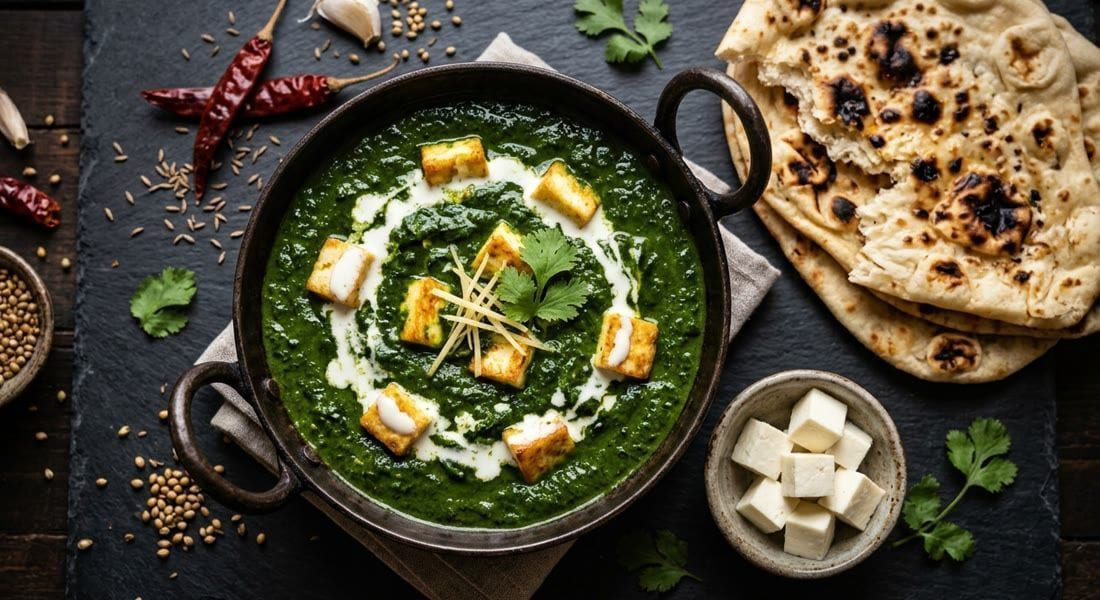
Finish the curry: stir in the cream and garam masala, then slide the seared paneer cubes back in along with any collected ghee. Simmer 3–4 minutes more so the paneer drinks a little sauce, then kill the heat and stir in the lemon juice — added at the end, it is what keeps the green bright. Taste and adjust salt.
Serve: ladle into warm bowls, drizzle a spoonful of cream over each in circles, and scatter with julienned ginger and cilantro. Serve immediately with hot naan for scooping or over basmati rice, with extra garam masala at the table.
What is the difference between palak paneer and saag paneer?
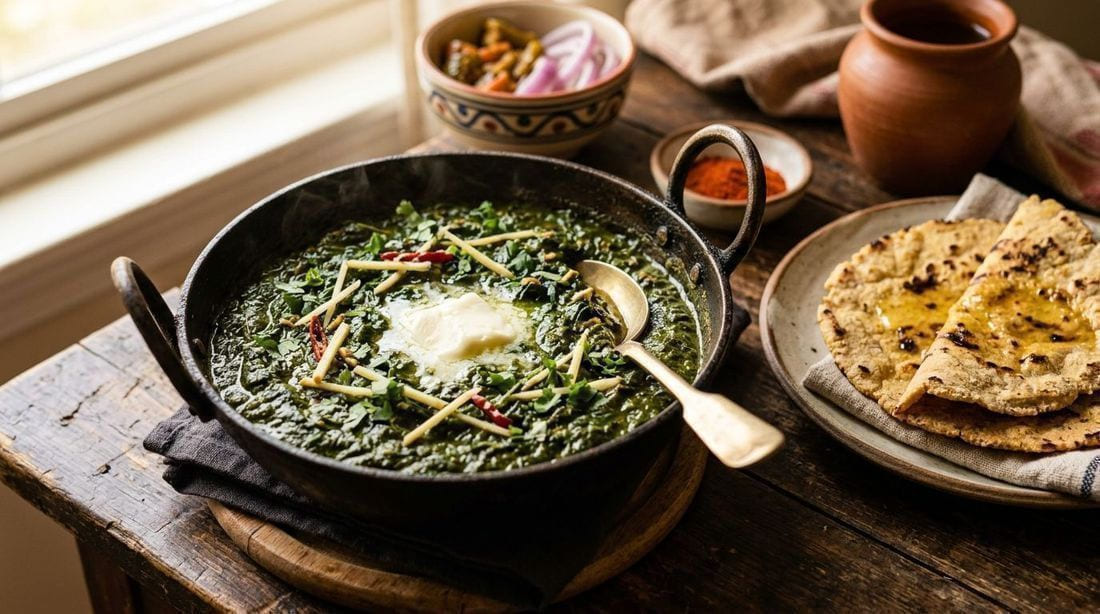
The greens. Palak means spinach only — that is this recipe, a bright jade-green purée with sweet, grassy depth. Saag is a mixed-greens curry, usually mustard greens (sarson) blended with spinach and sometimes bathua or fenugreek leaves, giving a darker, earthier, slightly bitter sauce — the Punjab classic that palak paneer grew out of. Restaurants often use the names interchangeably, but on a North Indian menu saag paneer is the heartier, deeper-flavored dish, while palak paneer is the smoother, sweeter, more vividly green one.
Can I use frozen spinach for palak paneer?
Yes, and it is the honest weeknight shortcut — thaw 2 x 10-oz boxes completely, squeeze them as dry as you can, and blend with the chilies as in step 2. Expect a slightly earthier flavor and a darker green (freezing dulls chlorophyll a shade), but the curry is still genuinely good. Skip the blanch-and-ice-bath step entirely — frozen spinach has already been blanched, so just thaw, squeeze, and blend. One caution: unsqueezed frozen spinach is the number-one cause of watery, loose palak paneer.
Is palak paneer healthy?
Genuinely, yes — and it is one of the rare creamy curries where the cream is almost optional. The body of the dish is two big bunches of spinach per four servings: iron, folate, vitamins A, C, and K, and a good hit of fiber, at well under 150 calories before the paneer. Paneer adds 16 g of protein per serving, and it is a fresh, uncured cheese so there is no processed anything. The fat is mostly from ghee and cream — use milk or a spoon of Greek yogurt instead of the cream and the whole dish comes in around 330 calories a serving.
Why did my palak paneer turn brown or dull instead of bright green?
Two usual culprits: overcooked spinach and heat after blending. Blanch the spinach for exactly 60 seconds and shock it immediately in ice water — that sets the chlorophyll — and blend it while cold. Then keep the purée at a lazy simmer, never a rolling boil, and stir the lemon juice in off the heat at the very end: acid added at a boil is the fastest way to knock the green out. Frozen spinach will also never be quite as vivid as fresh — expect a slightly deeper, earthier green.
What can I substitute for paneer?
The closest widely available swap is extra-firm tofu, pressed well and seared the same way — it holds its shape and soaks the sauce nicely (that version is essentially tofu palak). Halloumi works for a saltier, squeakier bite but skip the long sear since it browns fast. Feta is too salty and crumbles; ricotta is too wet. For a dairy-free curry entirely, use firm tofu and swap the cream for full-fat coconut milk — the sauce stays lush and the flavor shifts slightly tropical, which is genuinely good.
How do I get the restaurant-style green color and smooth texture?
Three things: blanch-and-shock the spinach (never cook it into the sauce), blend it completely smooth for 30–45 seconds with no visible leaf fibers — a strong blender matters here — and resist overcooking the purée. Eight to ten minutes at a gentle bubble is all the sauce needs; the longer it boils, the duller it gets. Finish with cream and a lemon squeeze off the heat, and the color stays that vivid restaurant jade.