Char the poblanos: place them directly under a broiler (or over a gas flame) on a foil-lined sheet, turning with tongs every 3–4 minutes, until the skins are blistered and blackened in patches all over, 10–12 minutes total. You want char, not ash — the flesh should still be firm.
Steam and peel: transfer the hot chiles to a bowl and cover tightly (or slip them into a plastic bag) for 10 minutes — the trapped steam loosens the skins. Then peel the blackened skin off with your fingers or a paper towel under a slow trickle of water. Do not rinse the inside. Pat completely dry.
Slit and seed: cut a single slit down the side of each chile from stem to tip, carefully open the pocket, and shake or scoop out the seed cluster and the white ribs. Leave the stem attached — it is the handle. Pat the inside dry; a wet chile is the enemy of the batter in Step 5.
Make the sauce: char the tomato halves, onion, and garlic in a dry skillet over medium-high heat until blackened in spots, 6–8 minutes. Blend with the stock and the 1/2 teaspoon salt until smooth, then simmer in a small saucepan for 8–10 minutes until it darkens and rounds out. Hold warm.
Stuff: stuff each chile through its slit with about 2 oz of the cheese — generous but not bursting; the chile should still close with one or two toothpicks. Lightly dust each stuffed chile all over with a little of the flour (about 2 tablespoons total across all six); dry flour gives the wet batter something to grip.
Whip the batter: beat the 4 egg whites with the 1 teaspoon salt and the pepper to stiff, glossy peaks — the bowl-over-your-head test. Lightly beat the yolks with a fork, then fold them into the whites in two additions, keeping as much air as possible. This foam is the entire soul of the dish.
Fry: heat the oil in a heavy skillet to 375°F (a cube of bread sizzles and browns in about 40 seconds). One at a time, hold a floured chile by the stem, spoon batter over it to coat completely, then lower it into the oil. Fry 2–3 minutes per side, spooning hot oil over the top as it cooks, until deep golden. Drain on a rack or paper towels; keep warm in a 200°F oven while you finish the rest.
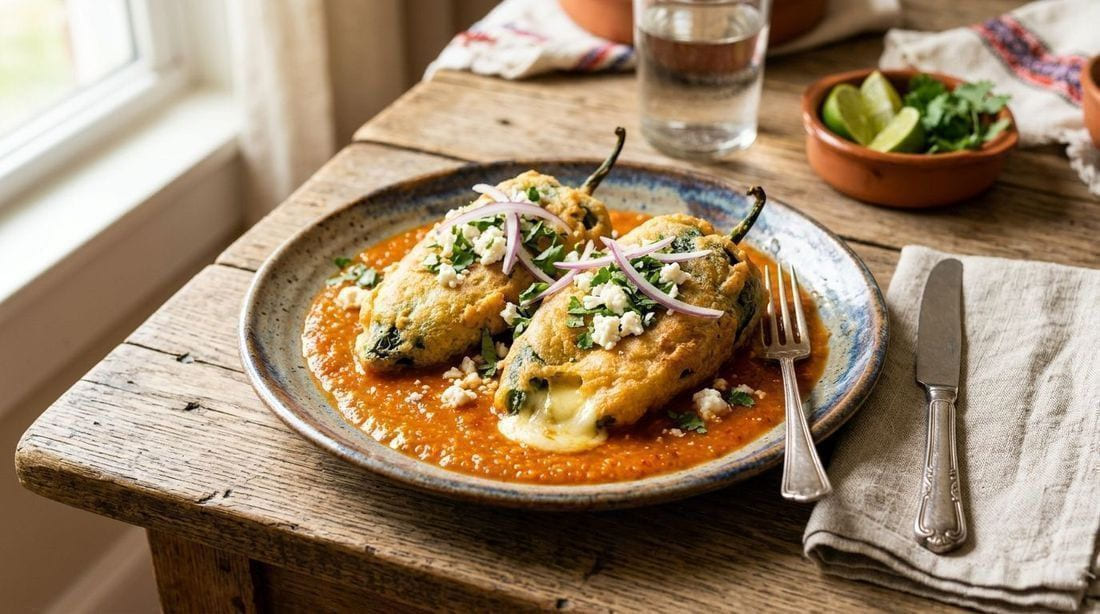
Serve: ladle the warm tomato sauce onto plates or into a shallow dish, lay the chiles on top, and finish with queso fresco, cilantro, and a grind of black pepper. Serve immediately — the batter is at its proudest in the first ten minutes.
How do I roast and peel poblanos without tearing them?
Char them under the broiler or over a gas flame until the skins blister and blacken in patches — but pull them while the flesh is still firm, before they collapse. Cover them in a bowl or bag for 10 minutes: the steam does the peeling for you, loosening the skin in sheets. Then peel with your fingers or a paper towel under a slow trickle of water, working from the stem down. If a small tear happens, do not panic — the batter will seal it in the fry, and a toothpick closes anything bigger until the cheese melts and holds the seam itself.
Why did my egg batter fall off in the oil?
Three causes, in order of likelihood: the chile was wet (water under the batter turns to steam and pushes it off — pat everything bone-dry, inside and out), the flour dusting was skipped (dry flour is the glue that gives the wet foam something to hold), or the oil was too cool (below about 350°F the batter soaks instead of setting — it needs to firm up within seconds). Also whip the whites to genuinely stiff peaks and fold the yolks in gently: a loose, watery foam coats thin, slides, and never puffs.
Can I make chiles rellenos ahead of time?
Partially, and that is the smart way. Roast, peel, seed, and even stuff the chiles up to a day ahead — refrigerate them in a single layer, loosely covered. The sauce also keeps 3–4 days and improves overnight. But batter and fry are always a la minute: whipped egg foam deflates within the hour, and fried rellenos lose their crackle fast. If you absolutely must reheat fried ones, skip the microwave (it steams the batter rubbery) and use a wire rack in a 375°F oven for 10–12 minutes — it revives a surprising amount of the crisp.
Can I use a chile other than poblano for chiles rellenos?
Poblanos are the classic — meaty walls, mild heat, and enough body to survive stuffing and frying. Anaheim (California) chiles are the traditional Northern alternative and work beautifully, slightly longer and thinner but just as mild. Hatch chiles in season are excellent. Avoid bell peppers (walls too thin and watery, no chile character), jalapeños (too small and too hot for this format — jalapeño poppers are a different dish), and anything with thin, papery walls like serranos. Whatever you choose, roast and peel it the same way; the peel is papery and bitter raw, and it never softens in the fry.
Can chiles rellenos be baked or air-fried instead of fried?
Yes, with honest expectations. Baked: place battered chiles on a parchment-lined sheet, spray or brush generously with oil, and bake at 425°F for 20–25 minutes, flipping once — you get a set, lightly golden coating rather than the puffy golden armor of frying. Air-fryer: 390°F for 10–14 minutes with an oil spray, also flipping once. Both are good lighter versions, but neither achieves the soufflé puff of deep frying, because the egg foam needs oil contact to puff and set fast. If you bake, whip the foam even stiffer and coat thicker to compensate.
What sauce and sides go with chiles rellenos?
The classic is a warm roasted-tomato sauce (this recipe) or a simple ranchera sauce; a thin red salsa roja also works. Salsa verde is the common second option at restaurants. As for sides, think restraint: Mexican white rice and warm tortillas, or refried beans and a simple cabbage-side salad — the relleno is rich, so the plate should be fresh and plain. A cold beer or agua fresca completes it. Skip heavy, cheesy sides; there is already a full cheese course inside each chile.