Season the pork: pat the pork shoulder chunks dry and rub them all over with the salt. Heat the oil in a large Dutch oven over medium-high heat and sear the pork in batches, turning occasionally, until deeply browned on at least two sides, 6–8 minutes per batch. Do not rush this — the browned crust is flavor that will carry through the whole braise.
Build the braise: return all the pork to the pot and nestle in the orange and lime halves, cut-side down, along with the onion quarters, smashed garlic, cumin, oregano, bay leaves, and black pepper. Pour in the water or stock — it should come about a third of the way up the pork, not cover it. Bring to a simmer.
Braise low and slow: cover the pot and transfer to a 300°F (150°C) oven. Cook until the pork is completely tender and falls apart at the touch of a fork, 3 to 3 1/2 hours. At the halfway point, turn the chunks so the tops get bathed in the juices. The liquid should stay at a gentle simmer — if it is boiling, drop the oven to 275°F.
Shred and defat: pull the pork out of the braising liquid and let it rest until cool enough to handle. Remove and discard the citrus halves, onion, and bay leaves. Skim most of the fat from the surface of the liquid and reserve it — this is the secret to the crispy finish. Shred the pork into generous bite-size pieces, keeping some bigger craggy bits for texture.
Crisp the edges: heat a large heavy skillet over medium-high heat with 2–3 tablespoons of the reserved fat. Add the shredded pork in a fairly even layer — do not overcrowd — and press it down gently. Let it cook undisturbed for 4–5 minutes until the bottom forms a golden, crispy crust, then flip in sections and crisp the other side, 3–4 minutes more. For a hands-off version, spread the pork on a sheet pan and broil 5–7 minutes until edges charr.
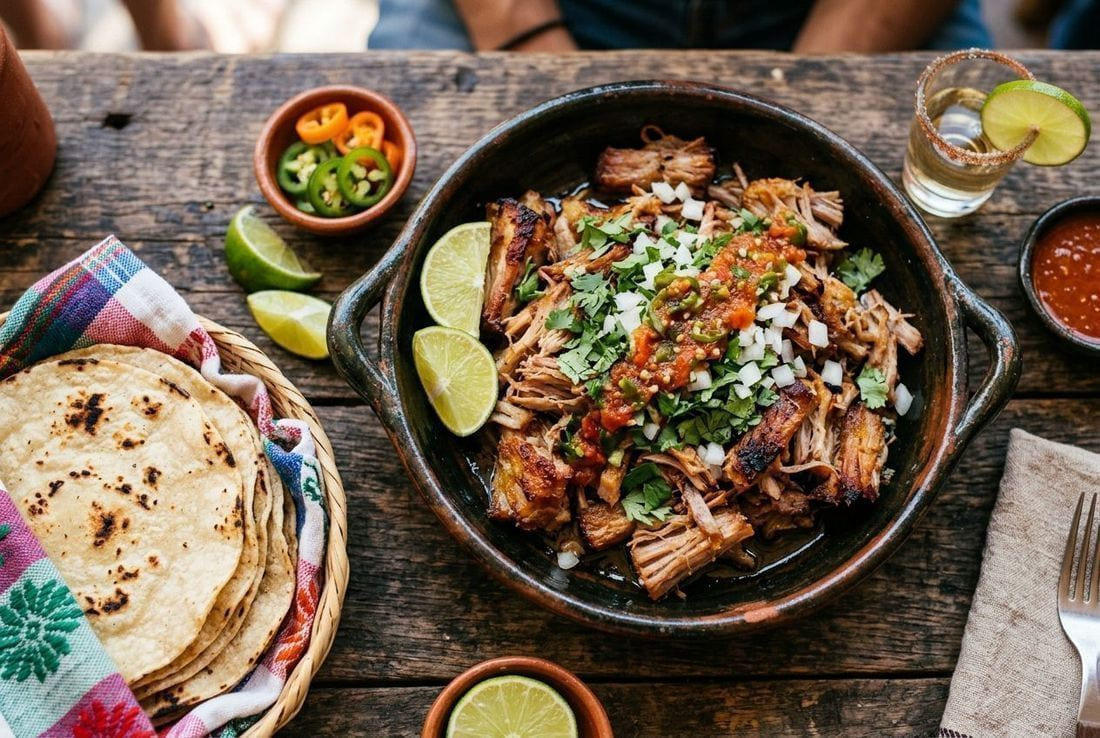
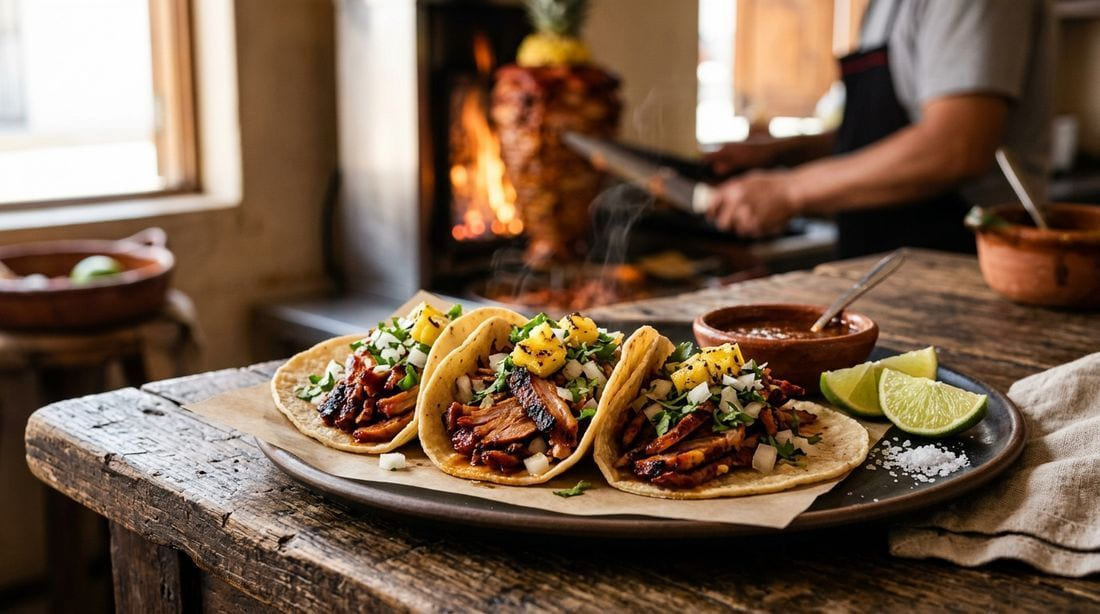
Season and serve: taste the carnitas and add salt if needed — the braise seasons the meat, but the crisping step concentrates flavor and may need a pinch more. Pile into warm corn tortillas with cilantro, diced onion, a squeeze of lime, and salsa. Serve the remaining braising liquid on the side for tacos that drip.
What cut of pork is best for carnitas?
Boneless pork shoulder — sold as pork butt or Boston butt — is the only cut to use. It has the marbling and connective tissue that slowly melt into the braise, which is what makes carnitas tender and rich. Pork loin or tenderloin cook up dry and lean in the time it takes to develop real carnitas flavor. If you can only find bone-in shoulder, the bone only improves the braise — just account for the extra weight (about 4 1/2 lb bone-in for 4 lb boneless).
Can I make carnitas in a slow cooker or Instant Pot?
Yes. Slow cooker: sear the pork first, then cook on low for 8–10 hours (high for 5–6) with the same aromatics. Instant Pot: sear in the pot on sauté, then pressure cook on high for 60–70 minutes with a 20-minute natural release. The braise is the easy part either way — never skip the final crisping in the skillet or under the broiler, because that step cannot be done in any appliance.
Are carnitas the same as pulled pork?
They are cousins, not twins. Both are slow-cooked pork shoulder, but carnitas are traditionally cooked in fat (confited) and always finished by crisping the edges until golden and shattery, with citrus and Mexican aromatics. Pulled pork is usually smoked or slow-cooked with a sweeter barbecue rub and sauce, and served soft and saucy. Carnitas belong in tacos with cilantro, onion, and lime; pulled pork belongs on a bun with coleslaw. This recipe is firmly in the carnitas camp.
Why are my carnitas not crispy after the slow roast?
Because the crisping step was skipped or rushed. Slow-roasted pork alone is just tender pulled pork — carnitas get their golden, shattery edges from a final blast of heat in fat. After shredding, crisp the meat in a hot skillet with 2–3 tablespoons of the reserved braising fat, in a single layer, undisturbed for 4–5 minutes per side until the edges charr. Overcrowding is the most common failure: the meat steams instead of crisps, so work in batches and keep the heat confident. The broiler version works too — spread the shredded pork on a sheet pan in a thin layer and broil 5–7 minutes, watching closely, until the edges turn bronzed and crackly.
My carnitas taste too salty (or too orange-y). How do I fix it?
Salt: the braise concentrates as it reduces, and the crisping step concentrates flavor further. If the cooked meat skews salty, pull it from the braise earlier (salt stops accumulating once the meat is tender), or balance the next batch by using less salt up front — the citrus and spices carry plenty of flavor on their own. For the current pot, a squeeze of fresh lime at serving cuts salt perception dramatically. Orange-heavy: usually from leaving the citrus halves in too long or using sweet orange juice instead of fresh halves. Use fresh oranges and remove the spent citrus when the meat comes out; the juice from the halves infuses during the braise but should not dominate. If the braising liquid tastes too citrus-forward, discard most of it before crisping and season the meat with a pinch more cumin and salt.
How do I store and reheat leftover carnitas?
Carnitas are the best leftovers in Mexican cooking. Cool the shredded meat, submerge it in its own braising liquid in an airtight container, and refrigerate for up to 5 days, or freeze for up to 3 months (vacuum-sealed or tightly wrapped). The liquid keeps the meat moist and seasoned. To reheat, skip the microwave: crisp the carnitas in a hot dry skillet straight from the fridge, 5–6 minutes until the edges re-crisp — the same move as the original crisping step, just faster because the meat is already cooked. Thaw frozen carnitas overnight in the fridge before crisping. Leftovers build the best part of the batch: breakfast burritos, tortas, quesadillas, or a carnitas-topped salad.
 Cuisine