Toast the chiles: working in two batches, press the guajillo, ancho, and árbol chiles flat into a dry skillet over medium heat for 20–30 seconds per side, until they smell fragrant and look slightly puffed — do not let them blacken or they turn bitter. Transfer to a bowl, cover with boiling water, and soak for 20 minutes.
While the chiles soak, season the beef chunks generously with salt and set aside at room temperature. Drain the soaked chiles, reserving the soaking liquid, and add them to a blender with the quartered onion, garlic, tomatoes, vinegar, oregano, cumin, coriander, smoked paprika, cinnamon, and cloves. Add 1/2 cup of the chile soaking water and blend until completely smooth, scraping down the sides — you want a thick, velvety, brick-red paste.
Preheat the oven to 325°F (160°C). Heat a large Dutch oven over medium-high heat and sear the beef in batches, 3–4 minutes per side, until deeply browned on all sides. Set the seared beef aside.
Pour the chile paste into the pot — it will sputter — and cook over medium heat for 2–3 minutes, stirring constantly, until it darkens and smells intensely aromatic. This bloom is where the sauce gets its depth, so do not rush it.
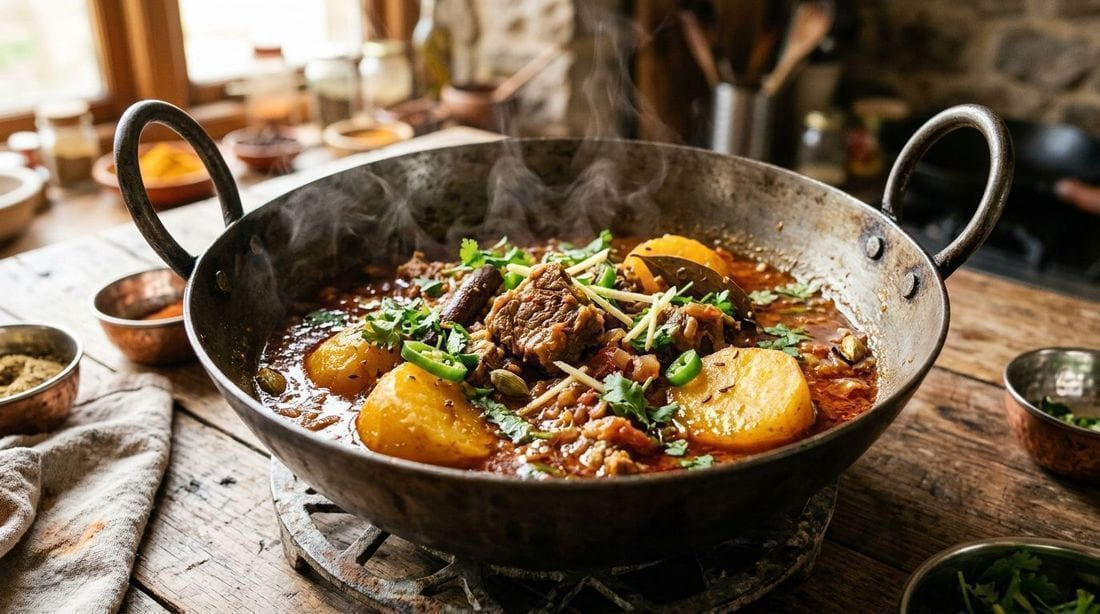
Return the beef to the pot with the bay leaves. Pour in the beef broth so the beef is almost — but not quite — submerged (add more broth or chile soaking water if needed). Cover, transfer to the oven, and braise for 3 hours, or until the beef shreds with a fork. Let it cool in the pot for at least 30 minutes (or up to overnight) — the flavor deepens as it rests.
Remove the beef, shred it into large, juicy pieces, and keep it warm. Skin the fat off the consommé (or use a fat separator), season generously with salt, and reheat. The consommé should be deeply flavored, silky, and brick-red — add a splash of beef broth if it reduced too much.
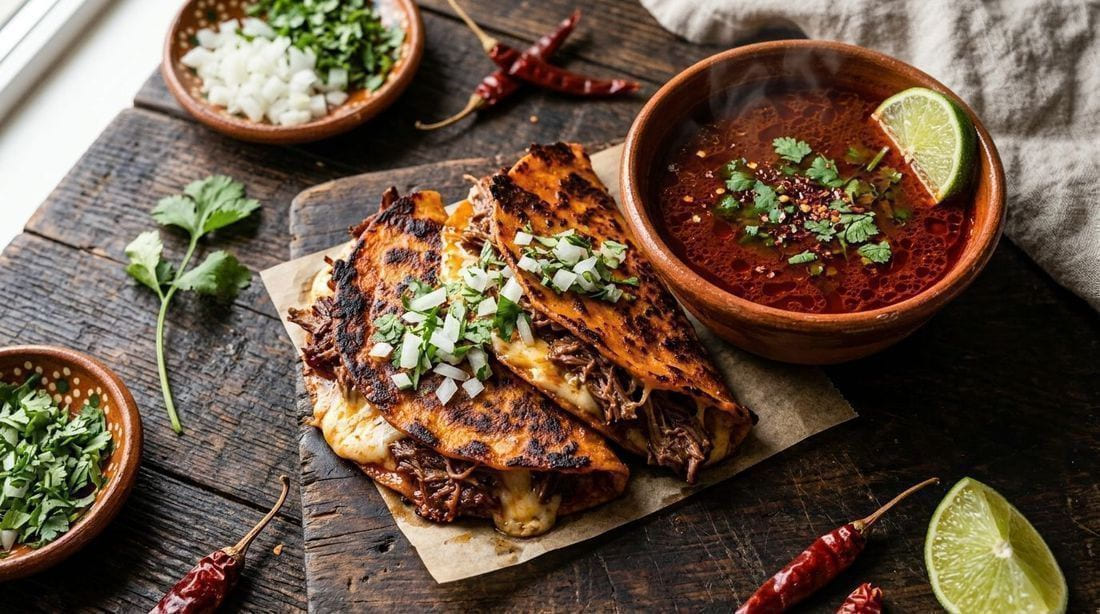
Assemble the tacos: warm a heavy skillet or griddle over medium-high heat. Working one at a time, place a tortilla in the pan, cover one half with a mound of shredded beef and a handful of cheese, and fold the bare half over. Cook 1–2 minutes per side, pressing gently, until the cheese melts through and the tortilla crisps and browns.
Serve immediately with bowls of hot consommé for dipping, plus the diced onion, cilantro, and lime wedges on the side.
What is birria, exactly?
Birria is a Mexican slow-braised stew — traditionally goat or lamb, more commonly beef today — cooked in a deep red chile consommé. The consommé is the soul of the dish: the meat braises in it, and the strained broth is served alongside for dipping. Birria tacos (or quesabirria) are the street-food version: the braised meat tucked into tortillas with melted cheese, crisped on the griddle, and dunked into the consommé.
Which cut of beef should I use?
Beef chuck is the reliable choice — it has the marbling a long braise needs and shreds beautifully. Beef short ribs (bone-in) are even richer if you want to splurge, and brisket works too. Avoid lean cuts like sirloin or round: they dry out during a three-hour braise instead of tenderizing.
Can I make birria in a slow cooker or instant pot?
Yes. Slow cooker: sear the beef and bloom the chile paste on the stove first, then transfer everything to the slow cooker and cook on low for 8 hours. Instant Pot: sear and bloom on sauté, then pressure cook on high for 45–55 minutes with a natural release. The stove-and-oven method above gives the crispiest sear and easiest fat-skimming, but either appliance works beautifully.
Why is my birria brown instead of brick-red?
The color comes from the chiles — most often the consommé turns brown because the chiles were not toasted (or were toasted too long and turned bitter), or because they were stale. Toast the guajillo and ancho chiles briefly in a dry skillet until fragrant but not blackened, and always buy chiles that smell fruity and sweet, not dusty. Blending them smooth with tomatoes and a splash of the soaking water also helps: a thin, under-blended paste cooks down to a dull brown, while a velvety red paste keeps its color through the braise.
Can I cook birria faster than 3 hours?
Yes — a pressure cooker gets the same results in about an hour. Sear the beef and bloom the chile paste on the sauté setting first, then pressure-cook on high for 50–60 minutes with a natural release (about 20 minutes). The Instant Pot shortcut costs a little color depth versus the oven braise, so bloom the paste an extra minute and finish the consommé by simmering it down uncovered to concentrate. Shortcuts like chuck cubed small and braised stovetop in 2 hours also work, but the meat will be slightly less fall-apart.
How should I store leftover consommé and meat?
They keep separately and beautifully. Refrigerate the shredded meat and the strained consommé in airtight containers for up to 4 days — the consommé actually improves as it rests, and the fat solidifies on top for easy skimming. Both also freeze for up to 3 months; thaw in the refrigerator overnight and reheat gently on the stovetop, adding a splash of beef broth to the consommé if it reduced too much. Leftover quesabirria tacos are best recrisped in a dry skillet for a minute per side rather than microwaved.
 Cuisine