Ingredients
- 10 day-old corn tortillas, cut into 8 wedges each (or 6 cups thick tortilla chips)
- 1/2 cup neutral oil (such as canola or sunflower), for frying
- 5 dried guajillo chiles, stemmed and seeded
- 2 dried árbol chiles, stemmed and seeded (optional, for heat)
- 1 medium tomato, halved
- 1/2 white onion, divided (half for the sauce, half thinly sliced for serving)
- 2 cloves garlic
- 1 1/2 cups chicken or vegetable stock
- 1 teaspoon salt, plus more to taste
- 4 large eggs
- 1/2 cup crumbled queso fresco (or feta)
- 1/4 cup Mexican crema (or sour cream thinned with milk)
- A handful of fresh cilantro leaves, for serving
- Lime wedges, for serving
Instructions
Make the sauce: toast the guajillo and árbol chiles in a dry skillet over medium heat for 30–60 seconds per side, pressing them flat with a spatula, until they smell fragrant and just darken — do not let them scorch, or the sauce turns bitter. Soak them in hot water for 10 minutes.
Char the vegetables: in the same skillet, char the tomato halves, half of the onion, and the garlic in a dry pan (or under the broiler) until blackened in spots, 6–8 minutes. Char is the backbone of the flavor — do not skip it.
Blend: drain the chiles and blend them with the charred tomato, onion, garlic, the stock, and the salt until completely smooth, at least a minute. Pass through a sieve if you want a silkier sauce.
Simmer the sauce: pour the sauce into a wide skillet and simmer over medium heat for 5–8 minutes, stirring, until it darkens to a deep brick red, tastes rounded (raw chile edge cooked off), and coats a spoon lightly. Taste and adjust salt — it should be slightly aggressive, because the chips will dilute it.
Fry the chips: heat the oil in a second skillet over medium-high until a tortilla wedge sizzles on contact. Fry the wedges in 2–3 batches, turning once, for 2–3 minutes per batch until golden and crisp. Drain on paper towels and salt them lightly. (Bagged thick chips: skip frying, but toast them 5 minutes at 375°F to refresh.)
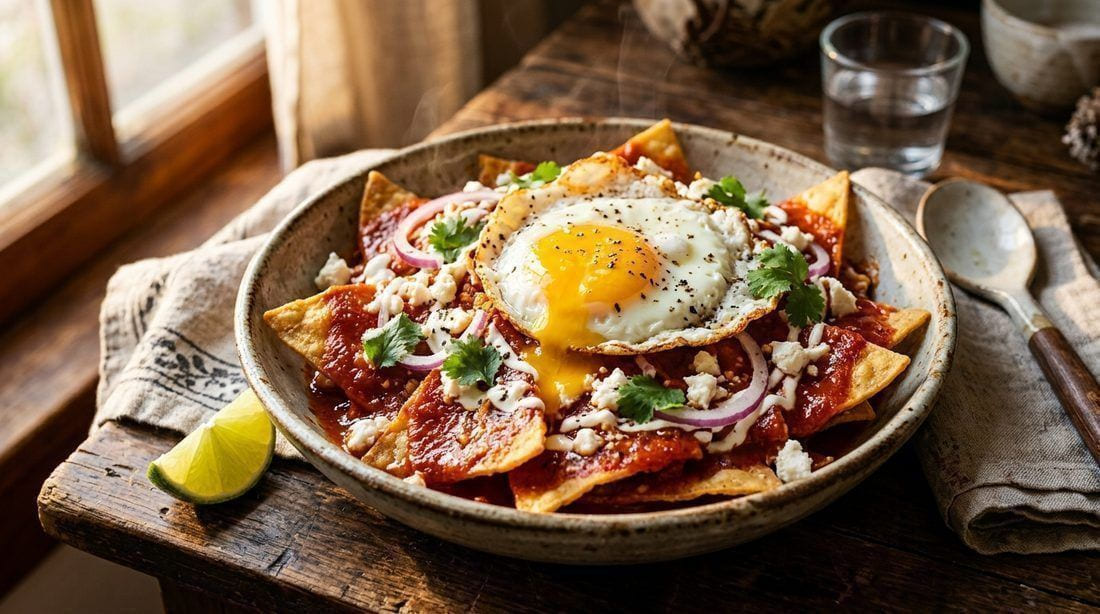
Combine and serve: raise the sauce to a gentle simmer, add the chips, and toss gently for 30–60 seconds — just until every chip is sauced but the batch still holds some bite. Divide between warm plates immediately, top each with a fried egg (runny yolk), queso fresco, crema, sliced onion, and cilantro. Serve with lime wedges — the acid at the table is non-negotiable.
Tips for Success
- Timing is everything: chips in the sauce for 30–60 seconds only, and serve the moment they are coated. If you simmer chilaquiles for 5 minutes you get tortilla soup — edible, but not the dish.
- Fresh-fry your tortillas if you can. Day-old tortillas fried at home taste of corn and clean oil; stale bagged chips carry the flavor of the bag. Cut the wedges first and let them air-dry a few hours (or overnight) so they fry crisper.
- Do not scorch the chiles when toasting — 30–60 seconds per side is enough. A scorched chile will make the entire sauce bitter, and no amount of stock or salt will fix it. If one blackens, throw it out and start again.
- Build heat with the árbol chiles, not with quantity: two árbol chiles make the sauce politely spicy, four make it aggressive. The crema and queso on top also tame heat, so season the sauce to the room, not to the pot.
Perfect pairings
Chilaquiles rojos is the weekend brunch anchor — pair it with the Mexican classics that share the same salsa-simmered spirit.
Frequently Asked Questions
Why did my chilaquiles turn out soggy?
Almost always one of two things: the chips went into the sauce too early, or the sauce was too thin. Fry your own chips fresh so they start hard and crisp, make sure the sauce simmers until it lightly coats a spoon before the chips go in, and toss the chips for 30–60 seconds only — then plate immediately. Chilaquiles wait for no one at the stove; they soften fast on the plate too, which is exactly why Mexicans eat them straight away.
How do I control the heat level of the red sauce?
The heat lives in the chile choice, not the sauce technique. Guajillos alone are mild and fruity — that is the base. Each árbol chile adds a real kick: start with one or two, blend, taste, and add a third only if you want serious heat. Deseeding the chiles removes a good chunk of the burn, and the toasting must be brief because scorched chiles taste bitter, not hot. Crema and queso fresco on top will also round the edge for sensitive eaters.
When do I add the eggs — and can I make chilaquiles ahead?
The eggs go in last, always: fry them while the chips take their 30-second sauce bath, and lay them on top so the yolk breaks over the chips at the table. You can make the sauce up to 4 days ahead (it improves overnight) and even fry the chips a day ahead — store them airtight and refresh 5 minutes in a 375°F oven. But the final toss is always a la minute; assembled chilaquiles do not keep.
Affiliate disclosure: this page contains affiliate links. If you buy equipment through them, Cuisinety earns a small commission at no extra cost to you — it keeps the site free. Picks follow the same research-backed standards as our gear guides. Read ourfull affiliate disclosure.
Browse All Recipes →
Love this recipe? Pin it!
Save it to your Pinterest board so you can find it later.
Pin this Recipe