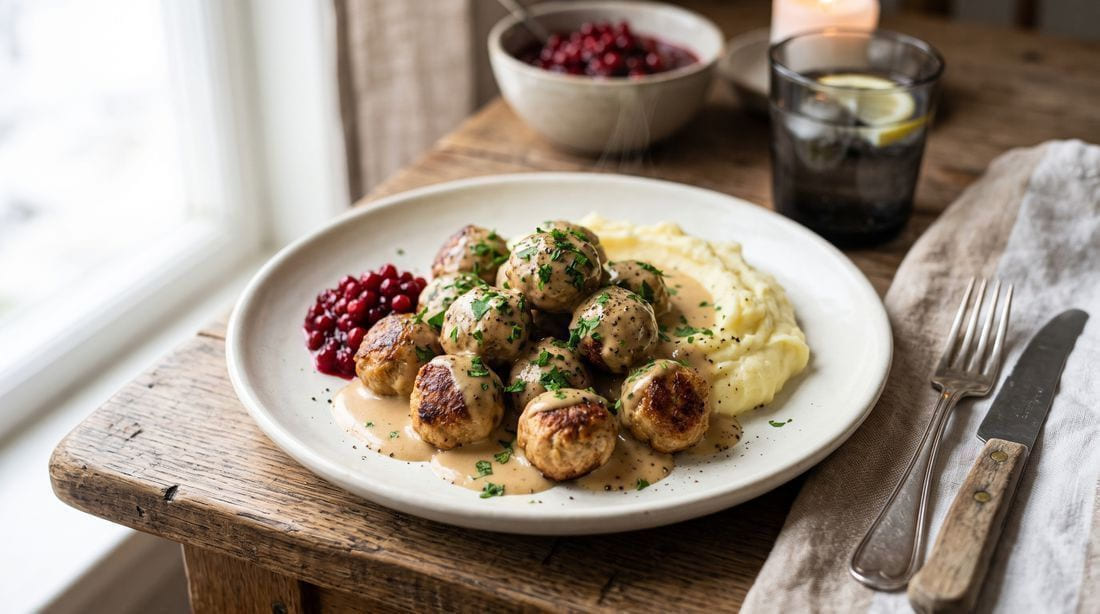
Swedish meatballs are proof that the greatest comfort foods are built on small, careful technique rather than show. Köttbullar are little — a proper Swedish meatball is bite-sized, which means more browned surface, more gravy cling, and a far more tender bite than a softball meatball ever manages. The seasoning is quietly Nordic: warm allspice and a whisper of nutmeg, onion cooked soft before it meets the meat, and breadcrumbs soaked in milk (a panade, the same trick that keeps the meatballs pillow-tender even through a hard sear). Then the gravy, which is the real reason the dish is famous: built right in the same pan from butter, flour, and beef broth, finished with cream so it coats the back of a spoon in glossy, savory velvet. Serve over mashed potatoes with a spoonful of lingonberry jam on the side — the sweet-tart counterpoint is not optional, it is the point. Forty-five minutes, one skillet, and dinner tastes like the best smörgåsbord in Stockholm.
By KarimMiddle Eastern & Grill · Middle Eastern & Grill
✓ Method-reviewed by our editors
Ingredients
4
1/2 cup panko breadcrumbs
1/3 cup whole milk
1 small yellow onion, very finely grated or minced
1 lb ground beef (85/15)
1/2 lb ground pork
1 egg, lightly beaten
1 1/4 teaspoons salt
1/2 teaspoon freshly ground black pepper
1 teaspoon ground allspice
1/4 teaspoon freshly grated nutmeg
4 tablespoons butter, divided
2 tablespoons all-purpose flour
2 cups beef broth
1 tablespoon Worcestershire sauce
2 teaspoons Dijon mustard
2/3 cup heavy cream (or half-and-half)
Lingonberry jam, for serving
Fresh parsley, finely chopped, for garnish
Instructions
Make the panade: stir the breadcrumbs into the milk in a large bowl and let them soak for 5 minutes until slurry-soft. While it sits, grate the onion on the fine side of a box grater (or blitz it finely in a food processor) — onion pieces large enough to see will make the meatballs crack apart.
Mix the meatballs: add the beef, pork, grated onion, egg, salt, pepper, allspice, and nutmeg to the bowl with the panade. Mix with clean hands just until everything is evenly combined — overmixing is what makes meatballs springy. Roll into 1-inch balls (about 1 1/4 oz each, roughly 30 in total) and set them on a plate.
Brown the meatballs: melt 2 tablespoons of butter in a large skillet over medium-high heat. When it stops foaming, add the meatballs in a single layer (work in two batches if needed) and brown all over, turning every couple of minutes, 7–9 minutes total, until deep golden and just cooked through. Transfer to a plate and tent loosely with foil — they finish in the gravy.
Start the gravy: reduce the heat to medium and melt the remaining 2 tablespoons of butter in the same skillet, scraping up the browned bits. Whisk in the flour and cook for 1–2 minutes, stirring constantly, until it smells like toasted pie crust and turns faintly nutty — this roux is what makes the gravy smooth instead of pasty.
Build the sauce: pour in the beef broth a splash at a time, whisking out every lump before adding the next splash. Add the Worcestershire and Dijon, then simmer 4–5 minutes until the gravy thickens enough to coat the back of a spoon.
Finish with cream: stir in the cream and let the gravy barely simmer for 2 minutes — do not boil hard or the cream can split. Taste and adjust salt and pepper.
Serve: return the meatballs (and any collected juices) to the skillet, spoon the gravy over, and warm through gently for 2–3 minutes. Serve over mashed potatoes or buttered egg noodles with a spoonful of lingonberry jam on the side and a snow of chopped parsley.
Tips for Success
Keep the meatballs small — 1 inch across, no bigger. Bite-sized meatballs have a higher browned-surface-to-center ratio, cook in minutes, and hold more gravy per bite. Giant meatballs go gray in the middle before the outside browns.
The panade (soaked breadcrumbs) is non-negotiable. It is the difference between tender and rubbery: the milk-swollen crumbs coat the protein strands and keep them from clenching as the meatballs sear. Dry breadcrumbs straight into the mix will not do the same job.
Cream goes in off a hard boil and stays there. The gravy should shimmer and barely tremble when the cream is added — full boiling can split it. If it ever does split, whisk in a splash of warm broth and pull it off the heat; it usually comes back together.
Perfect pairings
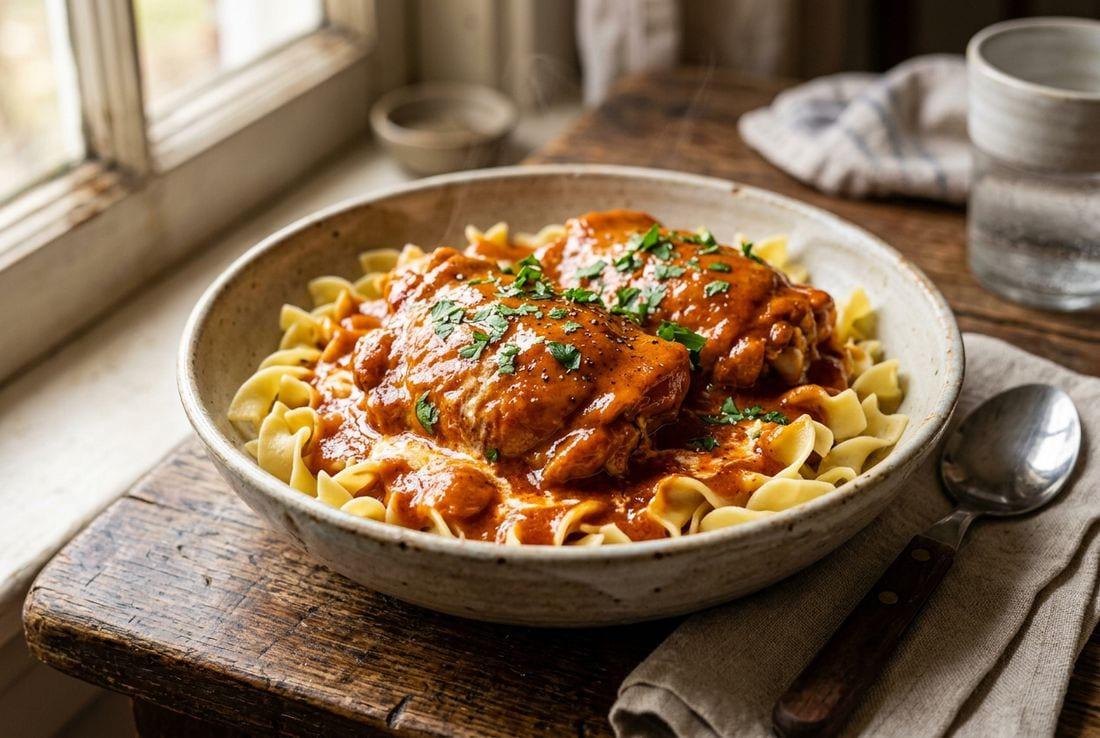
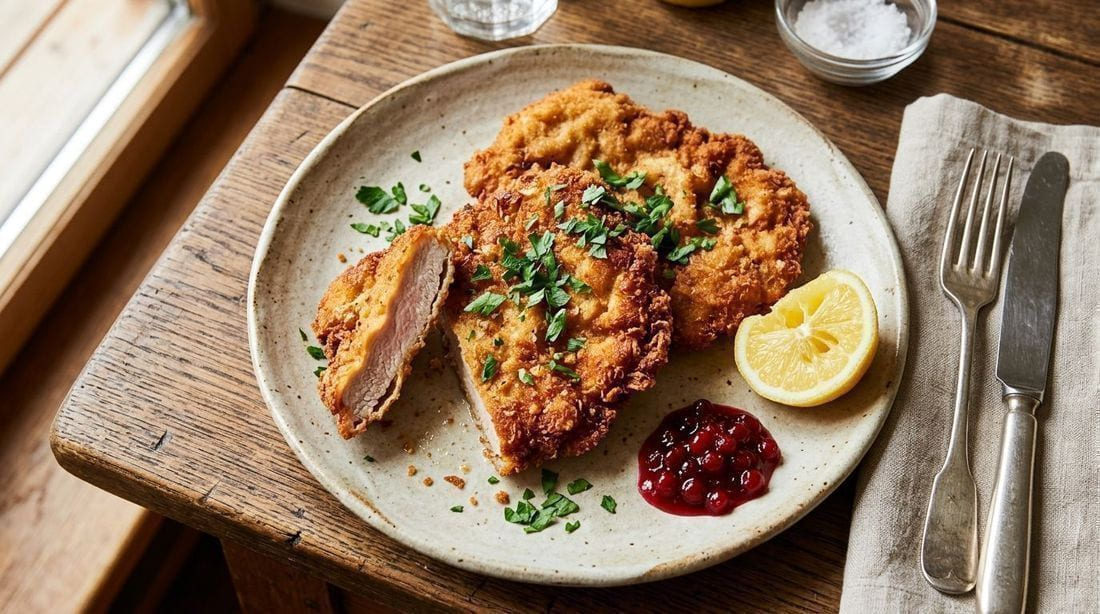
Swedish meatballs are a gravy-and-mash classic — pair them with the creamy European comfort that shares their patience and the pan-sauce cousins that build flavor the same way.
Yes — panko, plain dry breadcrumbs, or fresh breadcrumbs all work in the panade; soaked in milk they behave almost identically. What you should not swap is the soaking itself: breadcrumbs added dry make dense meatballs. Quick oats blitzed to a fine meal are a decent gluten-free stand-in.
Why did my sauce split or turn grainy?
Almost always a boil after the cream went in, or the roux was rushed. Cook the flour for a full 1–2 minutes before adding liquid, add the broth gradually while whisking, and after the cream goes in keep the pan at a bare simmer. If the sauce has already broken, pull it off the heat and whisk in a tablespoon or two of warm broth — most splits re-emulsify once the pan stops boiling.
Can I freeze Swedish meatballs?
Freeze the meatballs, not the finished dish. Cooked meatballs freeze beautifully for up to 3 months (spread them out to freeze solid, then bag them); thaw overnight in the fridge and warm them in a freshly made batch of gravy. Cream gravies separate when frozen and reheated, so make the sauce fresh — it takes ten minutes and makes the whole dish taste just-cooked.
Can I use breadcrumbs instead of a panade?
You can, but the soaked-panade step is what makes köttbullar tender. Breadcrumbs stirred in dry soak up liquid from the meat instead of bringing their own, which makes dense, springy meatballs. If you are short on time, soak the crumbs in the measured milk for just 5 minutes — that is enough. Panko, plain breadcrumbs, or fresh crumbs all work; quick oats blitzed to a fine meal are the gluten-free stand-in.
Why did my cream sauce split or turn grainy?
Two usual causes: the flour roux was rushed, or the sauce boiled hard after the cream went in. Cook the flour in butter for a full 1–2 minutes so it tastes nutty instead of pasty, add the broth gradually while whisking, and once the cream is in keep the pan at a bare simmer — never a rolling boil. If it has already split, pull it off the heat and whisk in a splash or two of warm broth; it almost always re-emulsifies.
Can I freeze Swedish meatballs?
Freeze the meatballs, not the finished dish. Cooked meatballs freeze beautifully for up to 3 months — spread them on a tray to freeze solid, then bag them. Thaw overnight in the fridge and warm them in a freshly made batch of gravy. Cream gravies separate when frozen and reheated, and fresh gravy only takes ten minutes, so the sauce is worth making on the day.
Affiliate disclosure: this page contains affiliate links. If you buy equipment through them, Cuisinety earns a small commission at no extra cost to you — it keeps the site free. Picks follow the same research-backed standards as our gear guides. Read ourfull affiliate disclosure.