Ingredients
- 14 oz spaghetti (or rigatoni)
- 6 oz guanciale (or pancetta), cut into small strips
- 3 large egg yolks, room temperature
- 2 large whole eggs, room temperature
- 1 1/4 cups finely grated Pecorino Romano, plus more for serving
- 2 teaspoons coarsely ground black pepper, plus more for serving
- 1 teaspoon salt, plus more for the pasta water
- Coarsely cracked black pepper, for finishing
Instructions
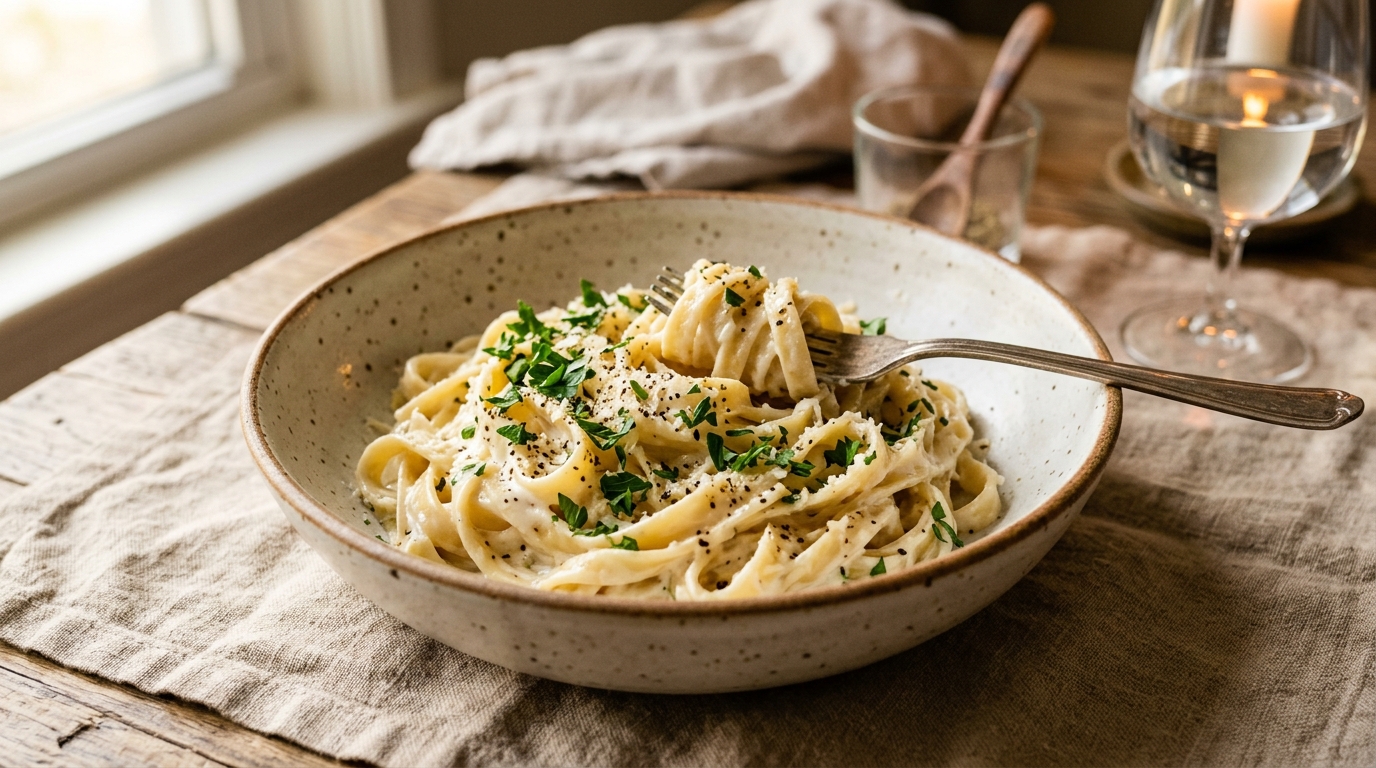
Bring a large pot of well-salted water to a boil. Whisk the egg yolks, whole eggs, Pecorino, and black pepper in a medium bowl until smooth and set aside.
Cook the guanciale in a large cold skillet set over medium heat, letting the fat render slowly for 8–10 minutes until deeply golden and crisp. Turn off the heat and leave the fat in the pan.
Cook the spaghetti in the boiling water until just shy of al dente (about 1 minute less than the package says). Before draining, reserve 1 1/2 cups of the starchy pasta water.
Add 1/2 cup of the hot pasta water to the skillet with the rendered fat and swirl to combine.
Drain the pasta and add it to the skillet. Toss well off the heat, then immediately pour in the egg mixture and stir vigorously with tongs, adding splashes of pasta water, until the sauce turns glossy and coats every strand. The residual heat cooks the eggs — never return the pan to the burner.
Serve right away in warm bowls, topped with extra Pecorino and a heavy crack of black pepper. Carbonara waits for no one.
Tips for Success
- Work fast and off the heat when the eggs go in. A pan that is too hot makes scrambled eggs; the pasta water is what keeps the sauce liquid and silky.
- Render the guanciale from a cold pan so the fat melts gradually and the pieces crisp instead of burning.
- Grate the Pecorino as finely as possible — coarse shreds melt into grainy strings instead of a smooth sauce.
Perfect pairings
These recipes belong on the same table — cook them together for a full spread, or swap in a variation next time.
Frequently Asked Questions
Can I use bacon instead of guanciale?
Yes, pancetta or unsmoked bacon are the closest substitutes. Skip heavily smoked American bacon if you can — it dominates the dish — but in a pinch it still makes a satisfying carbonara.
Are the eggs raw in carbonara?
The residual heat of the pasta gently cooks the eggs into a custard-like sauce — they are not raw, but they are not scrambled either. The technique is the same principle as making hollandaise or French silk pie.
Why did my sauce turn into scrambled eggs?
The pan or pasta was too hot when the eggs went in. Kill the heat, let the skillet rest a beat before tossing, and loosen everything with hot pasta water as you stir.
Can I add cream, garlic, or peas?
You can — but then it is not carbonara, it is a lovely cream pasta. The traditional Roman version gets all its richness from eggs, cheese, and guanciale fat alone.
Why is my carbonara thick and clumpy?
Not enough pasta water in the sauce. The eggs and cheese need the starchy water to stay fluid — add it in splashes off the heat while tossing until the sauce turns glossy and coats the strands.
Can I reheat carbonara?
Yes, gently: a cold pan on low heat with a splash of milk or pasta water, tossing for 1–2 minutes. Skip the microwave — it scrambles the egg sauce in seconds.
Why is my guanciale chewy instead of crisp?
Heat that is too high renders the fat too fast. Start the guanciale in a cold pan over medium-low and let it crisp slowly for 8–10 minutes.
Affiliate disclosure: this page contains affiliate links. If you buy equipment through them, Cuisinety earns a small commission at no extra cost to you — it keeps the site free. Picks follow the same research-backed standards as our gear guides. Read ourfull affiliate disclosure.
Browse Italian Recipes →
Love this recipe? Pin it!
Save it to your Pinterest board so you can find it later.
Pin this Recipe