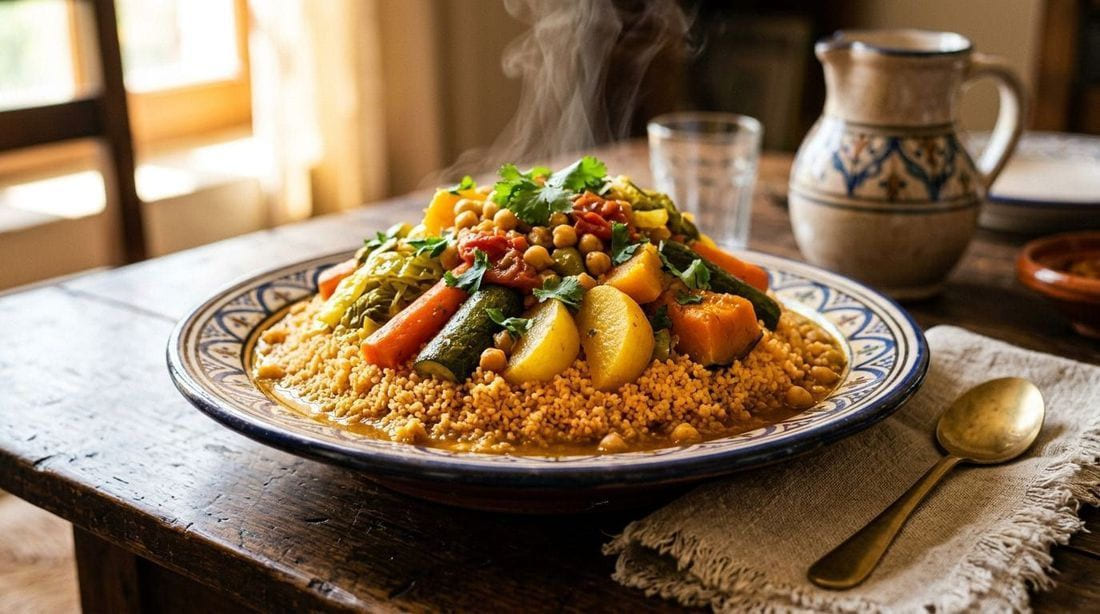
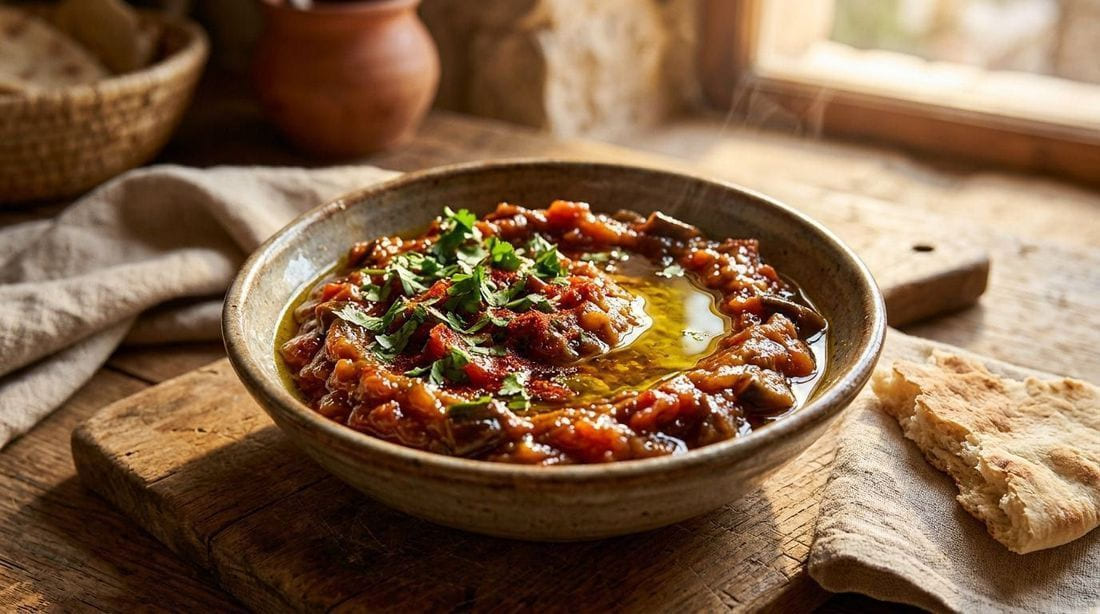
Make the marinade: whisk the olive oil, garlic, paprika, cumin, ginger, turmeric, saffron (with its soaking water), cayenne if using, and salt in a large bowl. Add the beef cubes and work the marinade into every piece with your hands — tanjia is a dry marinade, so there is no liquid to hide behind. Let it rest at least 1 hour at room temperature, or cover and refrigerate overnight; the longer rest is where the preserved lemon really gets into the meat.
Load the pot: pack the beef into a Moroccan clay tanjia urn or a small, heavy Dutch oven, tucking the chopped preserved-lemon rind between the pieces. Pour in the 1/2 cup of water around — not over — the meat. The pot should look almost empty of liquid; trust it.
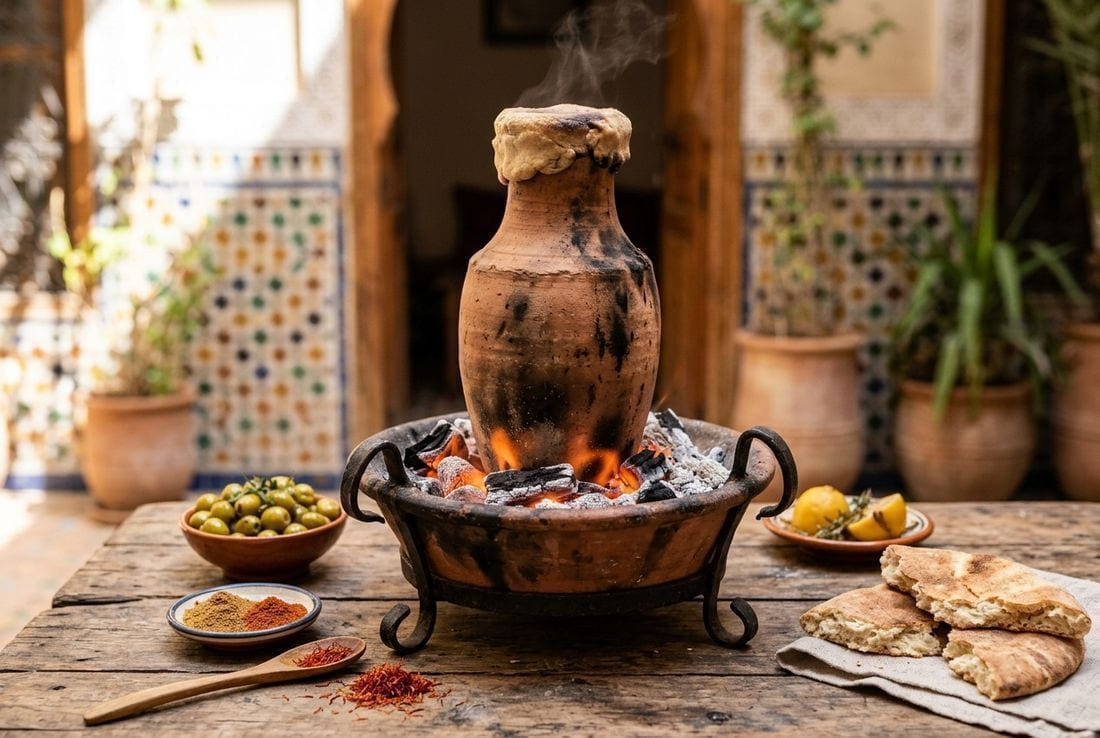
Seal it completely: press the lid on firmly, then run a rope of flour-water paste around the rim (or screw on a tight collar of aluminum foil, then a second layer). The seal is the whole recipe — a tanjia with a leaky lid is just a braise. You should not be able to see or smell anything escaping.
Cook slow and unopened: place the sealed pot in a cold oven, set it to 275°F (140°C), and leave it for 3 hours. In Marrakech the sealed urn spends these hours among the warm ashes of the hammam furnace; the low oven is the home translation of that gentle, dry heat. Do not peek — every opening breaks the seal and lets the steam out.
Check and finish: open the pot — it should take some effort, which is the seal doing its job. The beef should give way to a spoon, and the sauce should be dark, glossy, and concentrated, clinging to the meat rather than pooling around it. If there is a layer of fat on top, spoon most of it off. If the sauce looks thin, simmer uncovered over medium heat for a few minutes until it turns to a glaze.
Rest, still covered: take the pot off the heat and leave the lid on for 10–15 minutes. The meat relaxes, the sauce settles, and the last of the steam folds back into the pot.
Serve at the pot: set the urn on the table with torn khobz, green olives, preserved-lemon wedges, and small bowls of cumin and paprika for dusting. In Marrakech you eat tanjia with bread and your hands, scooping straight from the urn — bring spoons if you must, but know that the bread is the point.
What is the difference between tanjia and tagine?
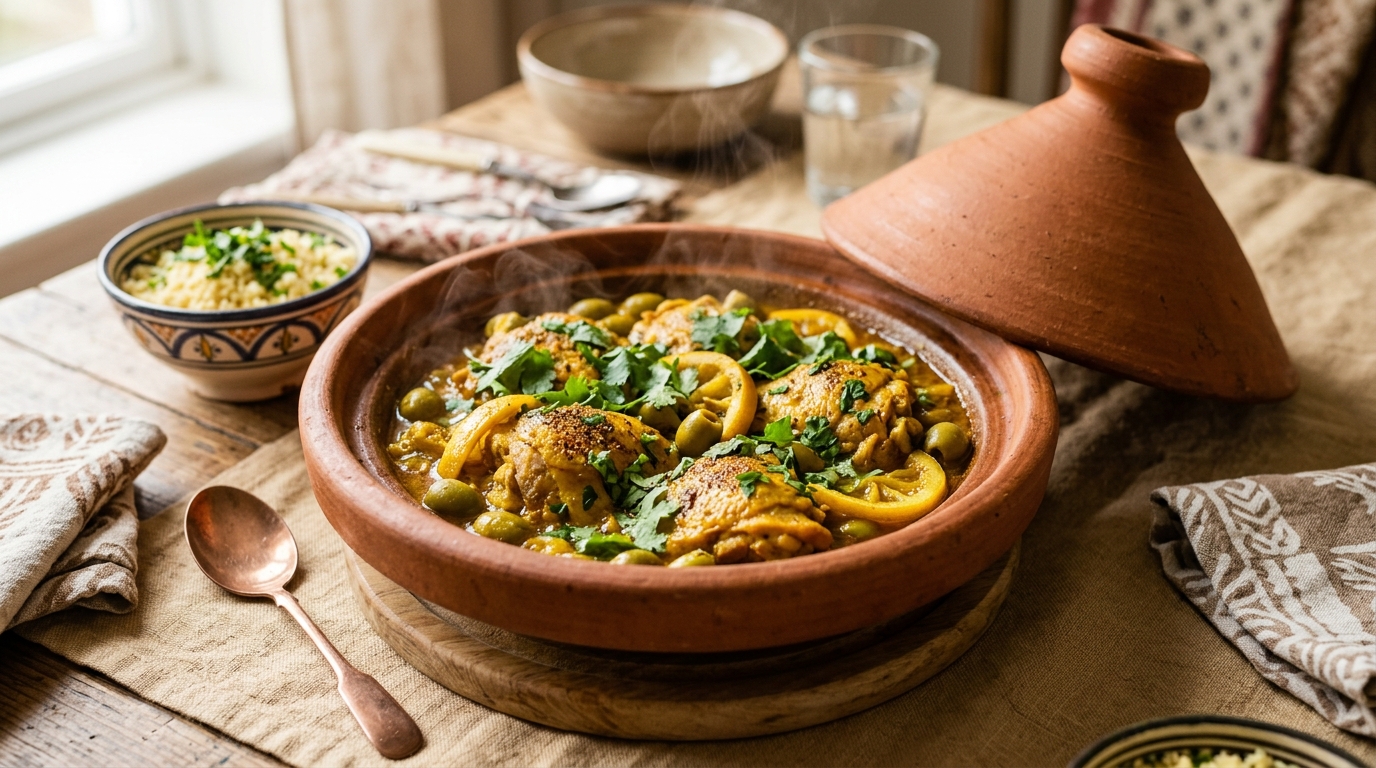
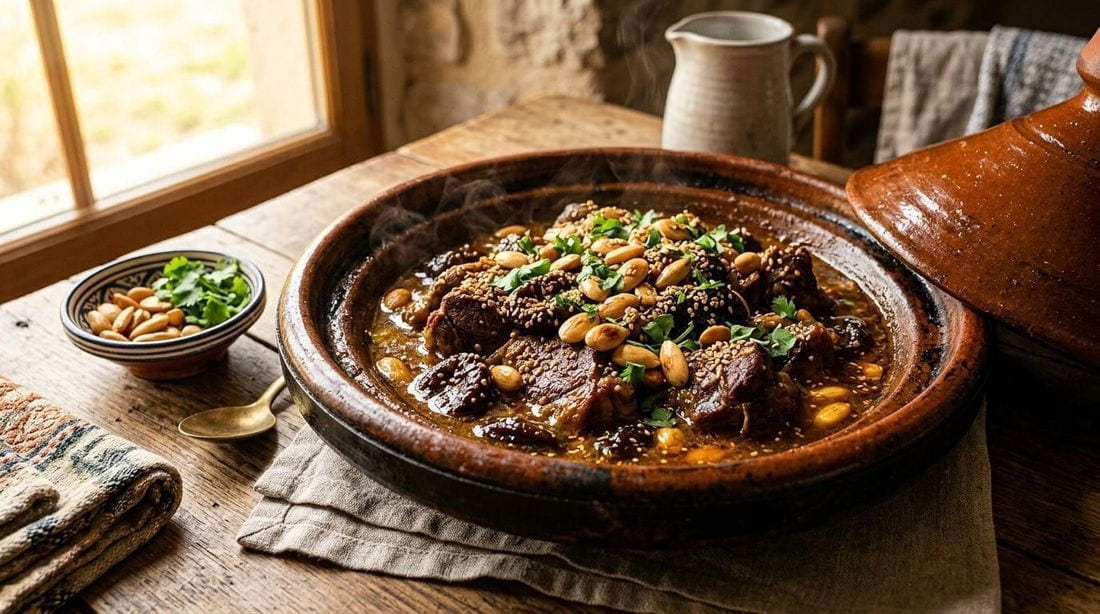
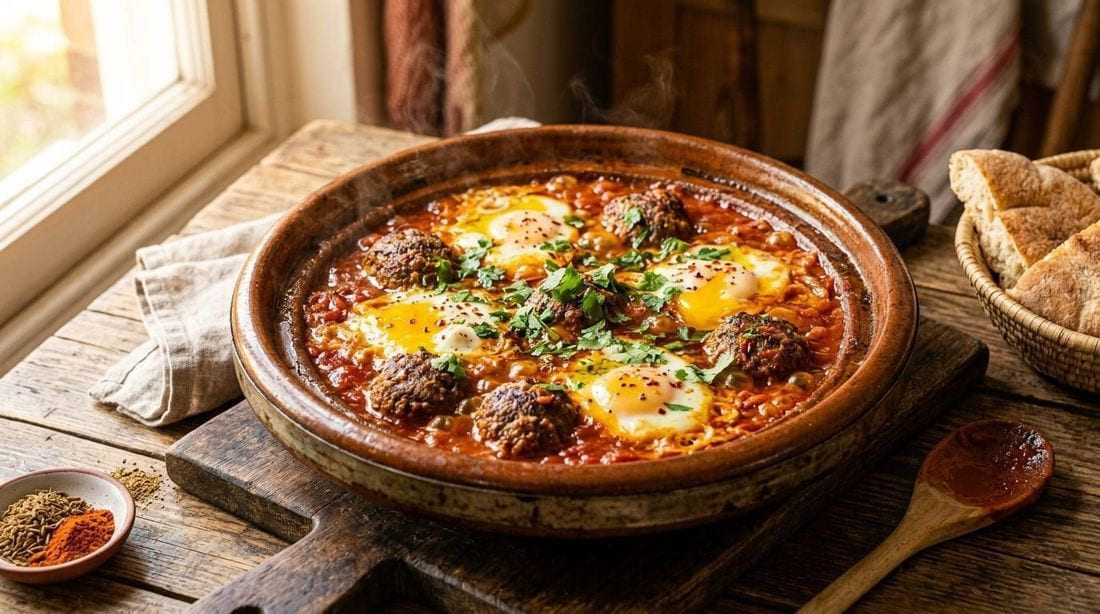
The names overlap but the dishes are opposites. A tagine is a shallow, conical dish that cooks meat or vegetables in a saucy base with room for carrots, onions, olives, or prunes — think of lamb tagine with prunes, where sauce is half the point. A tanjia is a tall, vase-shaped clay urn that cooks one thing only: meat, in a dry spice marinade, with almost no liquid, sealed completely. Tagine sauce simmers and bubbles; tanjia sauce reduces and glazes in trapped steam. In Marrakech, the tagine is home food and restaurant food, while the tanjia is famously street food — the urn that goes off to the hammam fire while you go about your day.
Can I make tanjia without a clay urn?
Yes — the urn matters less than the method. A small, heavy Dutch oven with a tight lid reproduces the essential conditions: even, gentle heat, minimal liquid, and a complete seal. What you cannot reproduce is the hammam: the wood-ash background warmth that gives the Marrakech original its faint smoky depth. A low oven is the practical home version, and it is genuinely good. If you happen to have a covered grill, setting the sealed pot on a cool corner of the grates after cooking with indirect heat comes closest to the real thing — just keep the temperature around 275°F and the lid sealed.
Can I use lamb instead of beef?
Absolutely, and you will be in good company — plenty of Marrakech urns are filled with lamb shoulder. Use the same weight of boneless lamb shoulder cut into 2-inch cubes, the same marinade, the same seal. Lamb takes the same 3 hours at 275°F but its flavor reads rounder and slightly sweeter; if anything, increase the preserved lemon to compensate. Neck or shank also work — they just want the top end of the cooking time — while lean cuts like leg dry out and are better left out of the urn.
Why is my tanjia tough instead of spoon-tender?
Three usual suspects: heat that crept too high, a broken seal, or the wrong cut. Tanjia wants a steady 275°F for the full 3 hours with the lid sealed the entire time — every peek lets the trapped steam escape and the pot drops back to ordinary braising. The cut matters just as much: beef shoulder (chuck) or brisket point marbles as it slow-cooks; lean cuts like leg or top round have no fat to relax and stay tight no matter how long they cook. If the pot finished tough, reseal and give it another 45–60 minutes at the same low temperature — shoulder almost always comes around.
Can I make tanjia in a slow cooker or pressure cooker?
Both work, with honest trade-offs. Slow cooker: marinate as directed, pack the beef with the preserved lemon, cook on low for 8 hours, then reduce the thin sauce in a pan on the stove to a glaze — you lose the sealed dry heat but keep the flavor. Pressure cooker: cook on high pressure for 45 minutes with a full natural release, using only 1/4 cup water, then simmer in sauté mode until the sauce turns dark and glossy. Neither gives you the faint smoky depth of the hammam ashes — that is the one thing no shortcut can fake — but both deliver genuinely good tanjia on a weeknight schedule.
What do you serve with tanjia?
In Marrakech, bread and nothing else: torn khobz for scooping the dark sauce straight from the urn, green olives and preserved-lemon wedges on the side, and small bowls of cumin and paprika for dusting each bite. To build it into a full Moroccan table, add smoky zaalouk or bright taktouka as a cooked salad, and finish the way the urn never does — with a hot glass of Moroccan mint tea. If you want a second street-food dish for the table, crisp makouda fritters fry up while the tanjia rests.