Sweat the onions: melt the butter with the olive oil in a heavy Dutch oven over medium heat. Add all the sliced onions and the salt, toss to coat, and cook for 15 minutes, stirring every few minutes, until the onions are soft, translucent, and have released most of their liquid.
Caramelize slowly: reduce the heat to medium-low and cook the onions for 45–60 minutes more, stirring every 4–5 minutes and scraping the browned fond from the bottom of the pot each time. The onions should turn from golden to deep amber and shrink to roughly a quarter of their starting volume — jammy, glossy, and dark mahogany at the edges. Never rush this with high heat; browned-bitter is not caramelized.
Deglaze: raise the heat to medium-high, pour in the wine, and scrape every bit of fond off the bottom of the pot. Let the wine bubble for 3–4 minutes until reduced by about half.
Bloom the flour: sprinkle the flour over the onions and stir constantly for 2–3 minutes so it toasts into the mixture and loses its raw taste — this is what gives the broth its signature body.
Simmer: pour in the hot beef stock, add the thyme and bay leaf, and bring to a gentle simmer. Cook uncovered for 20–25 minutes so the flavors marry and the broth thickens slightly. Taste and adjust with salt and pepper; stir in the cognac off the heat if using. Fish out the bay leaf and thyme stems.
Toast the bread: while the soup simmers, toast the baguette slices until dry and crisp — under the broiler or in a 400°F (200°C) oven, about 5 minutes, flipping once. The croutons must be fully crisp or they turn to mush under the cheese.
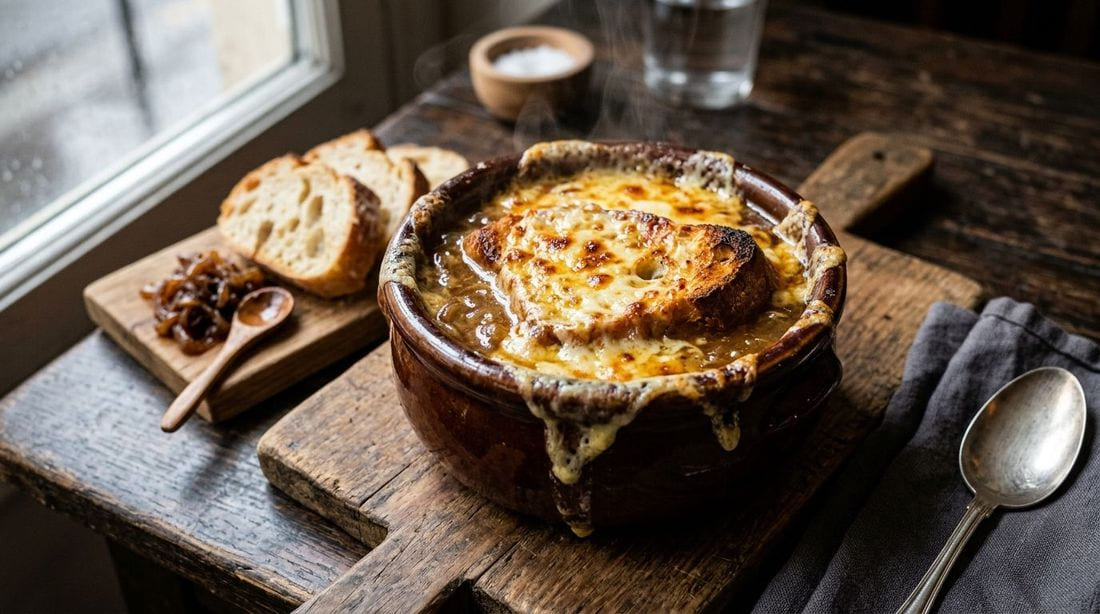
Broil: position a rack in the upper third of the oven and heat the broiler. Ladle the hot soup into 6 broiler-safe crocks on a sheet pan, float 2–3 toasted baguette slices in each, and blanket generously with the grated Gruyère, letting a little cheese cling to the rim.
Finish: broil for 3–5 minutes, watching constantly, until the cheese is bubbling, blistered, and spotted deep gold with a few dark edges. Let each crock rest for 3–5 minutes before serving — the soup underneath is volcano-hot.
Can I make French onion soup vegetarian?
Yes, with one honest swap: replace the beef stock with a dark vegetable stock and add a piece of dried porcini (about 1/2 oz, soaked or simmered in the pot) plus an extra splash of soy sauce or a teaspoon of miso for the savory depth the beef stock provides. The caramelized onions carry most of the flavor anyway. The result is a genuinely good vegetarian onion soup — just know it will taste lighter and sweeter than the bistro original, because the beef stock is doing real work in this recipe.
Can I caramelize the onions faster than an hour?
Not really, and the shortcuts all show. High heat burns the fond before the sugars develop, and added sugar produces candy-flat sweetness instead of the layered, almost-meaty depth of real caramelization. You can split the work across two days — onions caramelized ahead of time keep a week refrigerated — which is how restaurants serve this in 10 minutes. If you must compress, a 30-minute version at steady medium-low with frequent stirring is the floor; it will be good soup, just not the monument.
What cheese and bread work best, and can I skip the crocks?
Gruyère is the classic — it melts silky, browns in patches, and tastes nutty-sweet. Comté, Jarlsberg, or a Gruyère-mozzarella blend work; avoid pre-shredded cheese, whose anti-caking starch turns grainy under the broiler. For bread, a day-old baguette toasted until fully crisp is the standard; any sturdy rustic loaf works, but soft sandwich bread dissolves. No crocks? Make the classic everyday version: toast the croutons, rub them with a garlic clove, float them on the soup in a normal bowl, and lay the cheese over the top — or broil one big oven-safe dish and serve it family-style.
Why did my onions burn instead of caramelize?
Burned fond is the one failure this recipe cannot survive, because the fond becomes the broth. It happens when the heat is too high or the stirring gaps too long: the sugars at the pot bottom go from amber to black in under a minute near the end of the cook. Drop to medium-low, stir every 3–4 minutes in the final stretch, and scrape the fond each pass. If a dark spot does form, add a splash of water or wine immediately and dissolve it while it is still brown — if it is already black, add the water, scrape it out, and discard; do not stir black fond back into the pot.
Why is my cheese rubbery, sliding off, or refusing to brown?
Three checks. Rubbery cheese means the heat was too fierce or too long — broil 3–5 minutes with the rack 5–6 inches from the element and watch it constantly; a few dark gold spots is done, a full dark crust is overdone. Sliding off means the croutons were soft or floating loosely: the bread must be toasted until fully crisp so the cheese has something to grip, and the cheese should cling slightly to the crock rim. Refusing to brown usually means pre-shredded cheese (anti-caking starch prevents melting) or the broiler never fully heated — grate from a block and give the broiler 5 full minutes to preheat.
Why does my soup taste flat or greasy instead of deep?
Flat broth almost always means under-salted or under-reduced: taste after the simmer and add salt in small pinches — the broth should taste pleasantly seasoned on its own, before any cheese goes on. If it is thin, simmer 10 minutes longer to concentrate. Greasiness traces to the cheese broiled too hot and too long, which breaks the butterfat out — the rack-position fix above handles it — or to a fatty stock: if your beef stock is fatty, chill it, lift the fat cap, and skim the surface of the finished soup before ladling into the crocks.