Build the soffritto: heat the olive oil in a large pot or Dutch oven over medium heat. Add the onion, carrot, and celery with a pinch of salt and cook, stirring now and then, for 8–10 minutes, until the vegetables are soft, sweet, and just beginning to color at the edges. This step is the foundation of the whole soup — do not rush it.
Add the aromatics: stir in the garlic and tomato paste and cook for 1 minute, stirring constantly, until the paste darkens a shade and smells sweet and toasted rather than sharp.
Deglaze and build the base: pour in the crushed tomatoes, then the vegetable stock, scraping the bottom of the pot clean. Add the cannellini beans, the parmesan rind, rosemary or Italian herbs, salt, and pepper. Bring to a boil, then lower to a steady simmer.
Simmer the hardy vegetables: add the green beans and half of the zucchini and simmer, partially covered, for 20 minutes. Stir occasionally so the beans do not catch on the bottom. The rind will soften and start to melt into the broth; fish out the rosemary sprig if you used fresh.
Blend a scoop for body (the Italian trick): scoop out about 1 1/2 cups of the beans and vegetables, mash them against the side of the pot with a fork, or blitz briefly in a blender, and stir them back in. This thickens the broth into that signature creamy-without-cream texture without any flour or cream.
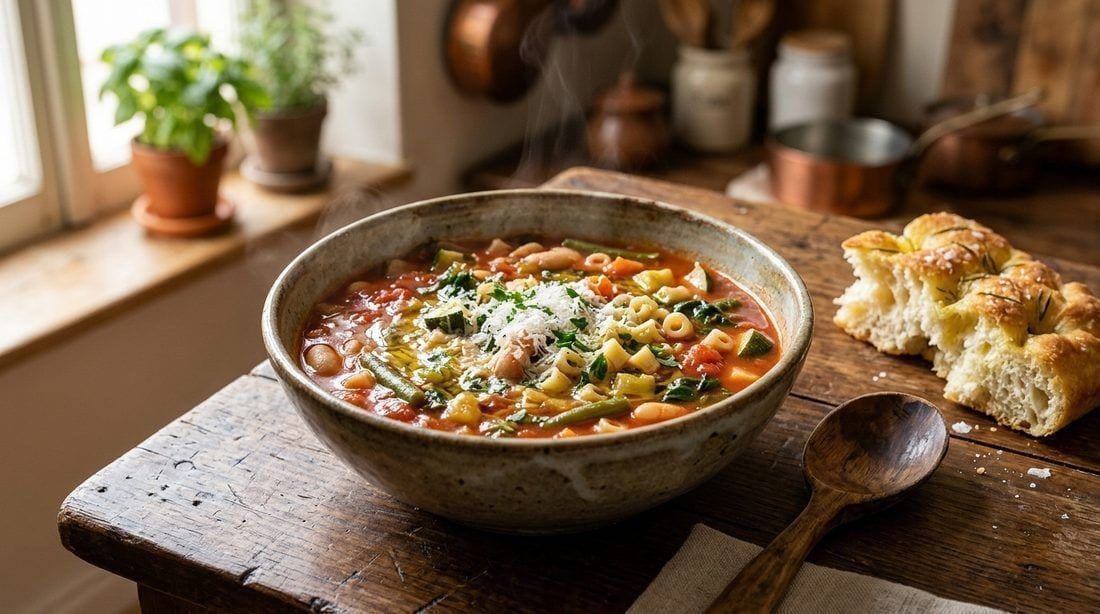
Add the pasta and the last of the vegetables: stir in the small pasta and the remaining zucchini and simmer for 8–10 minutes more, until the pasta is just tender. The soup should be thick — a spoon dragged across the bottom should leave a momentary trail. Add a splash of stock if it gets thicker than you like; the pasta keeps drinking as it sits.
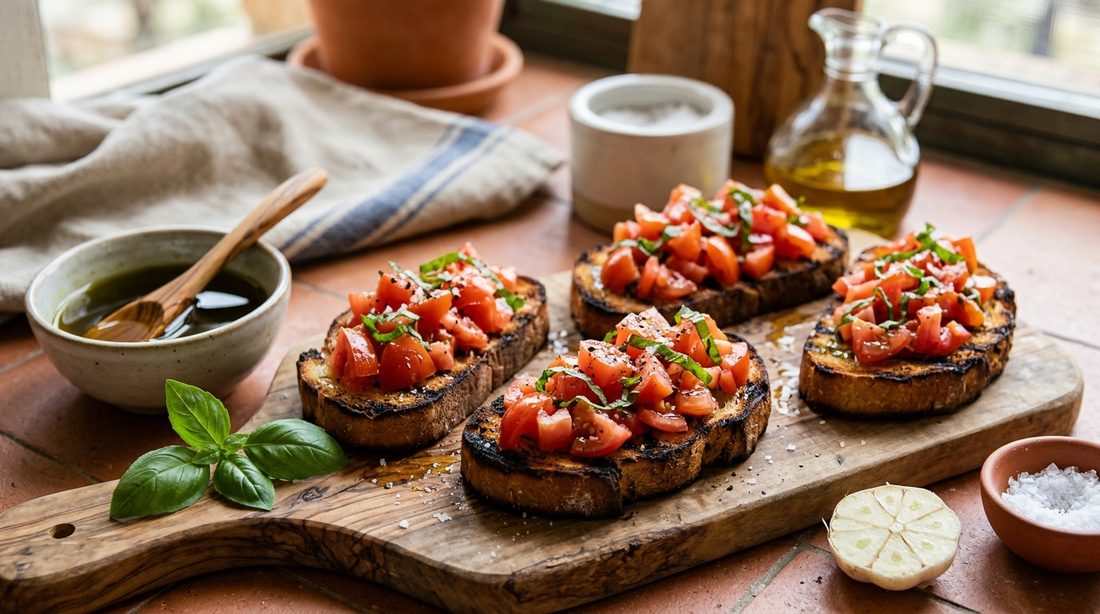
Finish and rest: remove the parmesan rind (it has given all it has). Taste and adjust salt and pepper. Let the soup rest off the heat for 5 minutes so the flavors settle, then ladle into warm bowls and top each with grated parmesan, torn basil, and a small spiral of raw olive oil. Serve with torn focaccia or bruschetta for dunking.
Can I use canned beans instead of dried?
Yes — canned cannellini beans are what most Italian home cooks reach for on a weeknight, and this recipe is written for them. Drain and rinse them so the canned liquid does not cloud or salt the broth, and add them when the recipe says so they simmer long enough to season. If you want to cook from dried, soak 1 cup of dried cannellini overnight, simmer them in fresh water until tender (45–60 minutes), and add them with their cooking liquid in place of the canned beans — the starchy bean liquid makes an even silkier broth.
Why did my minestrone turn out watery?
Three usual culprits: the soffritto was rushed (undercooked vegetables release water instead of sweetening the pot), too much stock for the amount of vegetables, or the pasta was cooked separately and never got to drink broth. Fix it in order: give the next soffritto the full 10 minutes, use 8 cups of stock for this quantity of vegetables — no more — and always finish with the mash-a-scoop-of-beans trick, which thickens the broth naturally in 30 seconds. If the pot is already made and thin, simmer it uncovered for 10 minutes and stir in the mashed beans.
What pasta works best in minestrone, and can I skip it?
Small shapes are the rule: ditalini is the classic, but elbow macaroni, small shells, or tubetti all hold broth and fit on a spoon. Anything long (spaghetti, fettuccine) tangles and turns mushy — leave it out rather than force it. And yes, you can skip the pasta entirely for a lighter, naturally gluten-free soup; add a second can of beans or an extra zucchini instead, and the soup stays just as authentic — plenty of Italian nonne make it pasta-less.
Why is my minestrone thin even after simmering, and how do I thicken it?
The classic Italian fix is in the pot already: scoop out about a cup and a half of the beans and vegetables, mash or briefly blend them, and stir them back in — the starch thickens the broth in seconds without any flour or cream. Thin soup almost always traces back to a rushed soffritto (give the onion, carrot, and celery the full 8–10 minutes so they melt and sweeten rather than weep water), too much stock relative to vegetables, or skipping the parmesan-rind step. If the pot is already finished and thin, simmer it uncovered for 10 minutes and apply the mash trick — it will not rescue a bland soup on its own, so re-check the salt after reducing.
Can I make minestrone ahead, and does it freeze well?
Yes to both, with one condition: the pasta. Left in the pot, pasta keeps drinking broth overnight and the soup turns stodgy. For a make-ahead batch, simmer everything except the pasta (it holds 3 days in the fridge and freezes beautifully for 3 months), then cook the pasta fresh — separately, in salted water — and add a small handful to each bowl before ladling the reheated soup over it. Thaw frozen minestrone overnight in the fridge and reheat gently; the flavor is genuinely better on day two, which is why so many Italian families make a double pot.
Is minestrone vegan, and what can I use instead of the parmesan rind?
The base of this recipe is already plant-based — the only animal ingredient is the parmigiano rind, and it is optional (though it is the savory secret). For a fully vegan minestrone, drop the rind and finish each bowl with 1/2 teaspoon of white miso stirred in off the heat for the same glutamate depth, plus a good grassy olive oil. Skip the parmesan snowfall on top or use a plant-based hard cheese. Everything else — beans, soffritto, crushed tomatoes, pasta — is already vegan, and the soup loses none of its structure.