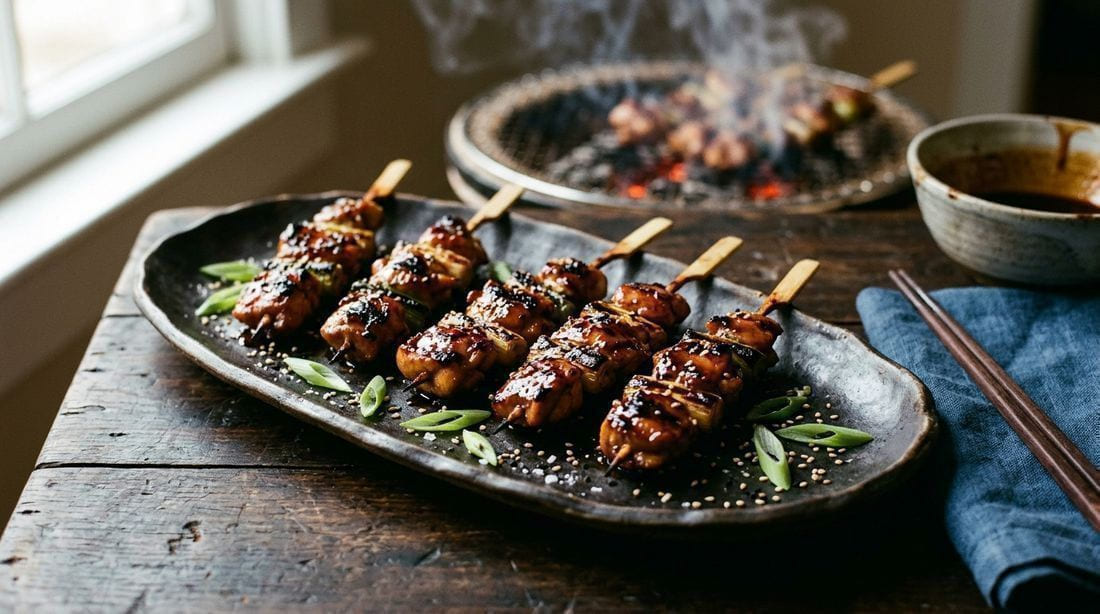
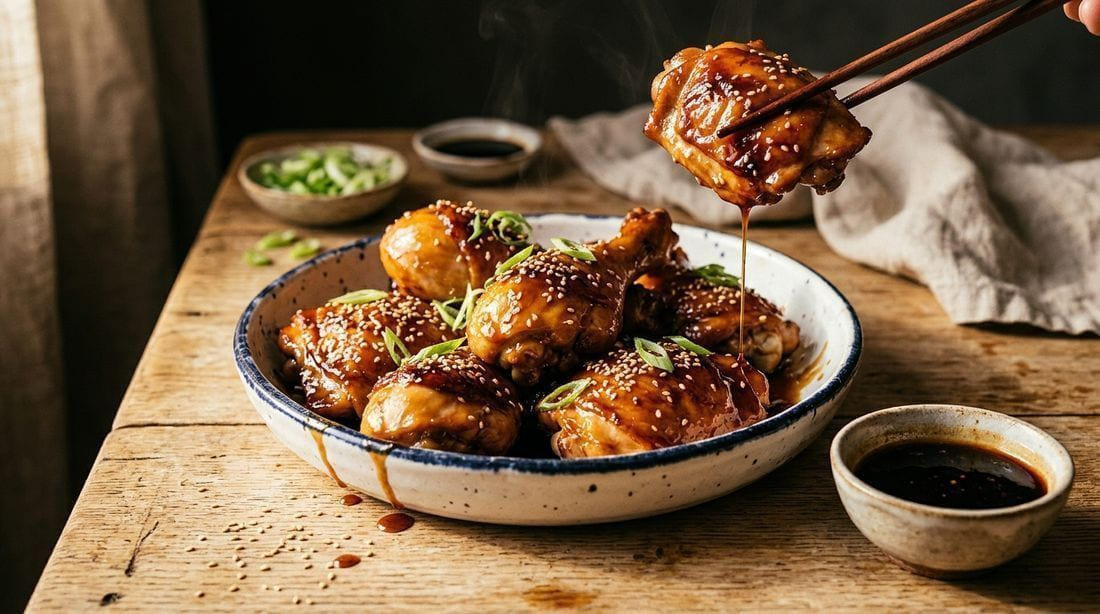
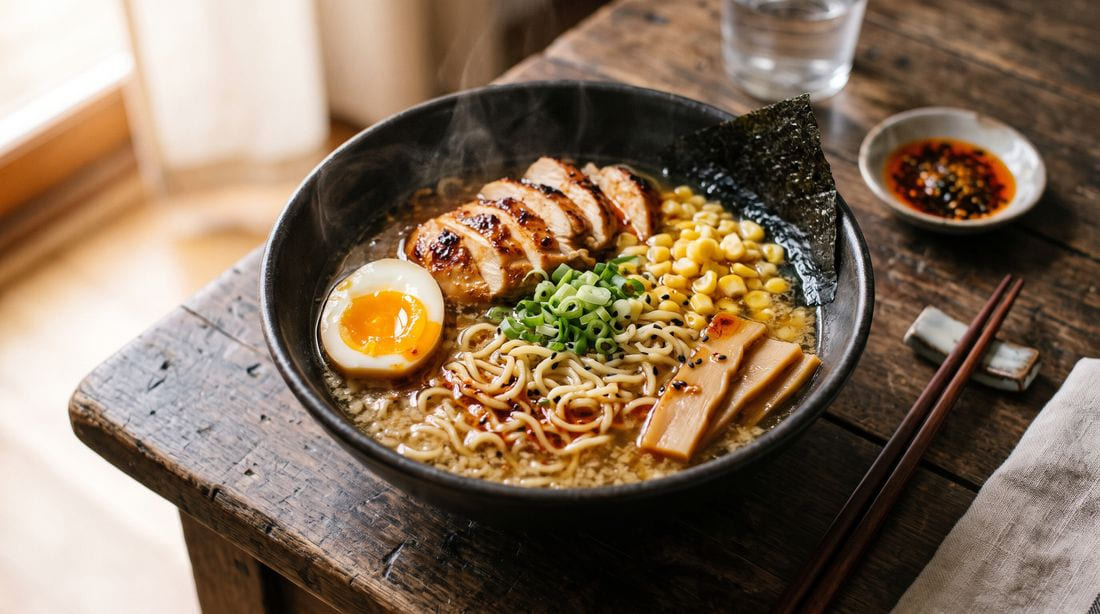
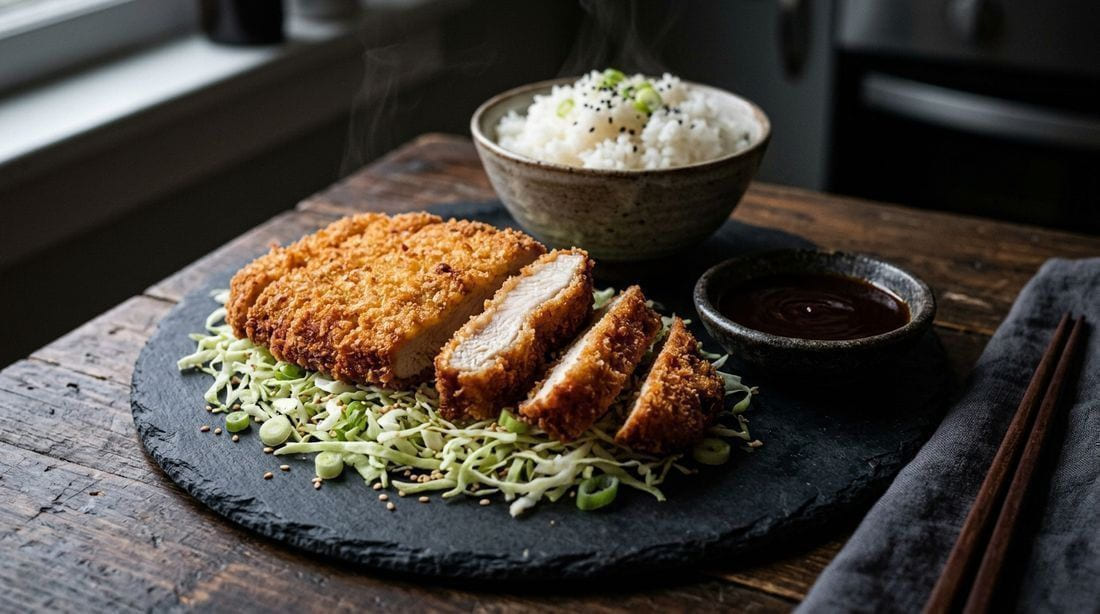
Yakitori is the Japanese art of grilling chicken on a skewer, and like most great grill crafts, its whole story is heat and repetition. At a yakitori-ya, the master stands over a binchotan charcoal pit, turning skewers of chicken thigh, negi leek, and skin with nothing but tongs and timing, brushing each one with tare — the soy, mirin, sake, and sugar glaze that has simmered on the back of the restaurant's stove for years, building character with every batch. The home version needs none of that apparatus: a screaming-hot grill pan or cast-iron skillet stands in for the charcoal, the chicken cooks in about eight minutes flat, and a small pot of homemade tare — reduced until it coats a spoon — delivers that dark, salty-sweet lacquer from the very first batch. Negima, the classic alternating skewer of thigh and leek, and momo, the pure thigh skewer, are both here, plus an optional run of crisp grilled chicken skin for anyone who has ever loved the end pieces. High heat, light baste, and the patience to let the glaze caramelize into the meat: that is yakitori, on a Tuesday night.
25 minutes (includes the tare and skewering) prep12 minutes cook37 minutes total4 servingsMedium~450 calories per serving
By KarimMiddle Eastern & Grill · Middle Eastern & Grill
2 Japanese leeks (negi), or 3–4 thick scallions, cut into 1-inch (2.5 cm) batons
8 oz (225 g) chicken skin, cut into 1-inch pieces (optional but traditional — ask your butcher for thigh skins)
2 tablespoons neutral oil
10–12 bamboo skewers, soaked in water 30 minutes
For the tare: 1/2 cup soy sauce, 1/2 cup mirin, 1/4 cup sake (or dry white wine), 2 tablespoons sugar, 1 clove garlic, smashed
Instructions
Make the tare: combine the soy sauce, mirin, sake, sugar, and smashed garlic in a small saucepan. Add the chicken skin pieces if using — real yakitori-ya tare simmers with chicken trimmings for depth. Bring to a simmer over medium heat and cook 10–12 minutes, until reduced by about a third and glossy enough to coat the back of a spoon. Strain out the garlic and skin (eat the crisp skins now; they are the chef's treat) and let the tare cool. It keeps for a month in the fridge and only gets better with reuse.
Skewer the chicken: for negima skewers, thread thigh pieces and leek batons alternately — three pieces of chicken to two batons per skewer, starting and ending with chicken so the meat holds the leek in place. For momo skewers, thread 5 pieces of plain thigh per skewer. Thread loosely — leave a bare millimeter between pieces so the heat reaches every side and the skewer still turns easily.
Preheat for a real sear: heat a grill pan or cast-iron skillet over high heat until it smokes, or set an outdoor grill on maximum. Lightly brush the chicken with the oil — just enough to release it from the pan, not enough to flare.
Grill the first side: lay the skewers on the hot surface and cook undisturbed 2–3 minutes, until the underside is deeply golden with charred edges. Character, not just brown: yakitori wants a little bite of char. Flip and cook 2 minutes more on the second side, until the chicken is about three-quarters cooked.
Glaze in layers: dip a pastry brush in the tare and brush every skewer generously, then flip and brush the other side. Cook 1 minute, flip, brush again, and cook 1 more minute — two or three light coats build that lacquered shell. The sugar in the tare caramelizes against the hot chicken; you will see the glaze turn dark and set. Total cooking time is 8–10 minutes; chicken should register 165°F (74°C).
Serve immediately, slicked with one final brush of tare and a dusting of shichimi togarashi or a pinch of sansho pepper, with lemon wedges on the side. Eat straight off the skewer — yakitori waits for no one, and the glaze starts setting the second it leaves the heat.
Tips for Success
Do not baste early. If the tare hits the chicken while it is still raw, the sugar burns into bitter black spots before the meat cooks through. Grill the chicken to three-quarters done with nothing but oil, then glaze in the final minutes — the caramelization lands right as the meat finishes.
Thread loosely, always. Skewers that are packed tight steam in the middle, and the pieces fuse into a gray log instead of charring individually. Leave a sliver of daylight between pieces, and you get edges on every side — which is where all the flavor lives.
Let the tare be the star, and let it age. This is a half-hour tare, but the real thing is a master batch that cooks with the restaurant for years. Make a double batch, keep it in the fridge, and use it for future glazes, marinades, and stir-fries — every time you simmer it, it gains depth. If it thickens in the fridge, loosen it with a splash of water before brushing.
Lower the heat for skin skewers. Chicken skin renders, not chars — grill skin pieces over medium heat for 6–8 minutes, turning often, until golden and crisp, then glaze at the end like everything else. Crisped, tare-slicked chicken skin is the single best thing on a yakitori menu; do not skip it.
Perfect pairings
These recipes belong on the same table — cook them together for a full spread, or swap in a variation next time.
I don't have a grill pan — can I still make yakitori?
Yes, three good ways. A cast-iron or heavy stainless skillet over high heat works exactly like a grill pan (it just lacks the grill marks). The broiler works too: arrange skewers on a foil-lined sheet, broil 5–6 inches from the element, 3 minutes per side, then glaze in the last minutes the same way. And if you have a real charcoal grill, you have the authentic setup — bank the coals for high, even heat and cook exactly as written.
What's the difference between tare and teriyaki sauce?
They are close cousins from the same soy-mirin-sugar family, but tare skews more savory and less sweet: it simmers longer, reduces further, and in the traditional version picks up chicken fat and trimmings, which gives it a deeper, rounder flavor than the quick teriyaki glaze. Teriyaki leans sweet and glossy; tare is darker, saltier, and built for grilled things. In a pinch you can brush teriyaki sauce on yakitori, but homemade tare is worth the ten extra minutes.
Can I use chicken breast instead of thigh?
Thighs are the traditional and far more forgiving choice — their extra fat keeps the meat juicy through the high-heat sear, and they do not dry out in the time it takes to develop char and glaze. Breast works if that's what you have: cut it into slightly bigger 1 1/4-inch pieces so it cooks at the same pace as the leeks, watch the heat, and pull the skewers the moment they hit 160°F (71°C) — carryover finishes them. Expect to be a little more careful — breast has no margin.
Affiliate disclosure: this page contains affiliate links. If you buy equipment through them, Cuisinety earns a small commission at no extra cost to you — it keeps the site free. Picks follow the same research-backed standards as our gear guides. Read ourfull affiliate disclosure.
Equipment I Used
Grill pan or cast-iron skillet:UK - US - IT - AU - DE - FR - ES - UAE