Chicken Katsu (Crispy Panko Cutlets with Tonkatsu Sauce)
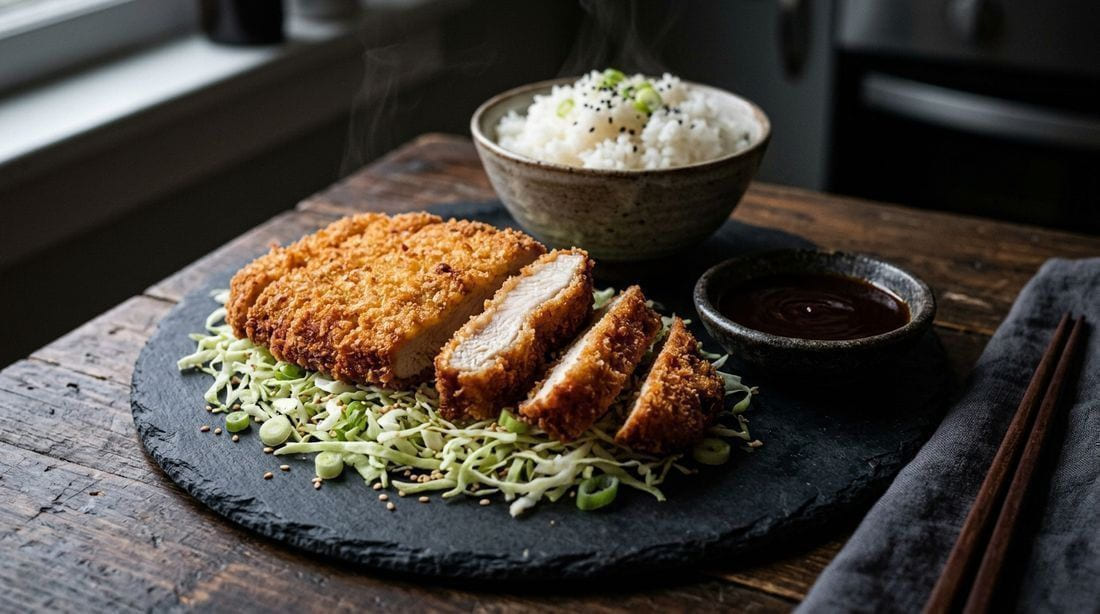
Katsu is Japan's argument that fried chicken does not need a complicated coating: a thin, even cutlet, a shaggy armor of panko, and enough hot oil to turn it all deep gold in a few minutes. The chicken is pounded thin and even so it cooks through the instant the crust finishes — no raw middle, no burnt crumbs — and the panko, coarser and flakier than any Western breadcrumb, fries into the craggy, feather-light shell that shatters with the first bite. It lands on a mound of steamed rice next to a heap of finely shredded cabbage, the cool crunch cutting the richness, and a spoon of tonkatsu sauce — the sweet, tangy, unabashedly ketchupy brown sauce that katsu was made for. Homemade tonkatsu sauce is a two-minute stir of pantry staples, so there is no reason to reach for the bottle. From first pound to first crackle in about 30 minutes, this is the weeknight version of the katsu counter's star plate.
20 minutes (includes pounding and breading) prep12 minutes cook32 minutes total4 servingsEasy~680 calories per serving
By KarimMiddle Eastern & Grill · Middle Eastern & Grill
✓ Method-reviewed by our editors
Ingredients
4
1 1/2 lb (680 g) boneless, skinless chicken breasts (about 2 large), butterflied and pounded to an even 1/2 inch (1.3 cm) thick
1 teaspoon salt
1/2 teaspoon black pepper
1/2 cup all-purpose flour
2 large eggs, beaten
2 cups panko breadcrumbs (the coarser, flakier the better — see tips)
1 1/2 cups neutral oil (enough for a 1/2-inch / 1.3 cm layer in your skillet)
4 cups finely shredded green cabbage (or 1 small head, cut into the finest shreds you can manage)
3 cups steamed short-grain rice, for serving
For the tonkatsu sauce: 1/4 cup ketchup, 2 tablespoons Worcestershire sauce, 1 tablespoon soy sauce, 1 tablespoon mirin (or 1 tablespoon water with 1 teaspoon sugar dissolved in it), 1/2 teaspoon Dijon mustard, 1 small clove garlic, grated
Instructions
Make the tonkatsu sauce: stir the ketchup, Worcestershire, soy sauce, mirin, Dijon, and grated garlic together in a small bowl until smooth. Taste and adjust — it should be sweet, tangy, and faintly savory, like Bulldog sauce but brighter. Set it aside; it only gets better as it sits.
Pound the chicken: butterfly each breast by slicing it horizontally almost all the way through and opening it like a book, then lay between two sheets of plastic wrap and pound with a rolling pin or the flat side of a heavy pan to an even 1/2 inch (1.3 cm) thick. Even thickness is the whole trick — thin spots overcook and thick spots stay raw under the crust. Season both sides with the salt and pepper.
Set up the breading station: three shallow dishes — flour in the first, beaten eggs in the second, panko in the third. Dredge a cutlet in the flour and shake off the excess, dip it in the egg and let the excess drip off, then press it firmly into the panko, flipping and pressing until every ridge is coated. Press, do not toss — the panko needs real contact to stick. Set the breaded cutlets on a wire rack and rest 10 minutes; this lets the coating set so it stays on the chicken instead of in the oil.
Fry: heat the oil in a large heavy skillet over medium heat until a pinch of panko sizzles immediately on contact (about 350°F / 175°C). Lay in one cutlet at a time — the pan should sizzle steadily, not roar — and fry 3 minutes per side until deep golden brown and the crust feels shatter-crisp. Two smaller cutlets can share the pan if they fit without crowding; otherwise fry one at a time, letting the oil come back up to temperature between batches.
Rest and drain: transfer each cutlet to a clean wire rack (not paper towels — steam trapped under paper softens the crust) and let it rest 3 minutes. The chicken finishes cooking from carryover as it rests.
Slice and serve: slice each cutlet against the grain into 3/4-inch (2 cm) strips and fan them over the steamed rice, cut-side up so the juicy interior shows. Pile the shredded cabbage alongside, drizzle the tonkatsu sauce over the meat (or serve it on the side for dipping), and eat immediately — the crust waits for no one.
Tips for Success
Pound to an even 1/2 inch — no thinner, no thicker, no bumps. Katsu is a fast, shallow fry; it works only if the meat cooks in the same time as the crust. Uneven cutlets mean chewy edges or a raw seam in the middle. If you do not own a pounder, a rolling pin or the bottom of a heavy saucepan works perfectly.
Use real panko, and the coarsest brand you can find. Panko's oversized, craggy flakes trap air and fry into deep ridges of crunch that fine breadcrumbs cannot produce. If your panko bag has broken down into fines, shake the crumbs through a coarse strainer and use the big flakes — it makes a visibly better crust.
Rest the breaded cutlets before frying, and drain them on a rack after. The ten-minute rest lets the flour-and-egg layer hydrate the panko just enough to glue it on, so the coating stays attached through the oil. And a wire rack beats paper towels every time: towels trap steam that softens the bottom crust before you even sit down.
Watch the oil, not the clock. At 350°F (175°C) the cutlet takes about 3 minutes per side; too hot and the crust blackens before the chicken cooks, too cool and the coating drinks oil and turns greasy. A thermometer removes the guessing, but a pinch of panko that sizzles on contact is a reliable stand-in. Let the oil recover between batches — frying cold oil is the number one greasy-katsu cause.
Perfect pairings
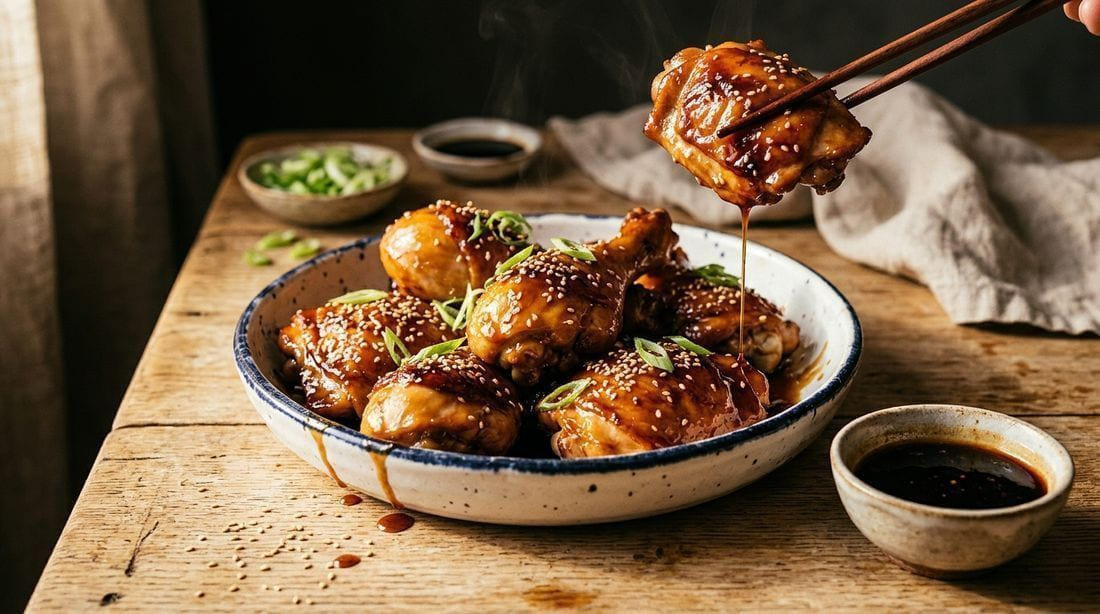
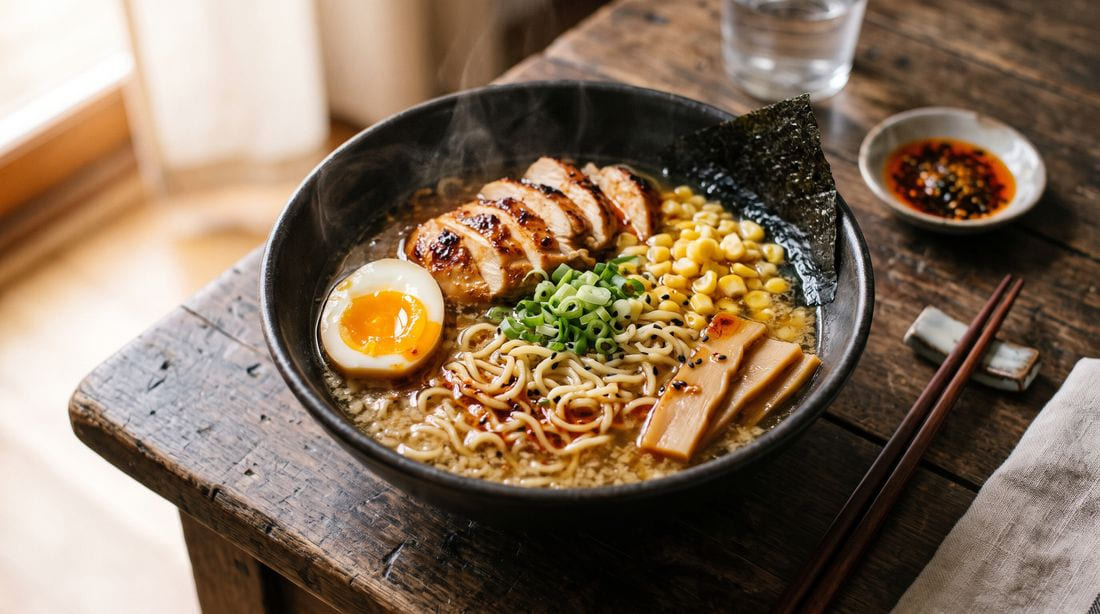
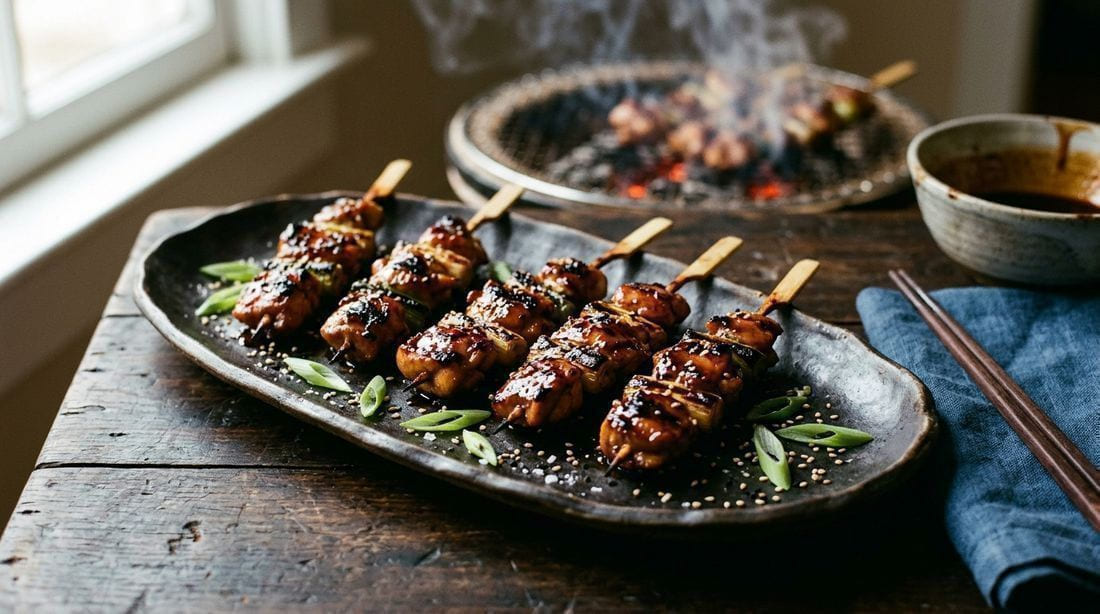
These recipes belong on the same table — cook them together for a full spread, or swap in a variation next time.
Yes — thighs make an arguably juicier katsu, and they are forgiving of a few extra seconds in the oil. Butterfly and pound them to the same even 1/2 inch, then fry about 3 1/2 to 4 minutes per side, until the crust is deep gold. The only adjustment: thigh pieces can be smaller and less uniform, so aim for roughly matching sizes so they cook evenly.
What can I substitute for Worcestershire or mirin in the tonkatsu sauce?
Both have easy pantry stand-ins. No Worcestershire: use 1 tablespoon soy sauce plus 1 teaspoon vinegar and a pinch of sugar in its place. No mirin: dissolve 1 teaspoon sugar in 1 tablespoon of water — mirin's only job here is sweetness with a touch of roundness. The sauce is forgiving by design: keep it sweet, keep it tangy, and it will taste like katsu sauce.
Can I freeze the breaded cutlets for later?
Absolutely, and they freeze like a dream. Freeze the raw, breaded cutlets in a single layer on a parchment-lined tray until solid, then stack them in a zip-top bag with sheets of parchment between — they keep for 2 months. Fry from frozen, straight into 350°F oil, adding about 2 minutes per side. No thawing, no soggy coating.
Affiliate disclosure: this page contains affiliate links. If you buy equipment through them, Cuisinety earns a small commission at no extra cost to you — it keeps the site free. Picks follow the same research-backed standards as our gear guides. Read ourfull affiliate disclosure.
Equipment I Used
Large heavy skillet (12-inch) for shallow frying:UK - US - IT - AU - DE - FR - ES - UAE
Meat pounder (or rolling pin / heavy saucepan):UK - US - IT - AU - DE - FR - ES - UAE