Jammy the eggs: lower the eggs into already-boiling water and cook exactly 7 minutes, then transfer to ice water for 5 minutes. Peel under cool running water and halve just before serving — the yolks should be deep orange and barely set.
Start the glaze: pat the chicken dry, season lightly with salt and pepper, and sear in 1 tablespoon neutral oil over medium-high heat for 5–6 minutes per side until deeply golden and just cooked through (74°C / 165°F inside). In the last minute, add 1 tablespoon soy sauce and let it reduce to a dark lacquer on the chicken. Rest 5 minutes, then slice across the grain.
Make the aroma oil: in the same pot you will use for broth, heat 2 tablespoons neutral oil over medium heat. Add the garlic, ginger, and scallion whites and cook 2–3 minutes until fragrant and just golden — do not let the garlic brown hard, it turns bitter.
Build the broth: add the chicken stock, water, mirin, 2 tablespoons soy sauce, and 1 tablespoon of the sesame oil. Bring to a boil, then lower to a steady simmer for 10 minutes. Taste and adjust — it should taste noticeably saltier and stronger than you want the finished bowl to be, because the noodles will dilute it.
Cook the noodles: bring a separate pot of unsalted water to a rolling boil and cook the ramen noodles 2–3 minutes (or per package) until springy with a thin firm core. Drain well — dressed noodles drink broth and swell, so undercook by 30 seconds.
Warm the toppings: add the corn to the broth for the last minute of simmering, and halve the peeled eggs.
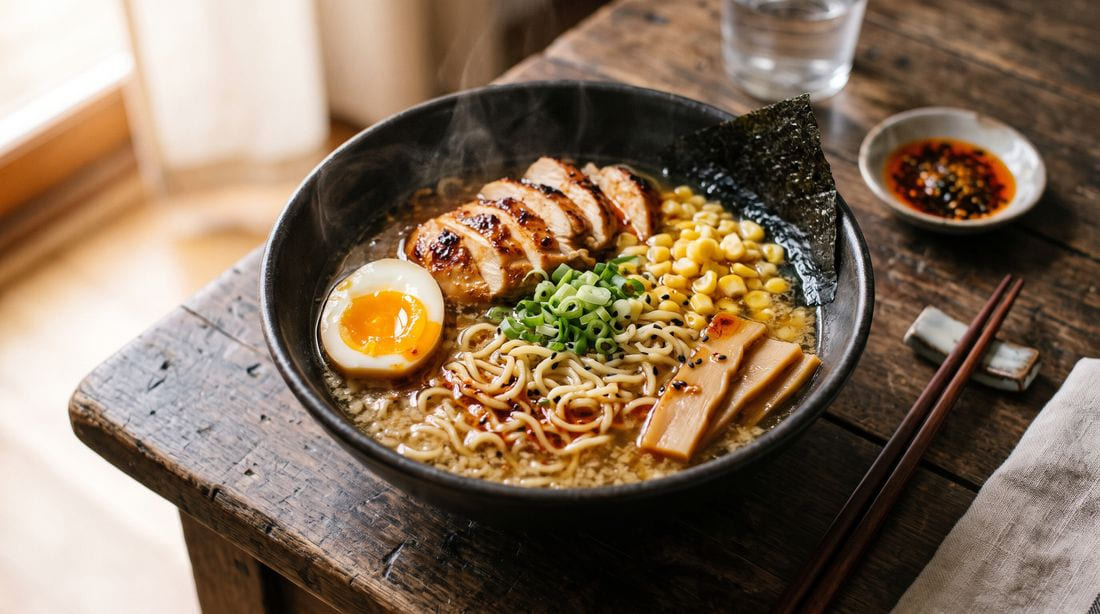
Assemble: divide the hot broth between two deep bowls, then lift the drained noodles straight into each. Lay the sliced glazed chicken across the noodles, add the egg halves, corn, scallion greens, and a quarter sheet of nori against the rim. Finish each bowl with a few drops of toasted sesame oil and a swirl of chili oil, and serve immediately — ramen waits for nobody.
Can I make chicken ramen without a 12-hour broth?
Yes — that is exactly what this recipe is. Shoyu ramen is a seasoning-forward style: the broth base only needs to be good chicken stock, and the shoyu tare (soy sauce, mirin, sesame) plus a hot aromatics oil does the heavy lifting. A 35-minute version built on store-bought stock and properly bloomed aromatics beats a bored 12-hour simmer every time. Keep the simmer short — long boiling clouds a clear shoyu broth rather than improving it.
My noodles turned the soup starchy and the noodles went mushy — what happened?
The noodles cooked in (or sat in) the broth. Ramen noodles are fresh and starchy; they need plain, fast-boiling unsalted water and immediate draining, then straight into bowls with hot broth over them. Undercook by about 30 seconds, because they keep softening in the hot soup. For leftovers, store broth and noodles in separate containers and combine only at serving, or the noodles will drink half the broth overnight.
What toppings can I put on chicken ramen?
The classic shoyu set is what is in this recipe — glazed chicken, jammy egg, scallions, nori, corn — and it is endlessly extendable. Good adds: blanched baby bok choy, quick-pickled bamboo shoots (menma), a handful of bean sprouts, sesame seeds, butter for a Sapporo-style richness, or a spoonful of miso whisked into the broth at the end for miso-shoyu hybrid depth. Ajamama (marinated soft egg) is the upgrade most worth making ahead: steep peeled 7-minute eggs in soy, mirin, and water for 4 hours and your topping is done.
Can I make chicken ramen without a 12-hour broth?
Yes — that is exactly what this recipe is. Shoyu ramen is a seasoning-forward style: the broth base only needs to be good chicken stock, and the shoyu tare (soy sauce, mirin, sesame) plus a hot aromatics oil does the heavy lifting. A 35-minute version built on store-bought stock and properly bloomed aromatics beats a bored 12-hour simmer every time. Keep the simmer short — long boiling clouds a clear shoyu broth rather than improving it.
My noodles turned the soup starchy and the noodles went mushy — what happened?
The noodles cooked in (or sat in) the broth. Ramen noodles are fresh and starchy; they need plain, fast-boiling unsalted water and immediate draining, then straight into bowls with hot broth over them. Undercook by about 30 seconds, because they keep softening in the hot soup. For leftovers, store broth and noodles in separate containers and combine only at serving, or the noodles will drink half the broth overnight.
What toppings can I put on chicken ramen?
The classic shoyu set is what is in this recipe — glazed chicken, jammy egg, scallions, nori, corn — and it is endlessly extendable. Good adds: blanched baby bok choy, quick-pickled bamboo shoots (menma), a handful of bean sprouts, sesame seeds, butter for a Sapporo-style richness, or a spoonful of miso whisked into the broth at the end for miso-shoyu hybrid depth. Ajitsuke tamago (marinated soft egg) is the upgrade most worth making ahead: steep peeled 7-minute eggs in soy, mirin, and water for 4 hours and your topping is done.